eSIM Compatibility: Empowering Global Travelers

Switching between networks while jumping from Paris to Singapore is now far simpler thanks to eSIM technology. For digital nomads working on the move, avoiding high roaming fees and unreliable physical SIMs is a real concern. Understanding eSIM compatibility and debunking the most common myths empowers you to travel with confidence and keep your projects on track no matter which country you visit.
Table of Contents
- Defining eSIM Compatibility And Common Myths
- Types Of Devices That Support eSIM
- How eSIM Works Across Platforms
- Key Requirements For eSIM Activation
- Financial Implications And Usage Limitations
- Top Mistakes To Avoid With eSIM
Key Takeaways
| Point | Details |
|---|---|
| eSIM Compatibility Varies | Not all devices and networks support eSIM technology; check individual device compatibility with carriers before use. |
| Diverse Device Support | eSIM is integrated into various devices including smartphones, tablets, and wearables, enabling greater flexibility for users. |
| Activation Requirements | Successful eSIM activation depends on device compatibility, carrier support, and security protocols, necessitating thorough verification. |
| Avoid Common Mistakes | Travelers should be aware of carrier restrictions, potential regional limitations, and ensure proper profile management to prevent connectivity issues. |
Defining eSIM Compatibility and Common Myths
The world of mobile connectivity has been transformed by eSIM technology, offering travelers unprecedented flexibility in managing their digital networks. Unlike traditional physical SIM cards, eSIM technology enables digital SIM functionality that can be remotely configured and switched between networks without physically changing a chip.
Key to understanding eSIM compatibility is recognizing that not all devices and networks are created equal. While the technology has been available for approximately a decade, its global adoption varies significantly. Modern smartphones, tablets, and laptops increasingly support eSIM profiles, but compatibility depends on several critical factors:
- Device manufacturer support
- Network operator agreements
- GSMA technical specifications
- Regional telecommunications regulations
Contrary to popular misconceptions, eSIMs are not restricted to specific carriers or device types. Advanced GSMA specifications now support multiple network profiles and enable seamless remote provisioning. This means travelers can switch between international carriers quickly, avoiding expensive roaming charges and maintaining consistent connectivity.
Pro tip: Always verify your specific device’s eSIM compatibility with your intended carrier before international travel to ensure smooth network transitions.
Types of Devices That Support eSIM
eSIM technology has rapidly expanded across multiple device categories, transforming how global travelers maintain connectivity. Diverse device ecosystems now support eSIM functionality, creating unprecedented flexibility for digital nomads and tech enthusiasts.
The primary device categories supporting eSIM include:
- Smartphones: Modern flagship devices from Apple, Samsung, Google, and other manufacturers
- Smartwatches: Apple Watch, Samsung Galaxy Watch series
- Tablets: iPad Pro, Samsung Galaxy Tab series
- Laptops: Select MacBook and Windows models with integrated cellular connectivity
- Wearables: Fitness trackers and advanced health monitoring devices
- Connected vehicles: Growing number of automotive brands integrating eSIM for navigation and communication
Beyond consumer electronics, enterprise and IoT solutions are increasingly adopting eSIM technology for global connectivity. This expansion means travelers can expect more seamless network transitions across an ever-growing range of devices, eliminating traditional roaming limitations and simplifying international communication.
Here’s a summary comparing eSIM functionality for travelers and enterprise users:
| User Type | Primary Benefit | Key Challenge | Typical Use Case |
|---|---|---|---|
| Travelers | Easy carrier switching abroad | Regional compatibility gaps | International roaming avoidance |
| Enterprise | Scalable device management | Integration with legacy systems | Global IoT device connectivity |
The adoption trend suggests that within the next few years, eSIM will become a standard feature across most high-end mobile and connected devices, offering unprecedented network flexibility for global users.
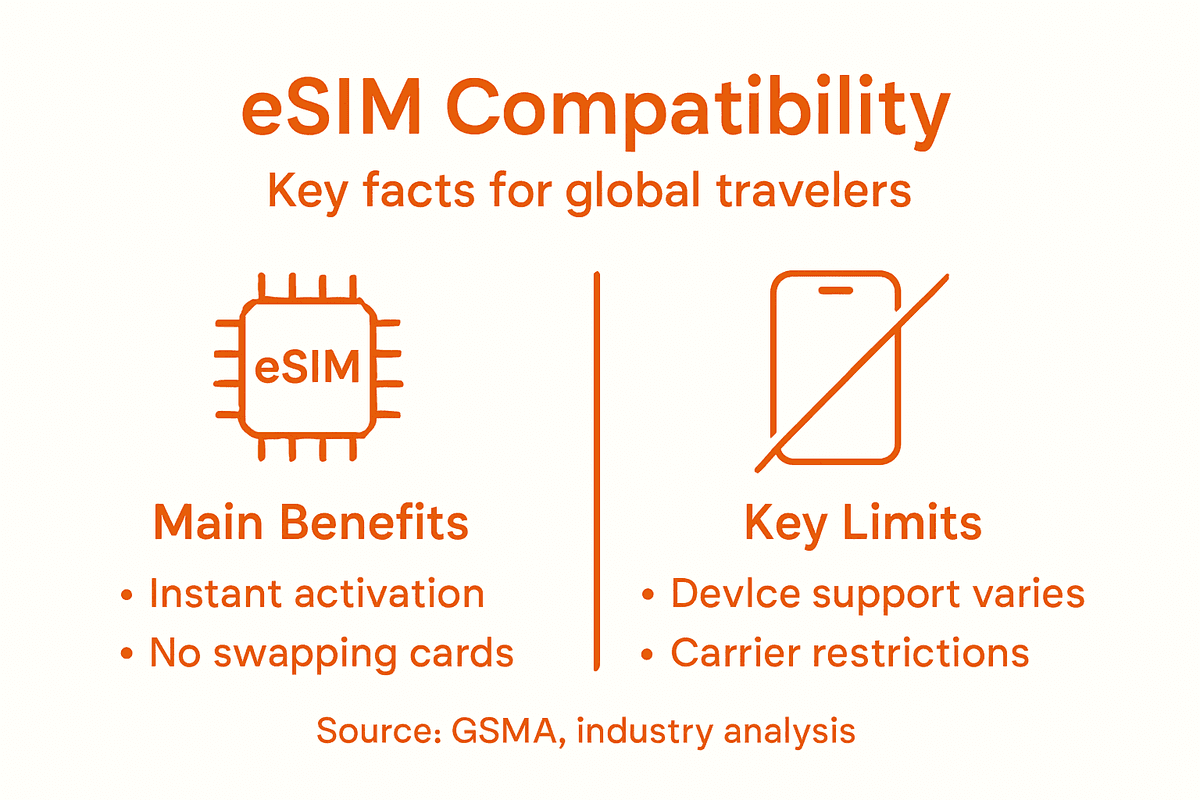
Pro tip: Before purchasing a device, always verify its specific eSIM compatibility with your intended carriers and regions to ensure optimal connectivity.
How eSIM Works Across Platforms
eSIM technology represents a sophisticated approach to digital connectivity, fundamentally transforming how devices communicate across different networks and platforms. Remote provisioning enables seamless carrier switching without the traditional limitations of physical SIM cards.
The core mechanism of eSIM functionality involves several critical technical components:
- Digital Profile Management: An embedded chip that stores multiple network profiles
- Over-the-Air Activation: Ability to download and switch carrier networks instantly
- Secure Authentication: Encryption protocols ensuring network security
- Universal Standards: GSMA SGP.32 specifications guaranteeing cross-platform compatibility
Programmable SIM modules integrated into device hardware enable users to manage network connections through simple device settings or dedicated apps. This approach eliminates the need for physical SIM card swaps, providing unprecedented flexibility for global travelers who frequently change geographic locations.

The technology supports a wide range of platforms, from consumer smartphones to enterprise IoT systems, creating a unified approach to mobile connectivity that transcends traditional network boundaries. Each eSIM-enabled device can store multiple network profiles, allowing users to switch between local carriers effortlessly and optimize their communication strategy based on current location and data requirements.
Pro tip: Always download and test your eSIM profile before traveling to ensure smooth connectivity in your destination country.
Key Requirements for eSIM Activation
eSIM activation represents a sophisticated process that demands specific technical and carrier-based prerequisites. Remote profile provisioning requires precise device compatibility and adherence to global telecommunications standards.
The critical requirements for successful eSIM activation include:
- Device Compatibility: Hardware supporting eUICC (embedded Universal Integrated Circuit Card) technology
- Carrier Network Support: Active partnership with eSIM-enabled mobile operators
- Authentication Mechanism: Secure QR code or dedicated mobile app for profile download
- Technical Infrastructure: Access to SM-DP+ (Subscription Manager Data Preparation) servers
- Network Specifications: Compliance with GSMA SGP.32 global standards
Carrier-specific activation protocols determine the final connectivity process, which typically involves scanning a unique QR code or using a mobile app to download and install the network profile. This approach ensures that users can seamlessly transition between different mobile networks without physical SIM card replacements.
The complexity of eSIM activation varies across different device manufacturers and mobile carriers, requiring users to carefully verify their specific device capabilities and carrier support before attempting activation. Successful implementation depends on meeting technical specifications, carrier agreements, and maintaining robust digital security protocols.
Pro tip: Contact your mobile carrier directly to confirm exact eSIM activation steps for your specific device model and network.
Financial Implications and Usage Limitations
eSIM technology introduces a complex landscape of financial considerations and operational constraints for global travelers. Mobile operators face significant infrastructure transformation costs while simultaneously creating opportunities for more flexible connectivity models.
The financial implications of eSIM technology span multiple dimensions:
- Reduced Distribution Costs: Elimination of physical SIM card manufacturing and logistics
- Flexible Pricing Models: Easier carrier switching and competitive data plans
- Lower Operational Expenses: Streamlined network management for telecommunications providers
- Potential Consumer Savings: More transparent and adaptable international roaming rates
Carrier profile restrictions can create significant usage limitations for travelers seeking seamless global connectivity. These constraints often emerge from regional regulatory differences, device compatibility challenges, and carrier-specific network configurations.
Technical and regulatory variations across different countries mean that while eSIM promises universal connectivity, practical implementation remains complex. Travelers must carefully research carrier agreements, device specifications, and regional telecommunications policies to maximize their eSIM’s potential and avoid unexpected connectivity interruptions or additional charges.
This table summarizes common eSIM financial and operational impacts for mobile users:
| Impact Area | Potential Benefit | Typical Limitation |
|---|---|---|
| SIM Production Costs | Lower physical logistics expenses | Initial device investment needed |
| Data Plan Flexibility | Access to varied global offers | Region-restricted options |
| Roaming Fees | Potentially lower costs abroad | Varies with carrier agreements |
| Device Management | Simplifies profile administration | Security and setup complexities |
Pro tip: Before international travel, thoroughly investigate your destination’s eSIM compatibility and preload appropriate carrier profiles to minimize potential connectivity issues.
Top Mistakes to Avoid With eSIM
eSIM technology offers incredible connectivity potential, but travelers frequently encounter pitfalls that can disrupt their mobile experience. Common user errors compromise seamless international connectivity and create unnecessary complications during travel.
The most critical mistakes global travelers make with eSIM include:
- Device Compatibility Misconceptions: Assuming all devices support eSIM equally
- Carrier Restriction Ignorance: Overlooking regional network limitations
- Profile Management Errors: Failing to understand profile transfer restrictions
- Security Negligence: Skipping critical activation verification steps
- Roaming Policy Misunderstandings: Not investigating carrier-specific international usage rules
Multiple profile management challenges often surprise inexperienced users, particularly those transitioning from traditional physical SIM cards. Understanding the nuanced differences between carrier policies, device capabilities, and regional technological infrastructure is crucial for avoiding unexpected connectivity interruptions.
Technical complexity means that no two eSIM experiences are identical. Travelers must approach eSIM adoption with careful research, proactive verification of device and carrier compatibility, and a willingness to adapt to evolving technological landscapes.
Pro tip: Always conduct a comprehensive compatibility check with your carrier and device manufacturer before relying on eSIM for critical international communications.
Simplify Your Global Connectivity with Lumo
Travelers who face challenges like device compatibility, complex carrier restrictions, and confusing eSIM profiles now have a powerful solution. The article highlights how eSIM technology promises seamless network switching and global access but warns of common pitfalls such as regional limitations and activation hurdles. If you want to avoid costly roaming fees and enjoy instant activation with extensive coverage in over 160 countries, Lumo is designed just for you.
Experience the freedom of managing multiple eSIM profiles on smartphones, tablets, and laptops with Lumo’s easy QR code activation and high-speed 5G/4G networks. Don’t let compatibility confusion or network restrictions disrupt your journey. Visit Lumo now to unlock hassle-free mobile data and stay connected anywhere in the world. Take control of your connectivity today with this all-in-one eSIM platform tailored for global travelers and digital lifestyles.
Frequently Asked Questions
What devices support eSIM technology?
Modern smartphones like Apple and Samsung, tablets such as iPad Pro, smartwatches, certain laptops, wearables, and connected vehicles support eSIM technology. It’s essential to verify specific device compatibility with intended carriers.
How does eSIM activation work?
To activate eSIM, you need a compatible device, an active partnership with an eSIM-enabled carrier, and secure authentication, often done via a QR code or mobile app to download the network profile.
What are the financial implications of using eSIM?
eSIM technology can reduce costs associated with physical SIM production, offer flexible pricing models, and lower operational expenses for mobile operators, potentially leading to consumer savings on international roaming charges.
What common mistakes should I avoid when using eSIM?
Avoid assuming all devices support eSIM equally, overlooking carrier restrictions, failing to manage profiles correctly, neglecting security verification steps, and misunderstanding roaming policies to ensure a smooth international connectivity experience.
Recommended
Related Topics
Stay Connected Anywhere
Prepaid eSIM data plans for 180+ countries and territories. No physical SIM required.