Role of QR Codes in eSIM: Simplifying Global Connectivity

Switching mobile carriers on the move once meant carrying extra SIM cards or facing steep roaming charges, but now nearly 60 percent of remote professionals use eSIM technology to stay connected abroad. For the American digital nomad or frequent traveler, seamless transitions between local networks are vital to work and life. Discover how QR code eSIM activation makes international connectivity effortless, secure, and cost-effective for those who value reliability in every corner of the globe.
Table of Contents
- eSIM And QR Codes: Core Concepts
- How QR Code Activation Works For eSIMs
- Security And Privacy In QR Code eSIM Use
- Common Issues And Troubleshooting QR Codes
- Comparing QR Activation To Other eSIM Methods
Key Takeaways
| Point | Details |
|---|---|
| eSIM Technology | eSIMs provide programmable connectivity, allowing users to switch carriers without physical SIM cards, enhancing flexibility. |
| QR Code Activation | QR codes simplify eSIM activation by enabling instant download of network profiles with minimal user effort. |
| Security Awareness | Users must verify QR code sources and maintain proactive security practices to mitigate privacy risks. |
| Troubleshooting Tips | Common issues during QR code activation can be resolved by ensuring updated software and optimal scanning conditions. |
eSIM and QR Codes: Core Concepts
The world of mobile connectivity is rapidly transforming with embedded subscriber identity modules, commonly known as eSIMs. Unlike traditional physical SIM cards, an eSIM is a programmable chip directly integrated into mobile devices, enabling users to switch carriers and manage multiple network profiles without physically changing hardware.
QR codes play a critical role in this technological evolution. These two-dimensional matrix barcodes serve as a digital activation mechanism for eSIMs, efficiently encoding the necessary network profile information. When a user scans a QR code, the encoded data allows instant download and installation of a specific mobile network configuration, eliminating complex manual setup processes.
The technical architecture of eSIMs represents a significant leap in telecommunications infrastructure. Mobile devices equipped with eSIM technology can store multiple network profiles simultaneously, allowing travelers and professionals to switch between local and international carriers with unprecedented ease. This flexibility means users can select optimal data plans based on location, cost, and connectivity requirements without being locked into a single provider.
The integration of QR codes simplifies this process dramatically. Users can now activate international data plans by simply scanning a code, transforming what was once a complicated administrative task into a seamless, instantaneous experience.
Pro Tip: Always screenshot or save your eSIM activation QR code before traveling, ensuring you have a backup method of reconnecting to mobile networks in case of device issues.
How QR Code Activation Works for eSIMs
QR code activation represents a revolutionary approach to mobile network connectivity, transforming how travelers and professionals manage their cellular data. When using an eSIM, the activation process becomes incredibly streamlined through these compact digital barcodes. A user simply needs to scan the QR code using their smartphone camera, which automatically triggers the download and installation of a specific mobile network profile.
The technical mechanism behind QR code activation involves several critical steps. First, the QR code contains encrypted network configuration data that includes details like carrier information, network credentials, and data plan specifics. When scanned, this code communicates directly with the device’s eSIM chip, instantaneously programming the necessary connection parameters. This eliminates the traditional complex process of manual network configuration, reducing activation time from potentially hours to mere seconds.

Mobile devices with eSIM technology are designed to recognize and process these activation QR codes through built-in software protocols. The process works across multiple device platforms, including smartphones, tablets, and laptops equipped with eSIM capabilities. Users can obtain these QR codes through various channels - directly from mobile carriers, online platforms like Lumo’s global data plans, or at international airports and travel centers.
The convenience of QR code activation extends beyond initial setup. Travelers can quickly switch between different international data plans by scanning new QR codes, providing unprecedented flexibility for global connectivity. This technology eliminates the need for physical SIM card swapping, reducing logistical complications and potential damage to device SIM card slots.
Pro Tip: Always ensure your device’s camera and scanning settings are enabled before attempting eSIM activation, and keep the QR code in good lighting for optimal scanning results.
Security and Privacy in QR Code eSIM Use
The digital landscape of mobile connectivity introduces complex security challenges, particularly in the realm of QR code eSIM activation. Research into eSIM ecosystem vulnerabilities reveals critical privacy risks that users must understand and mitigate. Malicious actors can potentially exploit QR codes as entry points for unauthorized device access, data interception, and network manipulation.
Understanding the security mechanisms is crucial for safe eSIM usage. Modern eSIM technologies incorporate multiple layers of encryption and authentication protocols to protect user data. These include secure element technologies within devices, cryptographic key management systems, and remote provisioning security standards that validate the integrity of network profile downloads. When scanning a QR code, advanced devices perform comprehensive security checks to verify the source and prevent potential compromise.
Privacy risks extend beyond direct device access. Unauthorized QR codes can potentially harvest sensitive user information, track location data, or introduce malware into mobile ecosystems. Users must exercise vigilance by verifying QR code sources, preferring official channels like global eSIM destination platforms for activation, and maintaining updated device security settings. Implementing two-factor authentication and regularly updating device firmware can provide additional protective barriers against potential security breaches.
The evolving landscape of mobile security demands continuous user education and technological adaptation. While QR code eSIM activation offers unprecedented convenience, it simultaneously requires a proactive approach to digital safety. Mobile network providers and device manufacturers are continuously developing more sophisticated security protocols to protect users from emerging digital threats.
Pro Tip: Always verify QR code sources before scanning, and use official carrier or trusted platform channels for eSIM activation to minimize potential security risks.
Common Issues and Troubleshooting QR Codes
QR code eSIM activation can occasionally present challenges that frustrate even tech-savvy travelers. Understanding common issues is the first step in maintaining seamless mobile connectivity. Potential security vulnerabilities highlight the importance of approaching eSIM activation with careful attention and strategic problem-solving.
Technical hurdles often emerge during the QR code scanning process. Users might encounter problems such as unrecognized QR codes, scanning errors, or incomplete profile downloads. These issues typically stem from several root causes: outdated device software, incompatible network settings, poor image quality of the QR code, or temporary carrier network disruptions. Most modern smartphones include built-in QR code readers, but some older devices may require additional third-party scanning applications.
Critical troubleshooting steps can resolve most eSIM activation challenges. Users should first ensure their device meets minimum compatibility requirements, including recent operating system versions and hardware specifications. Checking camera settings, ensuring proper lighting conditions, and maintaining a stable internet connection are fundamental troubleshooting techniques. When scanning fails, alternative activation methods like manual code entry or contacting carrier support can provide backup solutions. Some international destination platforms offer comprehensive support channels to assist users experiencing activation difficulties.
Prevention remains the most effective strategy for managing QR code activation issues. Regular device updates, using official carrier channels, and maintaining digital hygiene can significantly reduce potential complications. Users should be particularly cautious about scanning QR codes from unknown sources, as this can introduce security risks beyond mere activation problems.
To help users avoid issues, here is a summary of the most frequent QR code eSIM activation problems and proactive prevention tips:
| Common Issue | Likely Cause | Prevention Tip |
|---|---|---|
| QR code not recognized | Outdated software | Regularly update device OS |
| Scanning failure | Poor camera focus or lighting | Ensure lens cleanliness and good light |
| Incomplete profile download | Weak or unstable internet | Connect to strong, stable WiFi |
| Invalid network profile | Incorrect QR code source | Only use official carrier QR codes |
Pro Tip: Always screenshot your QR code before deletion and keep the carrier’s customer support contact information readily available in case of unexpected activation challenges.
Comparing QR Activation to Other eSIM Methods
The evolution of mobile connectivity has introduced multiple approaches to eSIM activation, with QR code methods emerging as a particularly user-friendly solution. Traditional activation methods like manual carrier configuration, phone call verification, and web-based profile downloads each present unique challenges that QR codes effectively streamline. These alternative approaches often require multiple complex steps, extensive user interaction, and significant time investment.
Manual configuration represents the most labor-intensive eSIM activation method. Users must navigate intricate carrier settings, input lengthy network credentials, and potentially contact customer support for assistance. In contrast, QR code activation reduces this process to a simple scan, instantly programming device network profiles. The efficiency is particularly notable for international travelers who frequently switch between mobile networks across different countries like those found in Qatar mobile data plans.
Other activation techniques include SMS-based profile downloads and direct carrier app installations. While functional, these methods introduce additional friction points. SMS verification can be unreliable in areas with poor cellular coverage, and carrier-specific apps often require multiple downloads and account creations. QR code activation circumvents these complications by providing a universal, platform-independent solution that works across device types and operating systems. The visual, one-step nature of QR code scanning dramatically simplifies the user experience compared to these alternative approaches.
Technological advancement continues to refine eSIM activation methods, but QR codes have emerged as a standout solution. Their combination of simplicity, security, and near-universal compatibility positions them as the most user-friendly approach to mobile network profile management. The ability to quickly and securely activate mobile data without complex technical knowledge represents a significant leap forward in global connectivity.
Here’s a concise comparison of eSIM activation methods to highlight the unique strengths and limitations of each approach:
| Activation Method | User Effort Required | Reliability When Traveling | Technical Complexity |
|---|---|---|---|
| QR Code Scan | Very low | Highly reliable worldwide | Minimal—automatic process |
| Manual Configuration | High | Limited by local carrier | Extensive—many steps |
| Carrier App Download | Moderate | Varies by region and carrier | Requires app installation |
| SMS-based Download | Moderate | Dependent on SMS delivery | Sometimes complicated |
Pro Tip: Always keep a digital or printed backup of your QR activation code, as it serves as a critical failsafe for reinstalling your mobile network profile in case of unexpected device issues.
Experience the Future of Global Connectivity with Lumo
The article reveals the challenges travelers and remote workers face when activating eSIMs using QR codes including security concerns, complex manual setups, and unpredictable carrier limitations. If you want to avoid activation frustrations and seamlessly switch between multiple eSIM profiles while enjoying instant QR code activation, Lumo is your ultimate solution. Lumo’s platform simplifies global connectivity across over 160 countries offering flexible data plans with reliable high-speed 5G and 4G networks designed for your digital lifestyle.
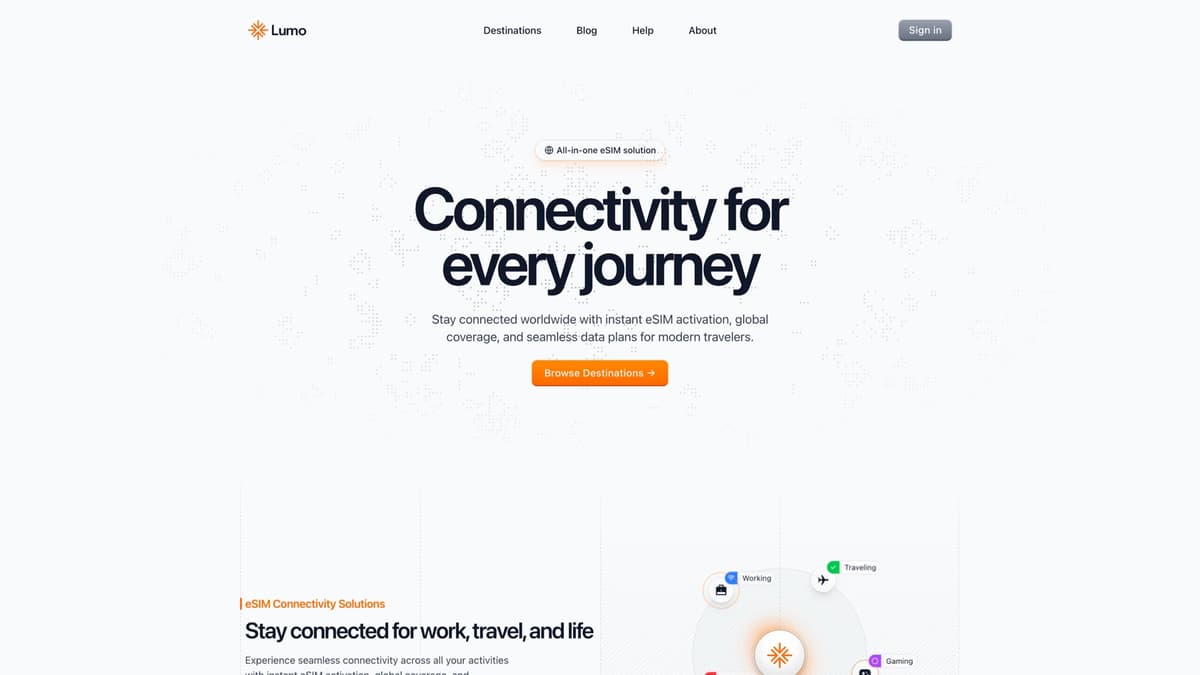
Discover how effortless managing your mobile data can be by visiting Lumo’s all-in-one eSIM solution. Take control of your international mobile experience and activate your data plan in seconds without dealing with complicated manual steps. Don’t let roaming charges or activation delays hold you back. Explore Lumo’s global destinations to find data plans tailored for your next trip. Start simplifying your connectivity journey today with Lumo’s trusted eSIM platform.
Frequently Asked Questions
What is an eSIM and how does it differ from a traditional SIM card?
An eSIM, or embedded subscriber identity module, is a programmable chip integrated into mobile devices. Unlike traditional SIM cards that are removable, an eSIM allows users to switch carriers and manage multiple network profiles without needing physical hardware changes.
How do QR codes facilitate the activation of eSIMs?
QR codes enable simple activation of eSIMs by encoding all necessary network profile information. When a user scans a QR code, it triggers the automatic download and installation of a specific mobile network configuration, vastly simplifying the activation process.
What should I do if my QR code for eSIM activation is not recognized?
If your QR code is not recognized, check that your device software is up to date, ensure your camera settings are correct, and try scanning the code in well-lit conditions. If issues persist, consider using alternative activation methods like manual code entry or contacting your carrier for support.
Are there security risks associated with using QR codes for eSIM activation?
Yes, there are potential security risks, such as unauthorized access or data interception. It is crucial to verify the source of the QR code before scanning and use only official channels for eSIM activation to minimize these risks.
Recommended
Related Topics
Stay Connected Anywhere
Prepaid eSIM data plans for 180+ countries and territories. No physical SIM required.