What Is eSIM Profile and How It Simplifies Travel

Roaming fees can drain an American’s travel budget faster than a cross-continent flight. For those managing work, personal, and local connections on the move, switching SIM cards feels outdated. Now, over 60 percent of modern smartphones support multiple eSIM profiles, letting travelers and digital nomads avoid the hassle of physical swaps. This guide reveals why eSIM solutions offer smooth, affordable connectivity for global journeys, plus how to sidestep common mistakes.
Table of Contents
- Defining eSIM Profile And Common Misconceptions
- How eSIM Profiles Work Across Devices
- Activating And Managing eSIM Profiles Easily
- Key Benefits For Global Connectivity Seekers
- Costs, Risks, And eSIM Alternatives
Key Takeaways
| Point | Details |
|---|---|
| eSIM Profiles Enable Convenience | eSIM profiles allow users to switch carriers digitally, simplifying connectivity for international travel. |
| User-Friendly Activation Process | Activating an eSIM is straightforward, often requiring just a QR code scan for setup and management. |
| Enhanced Security Features | eSIM profiles utilize advanced encryption for secure management, allowing remote deactivation if needed. |
| Need for Compatibility Checking | Always verify device compatibility with eSIM technology before international travel to ensure connectivity. |
Defining eSIM Profile and Common Misconceptions
An eSIM profile represents a digital representation of a mobile carrier’s subscriber information traditionally stored on physical SIM cards. Unlike conventional SIM technology, an eSIM profile contains all necessary network credentials embedded directly within a device’s integrated circuit. Carrier subscription data can now be downloaded, managed, and switched remotely without physically swapping hardware.
The core functionality of an eSIM profile involves storing critical network authentication details digitally, enabling travelers to connect to local mobile networks instantly. This technology eliminates the need for physical SIM card exchanges, reducing complexity for international travelers who previously required multiple physical cards or expensive roaming plans. Users can now download carrier profiles directly to their device, switching between networks with a few digital taps.
Despite growing adoption, several misconceptions persist about eSIM technology. Many travelers incorrectly assume eSIM profiles only work with specific carriers or require complicated technical knowledge. In reality, most modern smartphones support multiple eSIM profiles, allowing seamless network switching across different countries and providers. The technology is designed to be user-friendly, with most activation processes involving simple QR code scanning or digital downloads.
Pro tip: When traveling internationally, always verify your device’s eSIM compatibility and download carrier profiles before departure to ensure smooth connectivity.
How eSIM Profiles Work Across Devices
eSIM profiles represent a revolutionary approach to mobile connectivity, enabling seamless network access across multiple device types. Device compatibility has expanded significantly beyond traditional smartphones to include tablets, smartwatches, laptops, and Internet of Things (IoT) devices. This digital technology allows users to store multiple network profiles simultaneously, switching between carriers with unprecedented ease.

The technical architecture of eSIM profiles involves a standardized embedded universal integrated circuit card (eUICC) that can securely store and manage multiple carrier credentials. Unlike physical SIM cards, these digital profiles can be remotely provisioned and updated without physical intervention. Smartphones and other compatible devices now include specialized hardware that supports these embedded profiles, allowing consumers to download and activate network credentials through digital interfaces like QR codes or dedicated mobile apps.
Modern devices support multiple eSIM profiles, which means travelers can maintain home country and local network connections simultaneously. This functionality is particularly powerful for international travelers, digital nomads, and business professionals who require flexible connectivity options. The ability to switch between networks without swapping physical cards represents a significant advancement in mobile telecommunications, reducing complexity and improving user experience across different geographic regions.
Pro tip: Before international travel, verify your device’s eSIM compatibility and research local carrier options to ensure seamless network access.
Activating and Managing eSIM Profiles Easily
Activating an eSIM profile has become remarkably straightforward, thanks to modern digital provisioning technologies. Users can now download and configure mobile network profiles directly through their device’s settings, carrier apps, or by scanning a simple QR code. This digital-first approach eliminates the traditional complexities associated with physical SIM card acquisition and installation, allowing travelers to set up network access within minutes from anywhere in the world.
The technical process of eSIM profile management involves several key steps. After selecting a compatible carrier, users typically receive a digital activation code or QR code that can be scanned directly into their device. Modern smartphones and tablets are designed with built-in eSIM management interfaces that guide users through profile installation, allowing them to add, switch, or remove network profiles with just a few screen taps. This flexibility enables travelers to maintain multiple network profiles simultaneously, switching between home country and local networks without physical intervention.
Security remains a critical consideration in eSIM profile management. Each digital profile is protected by robust encryption protocols and can be remotely deactivated if a device is lost or stolen. Mobile operators provide comprehensive digital management platforms that allow users to monitor data usage, control network access, and update profile settings in real-time. These advanced management capabilities represent a significant upgrade from traditional SIM card technologies, offering unprecedented control and convenience for mobile users.
Pro tip: Always keep a screenshot of your eSIM activation QR code and carrier contact information in a secure cloud storage location as a backup for international travel.
Key Benefits for Global Connectivity Seekers
Global travelers have discovered significant advantages with eSIM technology, particularly through seamless network switching capabilities. Unlike traditional roaming solutions, eSIM profiles enable instant access to local mobile networks without purchasing physical SIM cards, dramatically reducing international communication costs. Travelers can now maintain connectivity across multiple countries by simply downloading a new network profile, eliminating the complexity of carrying multiple physical SIM cards or negotiating expensive international roaming packages.
The financial benefits of eSIM technology extend beyond simple cost savings. Digital network profiles provide unprecedented flexibility in managing mobile data plans, allowing users to select local carriers with the most competitive rates in real-time. Frequent international travelers can quickly compare and switch between network providers, optimizing their connectivity expenses and ensuring reliable mobile access. This level of control was previously impossible with traditional SIM card technologies, representing a fundamental shift in how mobile users manage their global communication needs.
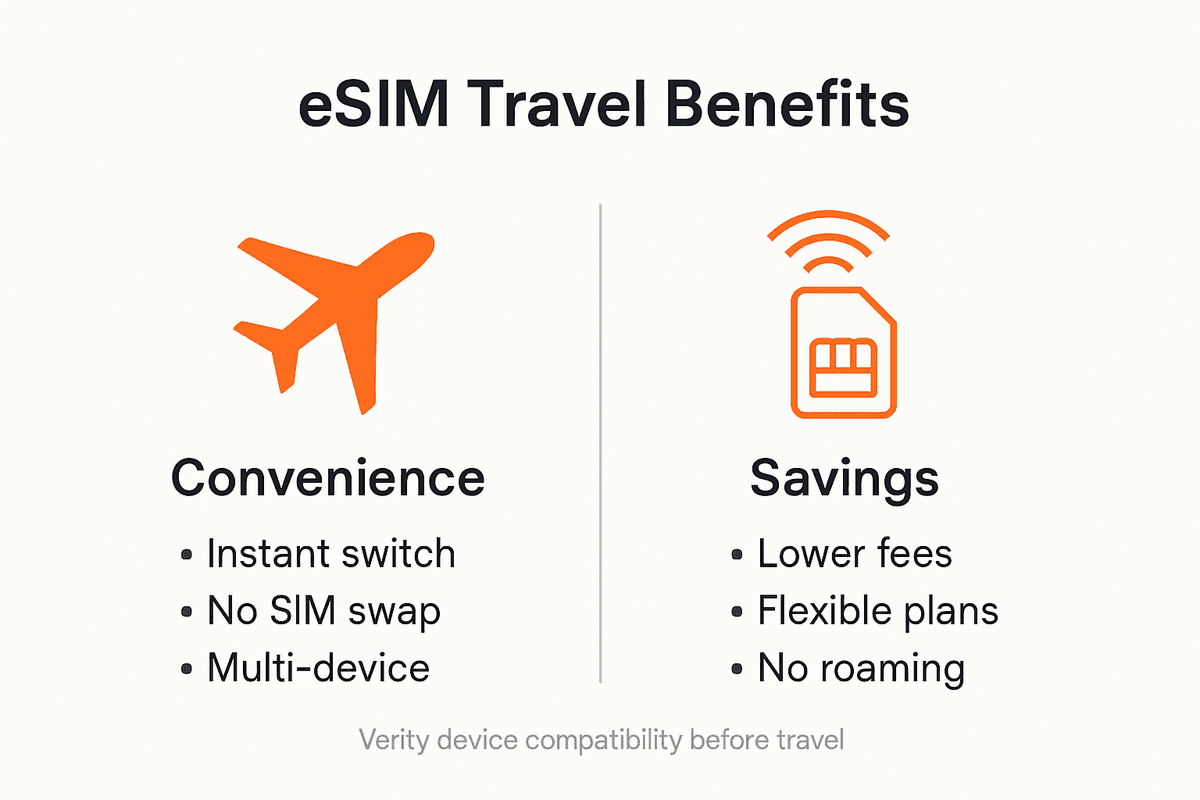
Security and convenience represent additional critical advantages of eSIM profiles for global connectivity seekers. Each digital profile includes advanced encryption protocols, protecting user data during network transitions. The ability to remotely disable or modify network access provides an extra layer of protection against potential mobile security risks. Furthermore, eSIM technology supports multiple network profiles on a single device, allowing business travelers and digital nomads to maintain separate personal and professional mobile connections without carrying multiple devices or complex communication setups.
Pro tip: Research and download local carrier eSIM profiles before international travel to ensure immediate, cost-effective mobile connectivity upon arrival.
Below is a summary of key benefits and considerations when using eSIM profiles for global connectivity:
| Key Benefit | Practical Impact | Consideration |
|---|---|---|
| Seamless network switching | Switch carriers instantly while abroad | May face regional limitations |
| Cost control | Select local plans, avoid high roaming | Initial setup cost can vary |
| Profile management | Add, remove, manage multiple profiles | Requires compatible device |
| Enhanced security | Profiles can be remotely deactivated | Risk if device access is lost |
Costs, Risks, and eSIM Alternatives
eSIM technology introduces nuanced financial considerations and potential risks that travelers must carefully evaluate. Security vulnerabilities in remote profile provisioning represent a critical concern for users considering digital network profiles. While eSIM solutions offer significant convenience, they are not without potential drawbacks, including potential higher data plan costs and complex carrier relationship management compared to traditional physical SIM cards.
The cost structure of eSIM plans varies dramatically across different regions and mobile operators. Some international travelers might encounter higher initial setup expenses or more restrictive data packages compared to local physical SIM alternatives. Network providers are still developing standardized pricing models, which means consumers must carefully compare plans and understand the specific terms of each digital profile. Potential risks include potential carrier lock-in scenarios and limited flexibility in switching between network providers, particularly in regions with less developed eSIM infrastructure.
Alternative connectivity solutions remain relevant for travelers seeking diverse options. Traditional physical SIM cards continue to offer straightforward, widely compatible connectivity, especially in regions with limited eSIM support. Emerging technologies like integrated SIMs (iSIMs) represent another potential alternative, promising even more seamless device connectivity. Travelers should assess their specific connectivity needs, considering factors like destination, duration of travel, data requirements, and budget when selecting between eSIM profiles and alternative mobile network solutions.
Here’s a side-by-side comparison of eSIM technology, traditional SIM cards, and emerging iSIM solutions:
| Aspect | eSIM Profiles | Physical SIM Cards | iSIM (Integrated SIM) |
|---|---|---|---|
| Installation | Digital download; no hardware swap | Manual insertion; replace cards | Built into device processor |
| Network Switching | Instant, multi-profile support | Physically swap to change networks | Automatic, seamless carrier changes |
| Availability | Supported on modern smart devices | Universally supported worldwide | Limited; emerging technology |
| Security | Advanced remote encryption | Basic; physical access required | Embedded security in hardware |
| Flexibility | Manage multiple carriers at once | One carrier per card | Highest, no user action needed |
| Usage Scenario | International travel, professionals | Basic global mobile connectivity | Future IoT, ultra-compact devices |
Pro tip: Research and compare multiple eSIM and physical SIM options before international travel to find the most cost-effective and reliable connectivity solution for your specific journey.
Simplify Your Global Connectivity with Lumo’s All-in-One eSIM Solution
Traveling with multiple eSIM profiles can be confusing without the right tools. The article reveals common challenges such as managing several carrier profiles, avoiding expensive roaming charges, and securing instant activation of local networks. If you want to switch carriers instantly while abroad, control your mobile data costs, and enjoy seamless multi-device support, then Lumo provides exactly what you need. Lumo is designed to remove the hassle of physical SIM cards and complex setup by offering simple QR code activation, flexible plans across over 160 countries, and 24/7 customer support.
Experience the freedom to travel smarter by visiting Lumo’s landing page today. Get immediate access to a global network, manage multiple eSIM profiles effortlessly on your smartphones, tablets, or laptops, and avoid unexpected roaming fees whenever you arrive in a new country. Ready to connect instantly and save money while you travel? Explore how Lumo’s eSIM solution can transform your international connectivity now.
Frequently Asked Questions
What is an eSIM profile?
An eSIM profile is a digital representation of a mobile carrier’s subscriber information, embedded directly within a device’s integrated circuit, allowing users to connect to mobile networks without physical SIM cards.
How does an eSIM profile simplify travel?
An eSIM profile simplifies travel by enabling users to instantly download and switch between multiple local carrier networks, eliminating the need to carry physical SIM cards and reducing international roaming costs.
Can I manage multiple eSIM profiles simultaneously?
Yes, modern devices support multiple eSIM profiles, allowing you to maintain connections with both your home carrier and local networks simultaneously for greater flexibility during travel.
What security features are associated with eSIM profiles?
eSIM profiles include advanced encryption protocols to protect user data during network transitions, and the ability to remotely deactivate or modify profiles enhances security in case of device loss.
Recommended
Related Topics
Stay Connected Anywhere
Prepaid eSIM data plans for 180+ countries and territories. No physical SIM required.