Egypt's hidden deserts: whale fossils, salt lakes, and what locals explore
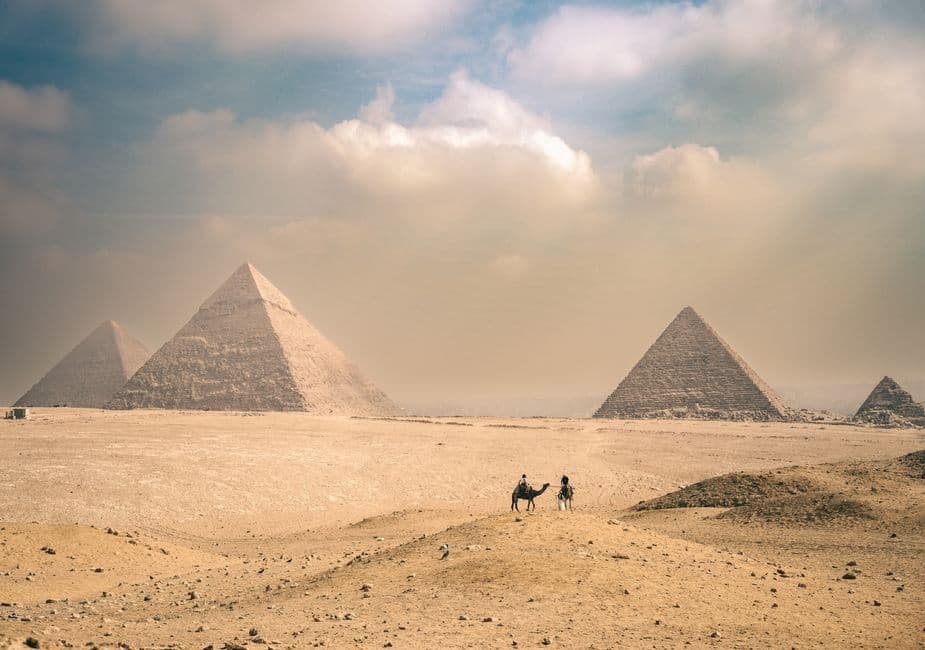
Beyond Giza and Luxor, Egypt hides a string of desert oases and lunar-like landscapes that most travelers never see — from a whale graveyard an hour outside Cairo to a national park that gets only a few hundred visitors a year. If you want the country locals quietly love, head to the Western Desert.
Why is Fayoum worth an hour outside Cairo?
Fayoum sits just an hour from the capital yet stays largely untouched by mass tourism. It holds Wadi Al-Hitan, a UNESCO World Heritage Site known as the world's largest whale graveyard, with fossils dating back 40 million years. Nearby is the unofficially named "Magic Lake," a body of water absent from Google Maps whose still surface mirrors the sky, making it a rising spot for astrotourism — helped along by Egypt's 2020 Eco Egypt campaign, which backs permits for tent camps and site security. Thirty miles into the desert, Fayoum also has Neolithic remains: standing foundations of prehistoric huts and rock art older than the pyramids, hand prints on cave walls that draw anthropologists from abroad.
Practically: Wadi El Rayan National Park (which contains the Valley of the Whales) charges foreigners $10 at the main gate, and camping runs $200/night for foreigners. You'll need a 4×4 for the sandy tracks to the Magic Lake and Valley of the Whales. The park is about 75 km from Fayoum city and 150 km (roughly a 2-hour drive) from Cairo. Go October–April; summers are extremely hot.
Which oases are worth the detour?
Each Western Desert oasis has its own draw. Dakhla has over 600 hot springs fed by a deep aquifer, with mineral pools set against pink limestone cliffs — a quieter alternative to the ruins-focused Kharga Oasis. Siwa, 30 miles from the Libyan border and a 12-hour drive from Cairo, has geode-like salt lakes with electric-blue water and crystallized shores you can float in; before the late 1980s it was reachable only by camel. Farafra, Egypt's most isolated oasis, is the gateway to the White Desert's white sand and mushroom-shaped limestone hoodoos — 4×4 required. Bahariya's Black Desert looks Martian: dead volcanoes and sand mountains dusted with black volcanic rock, plus 400 hot-and-cold springs and Roman-era wells to soak in afterward.
What's the most extreme off-grid trip in Egypt?
Gilf Kebir National Park, tucked in Egypt's far southwest, sees perhaps only a few hundred visitors a year against Egypt's 15 million annual international arrivals. Covering 48,533 square kilometers, it has no hotels, roads, cell towers, or permanent residents. Visits require 7–14 day expeditions in mandatory 4×4 convoys with military and environmental permits, full self-sufficiency in water, fuel, food, and emergency supplies, and cover 2,000–3,000 km. The reward: 8,000-year-old rock art of swimmers, Libyan Desert Glass fragments, and a preserved WWII airstrip. Travel October–March; summer heat tops 42°C, spring Khamseen winds can halt travel, and winter nights approach freezing.
FAQ
Do I need a 4×4 for these trips? Yes — Fayoum's Magic Lake and Valley of the Whales, the White Desert near Farafra, and Gilf Kebir all require 4×4 vehicles due to unpaved, sandy terrain.
When's the best time to go? October to April for Fayoum/Wadi El Rayan, and October through March for Gilf Kebir; summer heat is extreme in both regions.
Is Gilf Kebir easy to visit independently? No — it demands a full expedition with military and environmental permits, convoy travel, and complete self-sufficiency for 1–2 weeks.
Sources
- https://www.nationalgeographic.com/travel/article/egypts-best-desert-oases
- https://ecovoyager.com/blog/egypts-gilf-kebir-a-complete-travel-guide/
- https://www.mideastnews.net/news/278786163/egypt-valley-of-whales-becomes-new-hotspot-for-growing-astrotourism
- https://egyptfuntours.com/wadi-el-rayan-national-park/
Related Topics
Stay Connected Anywhere
Prepaid eSIM data plans for 180+ countries and territories. No physical SIM required.