Where locals actually go in Israel
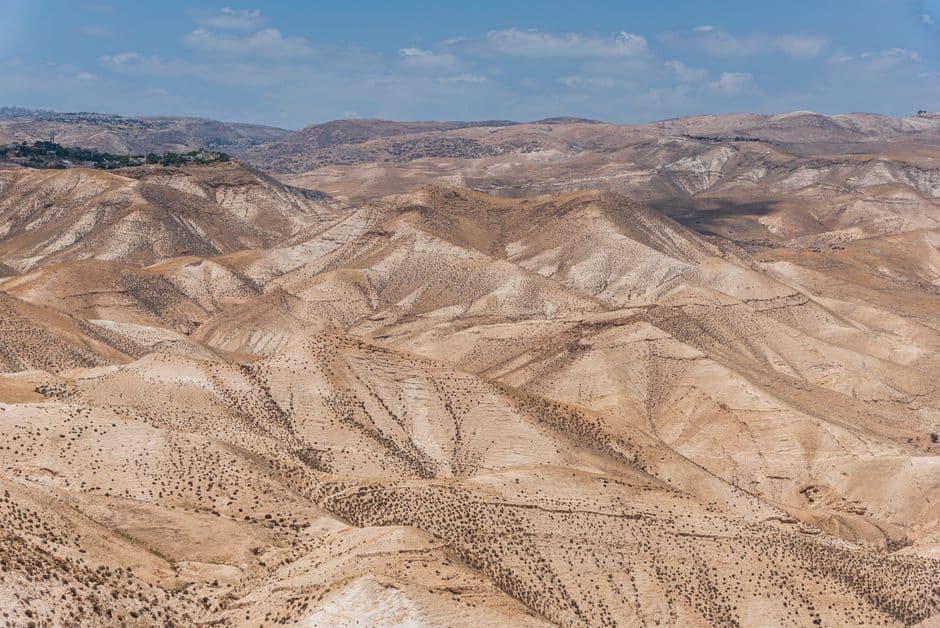
Israel's famous sites get the crowds, but the country's quieter corners—craters, caves, Druze villages, and a desert where Bedouin hospitality still means something—are where locals actually send their friends. Here are a few worth the detour.
What's worth seeing in the desert and south?
Mitzpe Ramon is the gateway to Machtesh Ramon (Ramon Crater), the world's largest crater at over 500m deep, 10km wide, and 40km long. It's a serious hiking destination, and because light pollution is minimal, it's also one of the best places in the country for stargazing. For a different kind of desert experience, Kfar Hanokdim offers Bedouin hospitality in traditional tents—expect tea, fresh-baked pita, and a traditional coffee ceremony rather than a rushed photo-op.
What's hiding underground and in the hills?
Near Beit Shemesh in the Jerusalem Mountains, the Soreq-Avshalom Cave (Mearat Hanetifim) holds stalactites and stalagmites formed roughly 5 million years ago. Guided walks take about 45 minutes, and the site is open 8:30 AM–4 PM daily (until 1 PM on Fridays and holiday eves), with entrance at 28 Shekels for adults and 14 Shekels for children.
South of Jerusalem, Tel Maresha in Beit Guvrin National Park has hundreds of caves alongside the remains of an ancient city—same entrance fees as Soreq-Avshalom (28 Shekels adults, 14 Shekels children). Both are easy to combine with a day trip away from the capital's main circuit.
Where can you meet communities most visitors skip?
Isfiya, a Druze village on the Carmel Mountains, lets visitors try traditional Druze cuisine and even stay overnight in authentic Druze homes. Nearby, Ein Hod is an artists' village founded by one of the Dadaist movement's founders, home to the Janco-Dada Museum—a strange, creative pocket in the Carmel Forest that most itineraries miss entirely.
In Haifa, the Shrine of the Bab and Baha'i Gardens climb Mount Carmel and offer sweeping views—one of the better reasons to linger in the north beyond the obvious stops.
What about culture and nature beyond the usual museums?
The Nalaga'at Center is unlike anything else in Israel: performances by its Deaf-Blind Acting Ensemble, plus two restaurants—Café Kapishe, staffed by deaf waiters, and BlackOut, where blind waiters serve you in total darkness. In Tel Aviv, the Steinhardt Museum of Natural History at Tel Aviv University holds over 5 million specimens and serves as the country's biodiversity research hub, with interactive exhibits worth a few hours. Up north, Tel Dan Reserve pairs streamside hiking with restored Canaanite and Israelite gates, including what may be the earliest constructed arch ever found.
FAQ
Are these sites easy to reach without a car? The facts here don't cover transport logistics, so check current options directly with tourism operators before planning.
Do I need to book ahead for Kfar Hanokdim or Nalaga'at? No booking details are confirmed here—contact each site directly for current requirements.
Is the Soreq Cave suitable for a half-day trip from Jerusalem? It's in the Jerusalem Mountains near Beit Shemesh, with a roughly 45-minute guided walk, making it feasible as part of a longer day out, though exact travel times aren't specified.
Sources
- https://onestep4ward.com/mitzpe-ramon-things-to-do/
- https://reformjudaism.org/go-beaten-path-israel
- https://www.go-telaviv.com/tel-maresha.html
- https://wrj.org/blog/wrj-ventures-beaten-path-israel
- Visit us Haifa - Holy Places and Gardens Bahá'í World Centre
- https://www.touristisrael.com/7-museums-off-the-beaten-path-in-israel/32739/
- https://reformjudaism.org/journeying-beaten-path-israel
Related Topics
Stay Connected Anywhere
Prepaid eSIM data plans for 180+ countries and territories. No physical SIM required.