What to Wear in Uzbekistan: Dress Codes for Cities, Mosques & Seasons
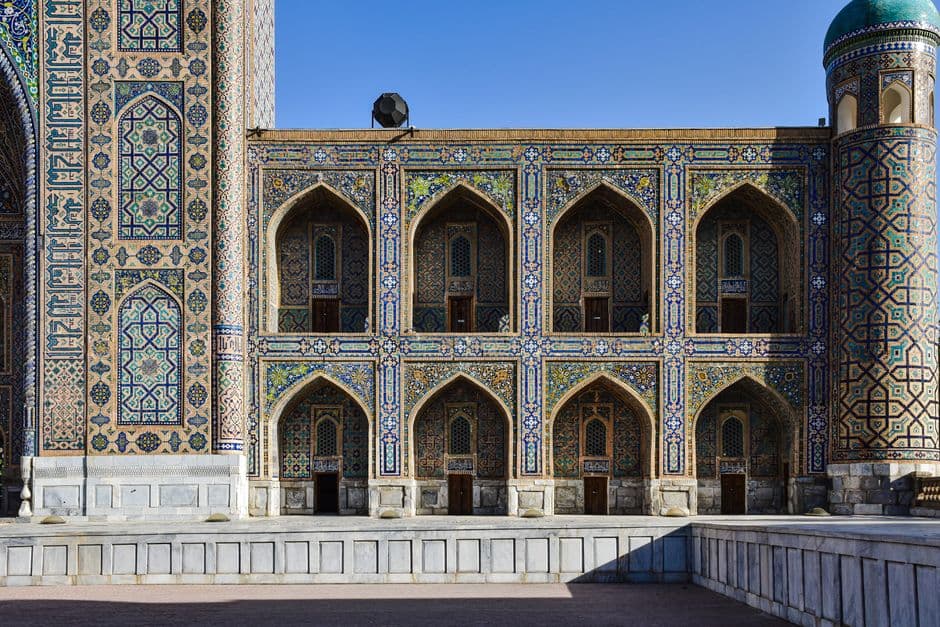
There's no strict dress code in Uzbekistan's cities, but modesty matters most at religious and historic sites — think shoulders and knees covered, comfortable shoes for cobbled streets, and layers for big temperature swings between seasons.
Do I need to cover up at mosques and mausoleums?
Yes. At sites like the Registan in Samarkand, the Kalyan Minaret in Bukhara, and the Shah-i-Zinda necropolis, both men and women should have shoulders and legs covered. Women should carry a scarf to cover their head when entering mosques or mausoleums, though this isn't required in most other places. Some sites offer sarongs or scarves for visitors who arrive uncovered, but availability and condition aren't guaranteed, so it's safer to bring your own. Shoe removal is required at mosques, so sandals that slip on and off easily are practical.
What should I wear day-to-day in cities and rural areas?
Uzbekistan is secular with a Sunni Muslim majority, and religious practice is moderate after decades of Soviet rule, so there's no formal dress code in cities — Tashkent especially sees a wide range of styles. Still, a good general guideline is to keep shoulders and knees covered, since most Uzbek women dress this way regardless of location. Women should avoid tight-fitting clothing, low-cut tops, and shorts, particularly at religious sites, in rural areas, or conservative neighborhoods. Loose pants, maxi skirts, and knee-length-or-longer dresses work well. In rural areas and smaller towns, dress is more conservative overall, and long trousers or skirts help visitors blend in.
What should I pack for the season I'm visiting?
Uzbekistan's climate swings widely. Summer temperatures can climb well above 40°C, so choose breathable fabrics, a hat, and sunglasses. Spring and autumn bring warm days but much cooler evenings, so pack layers — light shirts, trousers, and a jumper. Winter can drop to around -10°C, requiring a warm coat and sturdy shoes. Rain is rare except in early spring, so a lightweight jacket is usually enough to cover most conditions.
What footwear works best for sightseeing?
Comfortable walking shoes are essential, especially in old cities with uneven cobbled streets. Many travelers bring two pairs — one for long walks and one for dressing up. Sandals are especially useful since they're easy to slip off when entering mosques.
FAQ
Do I need to cover my head everywhere in Uzbekistan? No — head covering for women is really only needed inside active mosques or mausoleums. Outside those settings, it's not required.
Are shorts okay for women to wear? It's best to avoid shorts, particularly at religious sites, in rural areas, and in conservative neighborhoods. Loose trousers, maxi skirts, or below-knee dresses are a better fit.
Is Tashkent more relaxed about clothing than smaller towns? Yes — larger cities like Tashkent show a wider range of clothing styles, while smaller towns and rural areas tend to be more conservative.
Sources
- https://www.melaniemay.com/uzbekistan-travel-tips-practical-advice/
- https://yasminatour.uz/what-to-wear-in-uzbekistan-a-complete-guide-for-travelers/
- https://wanderingwheatleys.com/what-to-pack-for-uzbekistan-packing-list/
- https://www.laurassuitcase.com/uzbekistan-packing-list/
- Uzbek Customs and Etiquette: Traveler's Guide
- What to Pack for Uzbekistan: Complete Packing List | Jahongir Travel
- Religion in Uzbekistan: a practical guide | Eastern Paths
- https://www.laurassuitcase.com/first-time-in-uzbekistan/
- Uzbekistan Cultural Guide: Etiquette, Customs, and Tips
Related Topics
Stay Connected Anywhere
Prepaid eSIM data plans for 180+ countries and territories. No physical SIM required.