Mobile Data Roaming: Costs, Risks, and Smarter Choices

Over 40 percent of American international travelers report surprise charges from mobile data roaming each year. Navigating seamless connectivity from Europe to Asia can feel risky when a single video call might cost more than your hotel night. If avoiding roaming fees and protecting your information matter to you, this guide breaks down essential strategies for controlling mobile data costs and ensuring reliable access everywhere your journey takes you.
Table of Contents
- What Is Mobile Data Roaming?
- Types of Mobile Data Roaming Explained
- How Mobile Data Roaming Works
- Costs, Risks, and Common Pitfalls
- Alternatives to Data Roaming for Travelers
Key Takeaways
| Point | Details |
|---|---|
| Understanding Roaming Costs | International mobile data roaming can lead to unexpectedly high charges; always check your carrier’s rates before traveling. |
| Choosing the Right Roaming Type | Familiarize yourself with roaming types such as Home-Routed and Local Breakout to optimize connectivity and security. |
| Utilizing Alternatives | Consider local SIM cards, eSIMs, or public Wi-Fi to avoid high roaming fees and maintain connection abroad. |
| Protecting Your Data | Set strict data limits and use a VPN when accessing public networks to safeguard personal information. |
What Is Mobile Data Roaming?
Mobile data roaming is a wireless technology that allows your smartphone, tablet, or mobile device to connect to cellular networks outside your home carrier’s primary coverage area. When you travel internationally, mobile network connectivity happens automatically through agreements between different telecommunications providers, enabling you to stay connected while abroad.
Technically, roaming works through complex mobility management protocols that authenticate and authorize your device to access foreign networks. When you enable roaming, your mobile device searches for available networks and connects to one that has a partnership with your home carrier. This process happens seamlessly in the background, allowing you to make calls, send texts, and access mobile internet without manually switching settings.
However, roaming isn’t free. Network connection agreements often come with significant additional charges that can quickly escalate your mobile expenses. Carriers typically charge premium rates for data, calls, and text messages used outside your home network, which means international travelers can face unexpectedly high bills if they’re not careful about monitoring their usage.
Pro tip: Before traveling, always check your carrier’s international roaming rates and consider purchasing a local SIM card or using an eSIM to minimize unexpected charges.
Types of Mobile Data Roaming Explained
Mobile data roaming encompasses multiple technical approaches that enable wireless connectivity across different networks. The primary types are distinguished by their network routing mechanisms and authentication methods, with two main architectural models standing out: SIM-based and username-based roaming that provide travelers flexible connectivity options.
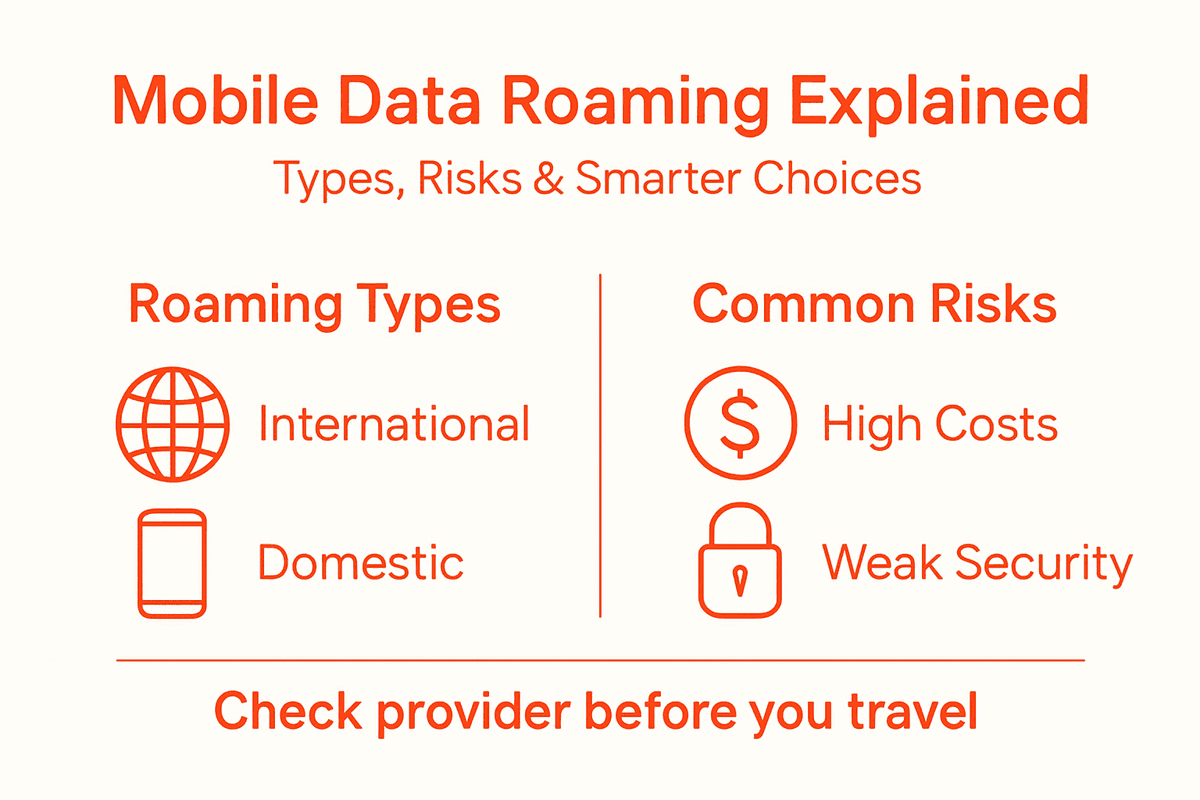
Network routing represents a critical differentiator in roaming types. Two primary data routing architectures emerge in modern telecommunications: Home-Routed and Local Breakout. Home-Routed roaming channels all user data back through the home network, ensuring maximum security and control but potentially introducing higher latency. Local Breakout routing allows data processing directly in the visited network, reducing latency but providing less direct control from the home carrier.
Additionally, roaming types can be categorized by network standards and service domains. These include voice roaming, SMS roaming, and data roaming across various technological generations like GSM, 3G, 4G LTE, and 5G networks. Each type introduces unique technical protocols and billing structures that impact how mobile devices maintain connectivity while traveling internationally.
Pro tip: Always verify your specific device and carrier’s roaming capabilities before international travel to understand exactly which roaming types are supported and potential associated costs.
Here’s a summary comparing key mobile data roaming types and their typical impacts:
| Roaming Type | Network Routing | Security Level | Typical Latency |
|---|---|---|---|
| Home-Routed | Data goes via home carrier | High, managed by home carrier | Slightly higher due to distance |
| Local Breakout | Data handled locally | Varies, depends on visited network | Lower, direct to local network |
| Username-Based | Authenticates on user ID | Depends on carrier implementations | Can be variable |
| SIM-Based | Authenticates via SIM card | Typically reliable, SIM-based security | Standard for most travelers |
How Mobile Data Roaming Works
Mobile data roaming is a sophisticated technological process that enables seamless connectivity when your device travels beyond its home network’s coverage area. Device connection mechanisms involve a complex series of network interactions that happen almost instantaneously, allowing travelers to stay connected across different cellular infrastructures.
The technical process begins when your mobile device scans available networks upon entering a new geographical area. Your device identifies and registers with a visited network (VPLMN) that has a roaming agreement with your home network (HPLMN). This registration triggers an authentication protocol where your home carrier verifies and authorizes the connection, essentially granting temporary permission to use the foreign network’s infrastructure.
Once authenticated, a PDU (Packet Data Unit) session is established, which creates a virtual pathway for data transmission. Roaming authorization procedures involve multiple technical checkpoints that manage billing, validate subscriber permissions, and ensure secure data transfer. These intricate protocols happen in milliseconds, allowing travelers to make calls, send messages, and access mobile internet without interruption.
Pro tip: Always enable international roaming settings only when needed and disable them immediately after use to prevent unexpected data charges and potential security risks.
Costs, Risks, and Common Pitfalls
International mobile data roaming presents significant financial challenges for travelers, with costs that can rapidly escalate beyond expectations. Roaming charges can be staggeringly expensive, often charging several dollars per megabyte of data, which means a single streaming session or large file download could potentially generate hundreds of dollars in unexpected fees.

The risks extend far beyond simple monetary concerns. International mobile roaming agreements create complex regulatory environments where transparency is limited, leaving consumers vulnerable to hidden charges and unpredictable billing structures. Common pitfalls include automatic app updates, background data usage by apps, and inadvertent data consumption that travelers might not even realize is occurring until they receive an astronomical bill.
Security represents another critical concern with mobile data roaming. Public and foreign networks may have weaker security protocols, increasing the potential for data interception, malware exposure, and unauthorized access to personal information. Unsecured networks can create significant vulnerabilities, especially when travelers are accessing sensitive accounts like banking or email services without understanding the potential risks associated with international connections.
Pro tip: Always set strict data usage limits on your device and download a reliable VPN before traveling to protect your personal information and control potential roaming expenses.
Alternatives to Data Roaming for Travelers
Travelers have multiple strategic options to avoid expensive mobile data roaming charges and maintain connectivity while abroad. Wi-Fi connectivity strategies provide the most cost-effective alternative, allowing travelers to leverage free and secure internet access without incurring additional fees.
Purchasing local SIM cards remains a popular and flexible solution for international travelers. These country-specific SIM cards offer significantly lower data rates compared to international roaming plans, enabling users to access local network infrastructures at substantially reduced costs. Dual SIM devices further enhance this approach, allowing seamless switching between home and local network providers without compromising communication capabilities.
Advanced technological solutions like eSIMs and global data packages represent increasingly sophisticated alternatives to traditional roaming. These digital solutions provide travelers with pre-purchased data packages that can be activated instantly, offering predictable pricing and comprehensive coverage across multiple countries. Some specialized services even allow users to purchase data in smaller increments, providing unprecedented flexibility for short-term international travel.
Pro tip: Download offline maps, translation apps, and essential travel information before departure to minimize data usage and reduce reliance on cellular networks while traveling internationally.
The following table highlights alternative connectivity options for travelers and their core benefits:
| Travel Connectivity Option | Main Advantage | Limitation |
|---|---|---|
| Local SIM Card | Lower rates, local coverage | Requires SIM swap |
| eSIM/Data Packages | Instant activation, flexibility | May have device restrictions |
| Public Wi-Fi | Free or low cost | Potential security risks |
| Offline Apps | No data use, reliable access | Limited features offline |
Avoid Costly Mobile Data Roaming With Smarter Connectivity Choices
Mobile data roaming can cause unexpected expenses and security concerns when traveling internationally. As the article highlights, roaming charges and risks like data interception can seriously impact your trip and budget. You want a solution that eliminates hidden fees while giving you fast and reliable internet access across countries. Traditional roaming options often fall short because they either route your data through your home network or leave you vulnerable on local networks.
Discover how Lumo offers an innovative eSIM platform designed to solve these common roaming headaches. With instant activation and the ability to switch between local carriers in over 160 countries, Lumo helps you avoid expensive roaming fees while staying securely connected on 5G and 4G networks. Its flexible data plans and support for multiple devices put you in control of your connectivity wherever you go. Say goodbye to worrying about unexpected data charges or security risks by visiting Lumo’s website and start simplifying your global mobile experience today.
Frequently Asked Questions
What is mobile data roaming?
Mobile data roaming is a service that allows your mobile device to connect to networks outside of your home carrier’s coverage area when traveling internationally. It enables you to make calls, send texts, and access mobile internet seamlessly.
How does mobile data roaming work?
Mobile data roaming works by registering your device with a visited network that has agreements with your home carrier. This process involves authentication and establishing a secure connection for data transmission almost instantaneously.
What are the risks associated with mobile data roaming?
The risks of mobile data roaming include high costs due to additional charges, potential security vulnerabilities when connecting to unsecured networks, and unexpected data consumption from automatic app updates and background usage.
What are some alternatives to data roaming when traveling?
Alternatives to data roaming include using local SIM cards for lower rates, leveraging eSIMs and global data packages for flexibility, connecting to public Wi-Fi for free internet access, and downloading offline apps to minimize data usage.
Recommended
- How to Avoid Roaming Fees and Stay Connected Abroad | Lumo eSIM Store
- 7 Key Advantages of Global eSIM Plans for Travelers | Lumo eSIM Store
- Why Business Travelers Need eSIM Solutions | Lumo eSIM Store
- 7 Types of eSIMs Every Global Traveler Should Know | Lumo eSIM Store
- Wi-Fi for International Travelers: List
Related Topics
Stay Connected Anywhere
Prepaid eSIM data plans for 180+ countries and territories. No physical SIM required.