Multi-Device eSIMs: Streamlined Connectivity Anywhere

Most American and European remote workers know the pain of juggling multiple SIM cards or paying surprise roaming fees just to stay connected abroad. With over 500 million eSIM-enabled devices now in circulation globally, tech professionals and frequent flyers are shifting to multi-device solutions that offer real flexibility. This guide sheds light on how multi-device eSIMs redefine global connectivity, helping you stay connected across all your devices while cutting costs during international travel.
Table of Contents
- Multi-Device eSIMs Defined and Debunked
- Supported Devices and eSIM Profile Limits
- How Multi-Device Activation and Management Works
- Benefits for Travelers and Remote Work
- Key Challenges: Security, Costs, and Data Sharing
Key Takeaways
| Point | Details |
|---|---|
| Multi-Device eSIMs Offer Flexibility | These digital SIMs allow users to manage multiple network profiles on various devices, enabling seamless switching and enhanced connectivity. |
| Growing Adoption Across Devices | Most flagship devices made since 2018 support eSIM technology, reflecting its mainstream acceptance among global travelers and remote professionals. |
| Streamlined Activation Process | Remote SIM provisioning simplifies the activation of new cellular profiles, allowing for quick and easy network changes without physical intervention. |
| Security and Cost Considerations | While eSIMs offer advanced security features, users must be aware of potential cybersecurity risks and the financial impact of initial implementation costs. |
Multi-Device eSIMs Defined and Debunked
A multi-device eSIM represents a cutting-edge digital connectivity solution that allows travelers and remote professionals to manage mobile network access across multiple devices without traditional physical SIM card limitations. Unlike standard SIM cards, eSIM technology enables connection to mobile network operators via remote provisioning, allowing instant switching between cellular plans and carriers.
The core innovation behind multi-device eSIMs lies in their embedded software architecture. These digital SIM profiles are permanently integrated into device hardware, supporting multiple network operator profiles simultaneously. This means you can store and switch between different cellular plans on smartphones, tablets, laptops, and wearables with unprecedented flexibility. Most flagship devices manufactured since 2018 now support this technology, reflecting its growing mainstream adoption among tech-savvy professionals.
Key characteristics of multi-device eSIMs include their ability to store multiple network profiles, enable instant carrier switching, and provide enhanced security through remote management. Unlike physical SIM cards, these digital profiles cannot be physically removed or transferred between devices without specialized technical support. The Global System for Mobile Communications Association (GSMA) maintains standardized protocols to ensure consistent performance and user experience across different manufacturers and network operators.
Pro tip: When selecting a multi-device eSIM solution, verify the number of simultaneous network profiles supported and check compatibility with all your primary devices to maximize connectivity flexibility.
Supported Devices and eSIM Profile Limits
eSIM technology has rapidly expanded to support a diverse range of devices, transforming how professionals and travelers manage mobile connectivity. Worldwide device shipments now exceed 500 million eSIM-enabled units, spanning consumer electronics, enterprise equipment, and industrial Internet of Things (IoT) platforms. The technology supports multiple device categories including smartphones, tablets, laptops, smartwatches, and specialized industrial hardware.
Device manufacturers and cellular carriers carefully manage eSIM profile limits to maintain system stability and performance. Most flagship devices manufactured since 2018 support multiple carrier profiles, though with specific restrictions. Typically, devices can store several network profiles simultaneously, but only activate one profile at a time. This approach provides flexibility while preventing network conflicts and ensuring secure, controlled connectivity across different devices and regions.
The technical specifications for eSIM profile management vary by device type and manufacturer. Consumer smartphones might support 5-10 stored profiles, while enterprise and IoT devices could have more complex configuration options. Key considerations include profile storage capacity, activation speed, and the ability to switch between networks seamlessly. Remote provisioning capabilities allow users to download and activate new cellular profiles without physical SIM card replacements, streamlining the connectivity experience for mobile professionals.
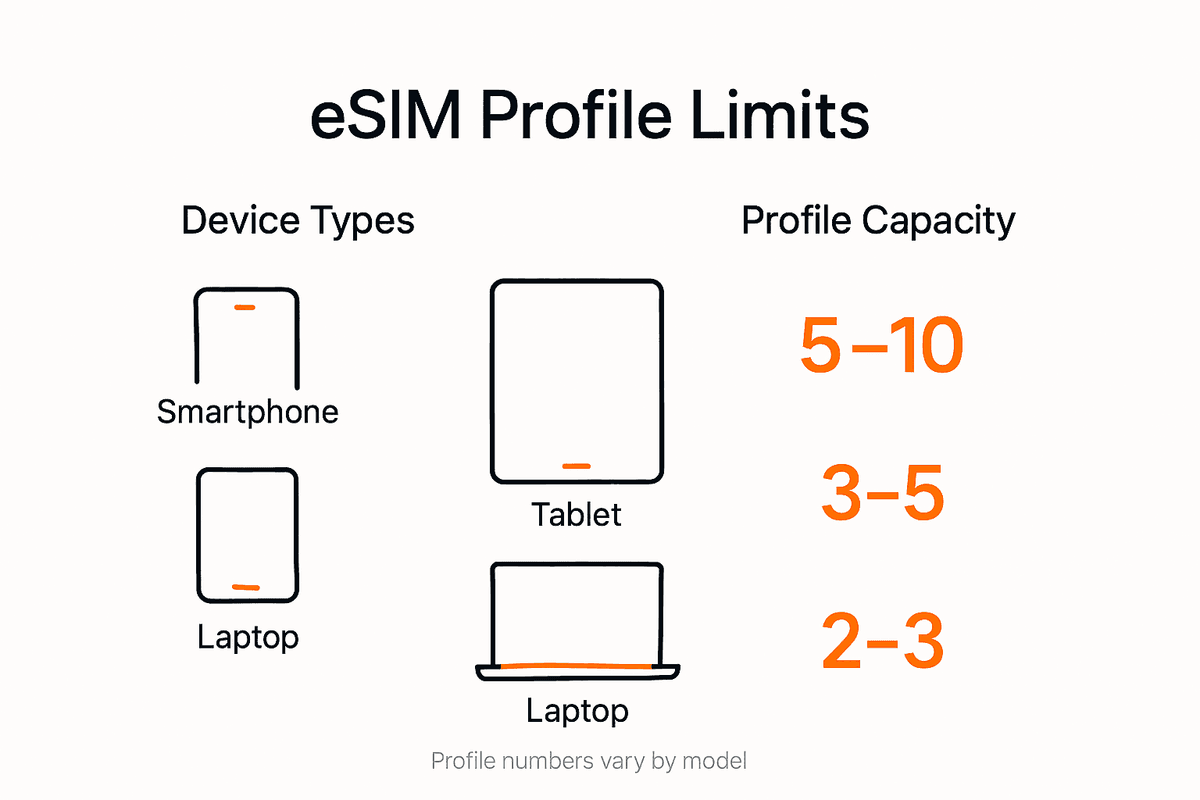
Pro tip: Before traveling, verify your specific device’s eSIM profile limits and confirm compatibility with your intended cellular networks to ensure uninterrupted global connectivity.
Here’s a quick overview of how eSIM capabilities differ across common device types:
| Device Type | Profile Storage Capacity | Typical Activation Speed | Special Use Case |
|---|---|---|---|
| Smartphones | 5-10 profiles | Instant (seconds) | Global roaming support |
| Tablets | 2-5 profiles | Fast (seconds) | Multi-network productivity |
| Laptops | 1-3 profiles | Moderate (minutes) | Secure business connectivity |
| Smartwatches | 1-2 profiles | Quick (seconds) | Fitness and travel tracking |
| IoT Hardware | Varies (up to 20) | Flexible (varies) | Remote monitoring and control |
How Multi-Device Activation and Management Works
Multi-device eSIM activation represents a sophisticated technological process that enables seamless connectivity across various digital platforms. The Global System for Mobile Communications Association (GSMA) has established Remote SIM Provisioning (RSP) standards that govern how devices download, authenticate, and manage cellular network profiles through embedded universal integrated circuit cards (eUICC).

The core of multi-device eSIM management relies on specialized software components called Local Profile Assistants (LPA). These assistants facilitate secure communication between devices and Subscription Manager Data Preparation servers, enabling users to download, enable, disable, and delete cellular profiles without physical intervention. The LPA operates either directly within device software or integrated into the eUICC chip, providing a robust framework for managing multiple network configurations simultaneously.
Technical activation involves a complex yet streamlined process. When a user selects a new cellular profile, the device initiates a secure authentication sequence with the carrier’s subscription management system. This process verifies the user’s credentials, checks device compatibility, and downloads the appropriate network configuration. Once authenticated, the profile becomes available for activation, allowing instant switching between different cellular networks without requiring physical SIM card replacements. This approach provides unprecedented flexibility for professionals who require consistent connectivity across smartphones, tablets, laptops, and other smart devices.
Pro tip: Always maintain updated device firmware and check carrier compatibility to ensure smooth eSIM profile downloads and activations across your multi-device ecosystem.
Benefits for Travelers and Remote Work
eSIM technology transforms connectivity for modern professionals and global travelers, offering unprecedented flexibility and cost-effectiveness. Travelers can now instantly access local mobile data plans upon international arrival, eliminating the traditional hassles of purchasing local SIM cards and navigating complex roaming charges. This digital solution allows users to retain their home phone number while simultaneously utilizing local data plans, dramatically reducing communication expenses.
Remote workers particularly benefit from multi-device eSIM capabilities that ensure continuous, reliable connectivity across different geographical regions. Digital SIM profiles enable seamless network access globally, simplifying onboarding processes and enhancing overall user experience. The ability to quickly switch between local and home network operators means professionals can maintain productivity without interruption, regardless of their physical location.
The strategic advantages of eSIM technology extend beyond basic connectivity. Professionals can now manage multiple network profiles simultaneously, optimize data plans based on local pricing, and maintain secure connections through advanced authentication protocols. This approach provides unprecedented control over mobile connectivity, allowing travelers and remote workers to adapt their communication strategy in real-time, without the logistical challenges of traditional SIM card management.
Pro tip: Before international travel, research and preload eSIM profiles for your destination countries to ensure immediate connectivity upon arrival and avoid unexpected roaming fees.
Key Challenges: Security, Costs, and Data Sharing
eSIM security represents a complex technological landscape with significant potential risks and innovative protective measures. Cryptographic protections and secure key storage technologies have been developed to mitigate potential cybersecurity threats, including advanced challenges like profile cloning, unauthorized access, and sophisticated remote attacks. These security mechanisms are crucial in maintaining user trust and protecting sensitive digital communication infrastructure.
The financial implications of eSIM technology extend beyond initial implementation costs. Carriers and manufacturers must invest substantially in infrastructure deployment and ensuring comprehensive device compatibility across different regions and network standards. These expenses potentially translate into higher upfront costs for consumers, though long-term savings through flexible data plans can offset initial investment barriers. The complexity of creating interoperable systems across diverse technological ecosystems further complicates cost structures.
Data sharing emerges as a critical challenge, requiring robust governance frameworks to balance operational necessities with individual privacy protections. The dynamic nature of eSIM technology, which enables multiple network profiles and cross-carrier data exchanges, necessitates stringent regulatory compliance and transparent user consent mechanisms. Industry organizations like the GSMA are actively developing standards to ensure secure, ethical data management practices that protect user information while maintaining technological innovation.
Pro tip: Always review the privacy policies of your eSIM provider and understand their data sharing practices before activating multiple network profiles.
The table below summarizes key business benefits and challenges of multi-device eSIM adoption:
| Aspect | Business Benefit | Potential Challenge |
|---|---|---|
| Flexibility | Instant global network access | Device compatibility issues |
| Cost Savings | Use local data rates abroad | Higher upfront costs |
| Security | Advanced remote management | Sophisticated cyber risks |
| Data Handling | Simplified cross-device sync | Regulatory compliance needs |
Experience Seamless Multi-Device eSIM Connectivity with Lumo
The challenge of managing multiple network profiles across smartphones, tablets, and laptops while traveling or working remotely can be complex and frustrating. This article highlights common pain points such as device compatibility, profile limits, and the need for instant carrier switching without physical SIM cards. Lumo addresses these concerns by offering an all-in-one eSIM solution designed to simplify global connectivity. With support for multiple eSIM profiles and rapid activation, you can enjoy instant access to local carriers and flexible data plans in over 160 countries without worrying about roaming charges or complicated setups.
Take control of your connectivity today by exploring Lumo’s innovative eSIM services. Benefit from high-speed 5G/4G networks and easy profile management across all your devices. Empower your global lifestyle with convenience and affordability—visit https://lumo.to now to start your seamless multi-device eSIM journey and stay connected anywhere, anytime.
Frequently Asked Questions
What is a multi-device eSIM and how does it work?
A multi-device eSIM is a digital SIM technology that allows users to manage mobile network access across multiple devices without needing physical SIM cards. It enables users to store and switch between different network profiles on their devices through remote provisioning.
How many network profiles can typically be stored on devices using multi-device eSIM technology?
Most flagship devices can store several network profiles simultaneously, typically ranging from 5 to 10 profiles for smartphones, while tablets may support 2 to 5 profiles. IoT devices can vary significantly, sometimes supporting up to 20 profiles.
What are the benefits of using multi-device eSIMs for travelers?
Travelers benefit from multi-device eSIMs by gaining instant access to local mobile data plans upon arrival, which eliminates the need to purchase local SIM cards. This technology also allows users to maintain their home number while utilizing local data plans, reducing communication costs.
How does multi-device eSIM activation and management work?
Multi-device eSIM activation involves a process governed by Remote SIM Provisioning (RSP) standards, where devices use Local Profile Assistants (LPA) to securely download and manage cellular profiles. This allows users to switch between networks instantly without needing to change physical SIM cards.
Recommended
Related Topics
Stay Connected Anywhere
Prepaid eSIM data plans for 180+ countries and territories. No physical SIM required.