Multi-Device eSIM: Streamlining Global Connectivity

More than 60 percent of American digital nomads struggle to manage data across multiple devices while traveling internationally. Staying reliably connected between tablets, wearables, and laptops can make or break visa runs, remote projects, and everyday communication. Multi-device eSIM technology has transformed how global travelers handle mobile service, offering instant carrier switching and reduced roaming fees. Discover the practical features and pitfalls that matter when using eSIM for seamless connectivity worldwide.
Table of Contents
- Defining Multi-Device eSIM Technology
- Supported Device Types And Variations
- How eSIM Profiles Enable Seamless Switching
- Comparing Costs And Data Management
- Common Pitfalls And Security Concerns
Key Takeaways
| Point | Details |
|---|---|
| Multi-device eSIM Technology | Users can manage multiple cellular profiles across various devices, allowing seamless switching between carriers without physical SIM cards. |
| Supported Device Categories | eSIM technology supports an extensive range of devices, including smartphones, tablets, laptops, wearables, IoT devices, and automotive systems, enhancing global connectivity. |
| Cost and Data Management | eSIM minimizes costs associated with traditional SIM management, enabling users to optimize mobile expenses and reduce roaming charges through flexible data plan selection. |
| Security Considerations | Users must remain vigilant against security challenges like profile hijacking and implement strong authentication measures to secure their eSIM profiles. |
Defining Multi-Device eSIM Technology
Multi-device eSIM technology represents a significant leap forward in digital connectivity, enabling users to manage multiple cellular profiles across different devices without physical SIM card limitations. Unlike traditional SIM cards, eSIM (embedded SIM) allows remote provisioning and management of mobile network credentials, giving travelers unprecedented flexibility in global communication.
The core innovation behind multi-device eSIM lies in its ability to support multiple network profiles simultaneously across smartphones, tablets, laptops, and wearables. This technology fundamentally transforms how global travelers connect, offering seamless switching between carriers and reducing the complexity of managing international mobile services. According to research from GSMA, consumer eSIM architectures now support diverse device ranges, enabling users to maintain connectivity across an entire ecosystem of personal technology.
Key characteristics of multi-device eSIM technology include:
- Remote profile management
- Ability to store multiple network credentials
- Instant carrier switching without physical interventions
- Enhanced device security through digital authentication
- Space-saving design eliminating traditional SIM card slots
Pro tip: Always verify your device’s eSIM compatibility and check carrier support before international travel to ensure smooth connectivity across your devices.
Supported Device Types and Variations
Multi-device eSIM technology has dramatically expanded connectivity options across an increasingly diverse range of electronic devices. eSIM architectures now support multiple device categories, transforming how digital systems communicate and interact. These device types range from consumer electronics to complex industrial systems, each with unique connectivity requirements and technological specifications.
The primary device categories supporting multi-device eSIM technology include:
- Smartphones: Primary consumer devices with comprehensive eSIM integration
- Tablets: Portable computing devices supporting flexible network profiles
- Laptops: Professional devices enabling remote work connectivity
- Wearables: Smartwatches and fitness trackers with compact eSIM implementations
- IoT Devices: Sensors, industrial equipment, and smart home technologies
- Automotive Systems: Connected vehicles with embedded communication capabilities
Each device type presents unique challenges and opportunities for eSIM implementation. Research demonstrates that IoT and consumer device architectures require specific adaptations to support multiple network profiles effectively. The flexibility of eSIM technology allows manufacturers to design devices with streamlined form factors, eliminating traditional physical SIM card constraints and enabling more sophisticated connectivity solutions.

Here’s how eSIM connectivity varies across common device categories:
| Device Category | Connectivity Use Case | Typical Benefits |
|---|---|---|
| Smartphones | Personal communications, travel | Flexible profiles, instant carrier switching |
| Laptops | Mobile productivity, remote work | Streamlined international data access |
| Wearables | Health monitoring, quick messaging | Compact design, seamless pairing |
| IoT Devices | Automation, tracking, sensors | Central management, large-scale deployment |
| Automotive Systems | Vehicle diagnostics, infotainment | Continuous network access while mobile |
Pro tip: When selecting devices, verify individual eSIM compatibility and profile management capabilities to ensure seamless multi-device connectivity.
How eSIM Profiles Enable Seamless Switching
eSIM profiles represent a revolutionary approach to mobile connectivity, enabling users to transition between network providers with unprecedented ease. These digital credentials act as virtual SIM cards, stored directly within a device’s embedded chip, allowing instantaneous network switching without physical SIM card replacements.
The seamless switching mechanism of eSIM profiles operates through several key technical capabilities:
- Remote Provisioning: Instantly download and activate new network profiles
- Simultaneous Profile Storage: Store multiple carrier credentials simultaneously
- One-Touch Activation: Switch networks with minimal user intervention
- Secure Authentication: Encrypted digital credentials prevent unauthorized access
- Global Compatibility: Support for international carrier networks
Unlike traditional SIM cards, eSIM profiles provide granular control over network selection. Users can strategically choose carriers based on real-time factors like signal strength, data pricing, and regional coverage. This dynamic switching capability transforms how travelers and remote professionals manage their mobile connectivity, offering unprecedented flexibility and cost-effectiveness across different geographic regions.
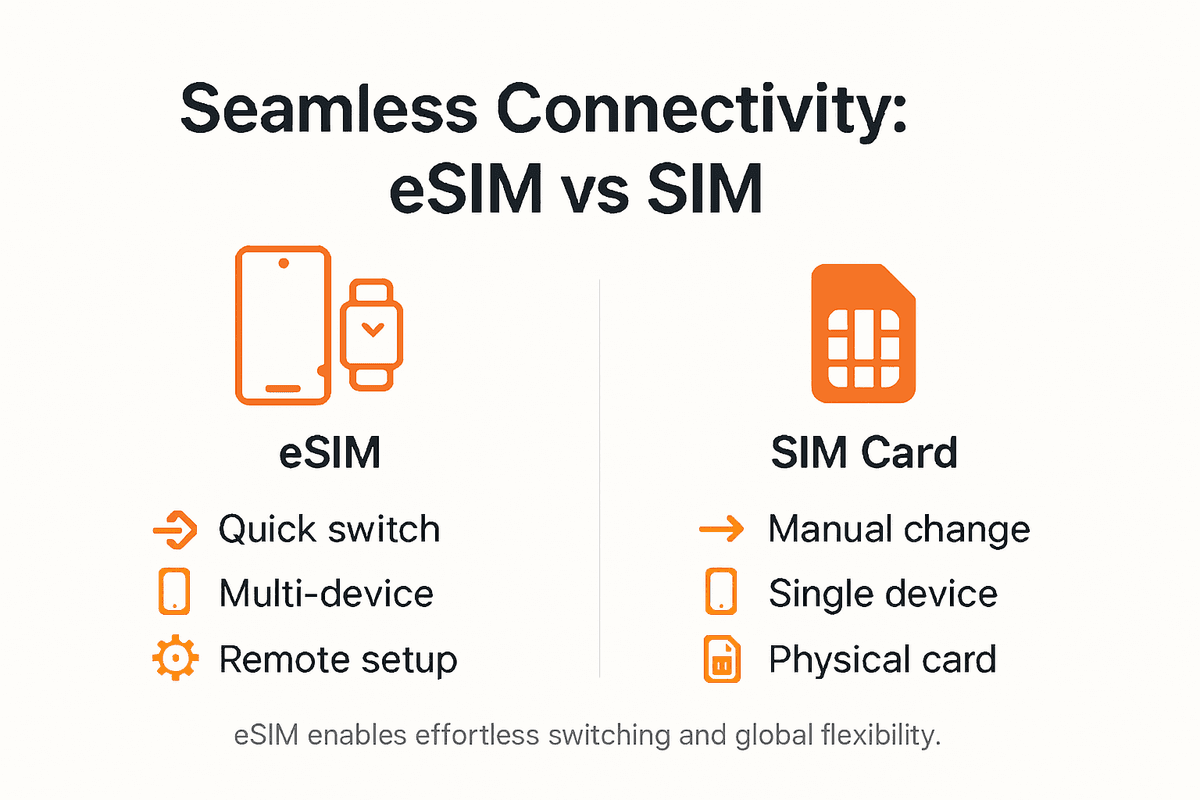
Comparison of eSIM vs. traditional SIM card approaches:
| Attribute | eSIM Approach | Traditional SIM Card |
|---|---|---|
| Profile Management | Remote and digital | Requires physical swap |
| Device Form Factor | No SIM slot needed | Requires SIM slot |
| Switching Carriers | Fast and remote | Manual replacement |
| Security Updates | Over-the-air possible | Physical replacement only |
Pro tip: Always maintain backups of your eSIM profiles and verify carrier compatibility before international travel to ensure uninterrupted connectivity.
Comparing Costs and Data Management
Multi-device eSIM technology fundamentally transforms mobile data economics by dramatically reducing operational costs associated with traditional connectivity management. Unlike conventional SIM card systems that require physical distribution and manual profile management, eSIM enables centralized digital provisioning, allowing users to optimize their mobile expenses with unprecedented precision.
Cost advantages of eSIM technology include:
- Elimination of Physical SIM Costs: No manufacturing or shipping expenses
- Flexible Data Plan Selection: Easy switching between carriers and plans
- Granular Usage Tracking: Real-time monitoring of data consumption
- Reduced Roaming Charges: Instant local network selection
- Bulk Management: Simplified administration for multiple devices
Research demonstrates that eSIM solutions can significantly reduce subscription management complexity, particularly for travelers and businesses managing multiple devices across different geographic regions. The ability to dynamically adjust data plans without physical intervention represents a substantial economic advantage, enabling users to make rapid, cost-effective connectivity decisions based on real-time requirements and regional pricing variations.
Pro tip: Regularly audit your eSIM profiles and data plans to identify potential cost-saving opportunities and optimize your mobile connectivity expenses.
Common Pitfalls and Security Concerns
Multi-device eSIM technology, while revolutionary, introduces complex security challenges that users and organizations must carefully navigate. Researchers have identified significant vulnerabilities in remote profile management and unauthorized access mechanisms, highlighting the critical need for robust security frameworks in eSIM deployments.
The primary security concerns and potential pitfalls include:
- Profile Hijacking: Risk of unauthorized profile cloning or replacement
- Remote Provisioning Vulnerabilities: Potential encryption weaknesses during digital credential transfers
- Device Compatibility Issues: Inconsistent security standards across different manufacturers
- Data Interception: Risks associated with wireless network profile exchanges
- Privacy Exposure: Potential tracking through persistent digital identifiers
Effective mitigation strategies require a multi-layered approach to eSIM security. Users must implement strong authentication protocols, regularly update device firmware, and maintain vigilant monitoring of their digital network profiles. The complexity of managing multiple device profiles demands a proactive security mindset, with continuous assessment of potential vulnerabilities and rapid response to emerging technological risks.
Pro tip: Enable two-factor authentication for your eSIM profiles and regularly audit your connected devices to prevent unauthorized network access.
Experience Effortless Multi-Device eSIM Connectivity with Lumo
Managing multiple eSIM profiles across smartphones, tablets, and laptops can be overwhelming without the right platform. The article highlights challenges like remote provisioning, instant carrier switching, and securing your profiles while traveling or working remotely. If you want to eliminate the hassle of physical SIM cards and enjoy seamless, global data access, you need a solution designed specifically for the modern digital lifestyle.
Lumo offers an all-in-one eSIM solution that matches the flexibility described in the article. With support for over 160 countries and multiple devices, Lumo empowers you to switch carriers instantly and avoid roaming fees without worrying about compatibility or security. Discover how easy managing multi-device eSIM profiles can be with features like rapid QR code activation, high-speed 5G/4G connectivity, and reliable 24/7 customer support.
Ready to streamline your global connectivity and take control of your mobile data plans? Visit Lumo now to explore our flexible eSIM options and experience true freedom in global communication. Learn more about how our platform simplifies managing multiple profiles and why thousands of travelers and professionals trust us for seamless, secure connectivity. Start your journey with Lumo today and never worry about international roaming or costly data plans again.
Frequently Asked Questions
What is multi-device eSIM technology?
Multi-device eSIM technology allows users to manage multiple cellular profiles across various devices without the limitations of physical SIM cards. This technology enables remote provisioning and management of mobile network credentials, enhancing connectivity for global travelers.
How does eSIM technology support seamless switching between carriers?
eSIM technology enables seamless switching by allowing users to store multiple network profiles on a single device. Users can switch between carriers instantly without needing to replace a physical SIM card, making it convenient for travelers who need flexible connectivity options.
What types of devices support multi-device eSIM technology?
Multi-device eSIM technology is compatible with a range of devices, including smartphones, tablets, laptops, wearables, IoT devices, and automotive systems. This flexibility allows for extensive connectivity across various personal and industrial applications.
What are the cost benefits of using eSIM instead of traditional SIM cards?
Using eSIM technology can significantly reduce costs associated with physical SIM cards, such as manufacturing and shipping expenses. It also allows for flexible data plan selection, real-time data usage tracking, and reduced roaming charges, providing better economic management for mobile connectivity.
Recommended
Related Topics
Stay Connected Anywhere
Prepaid eSIM data plans for 180+ countries and territories. No physical SIM required.