Role of eSIM in Connectivity – Why It Matters Now

Switching between mobile networks in countries like France, Mexico, or Japan used to mean fumbling with tiny SIM cards or paying frustratingly high roaming fees. For frequent travelers and North American digital nomads, the rise of eSIM technology based on GSMA specifications is transforming how you stay globally connected. Learn the core concepts of eSIM, how it enables seamless international connections, and why flexible, cost-effective data plans matter for travelers who need reliable service everywhere they go.
Table of Contents
- Defining eSIM and Its Core Concepts
- How eSIM Transforms Global Travel Connectivity
- Multiple Profiles and Device Compatibility Explained
- Cost Benefits Versus Traditional Roaming Methods
- Key Challenges and What Travelers Should Know
Key Takeaways
| Point | Details |
|---|---|
| eSIM integration offers flexibility | eSIM technology allows users to switch mobile carriers and manage multiple profiles seamlessly, enhancing convenience in connectivity. |
| Cost-effective for travelers | eSIM reduces expenses by providing local data plans that can be up to 75% cheaper than traditional roaming. |
| Device compatibility is crucial | Not all devices support eSIM technology or multiple profiles; verifying compatibility is essential before travel. |
| Research local network support | Travelers should investigate eSIM availability and network compatibility in their destination countries for smooth connectivity. |
Defining eSIM and Its Core Concepts
An eSIM (embedded SIM) represents a digital alternative to traditional physical SIM cards, enabling wireless carriers and devices to manage mobile network connectivity through software instead of removable hardware. Unlike traditional SIM cards that require manual insertion and replacement, eSIMs are permanently integrated into devices, offering a more flexible and streamlined approach to mobile connectivity.
The core architecture of eSIM technology is defined by GSMA specifications which establish a standardized framework for remote SIM provisioning. This innovative technology allows devices to securely store multiple network profiles simultaneously, giving users unprecedented flexibility in managing cellular connections. Key characteristics include:
- Permanent hardware integration within smartphones, tablets, and IoT devices
- Ability to switch between mobile carriers without physical SIM swaps
- Enhanced security through encrypted digital profile management
- Support for simultaneous multiple network profiles
Understanding eSIM goes beyond technical specifications. Remote provisioning capabilities represent a significant advancement in mobile connectivity, allowing users to download and activate cellular plans directly through digital interfaces. This means travelers can acquire local data plans instantly, without visiting physical stores or waiting for physical SIM cards to arrive.
Here’s a comparison of eSIM and traditional SIM cards by core features and travel impact:
| Criterion | eSIM Technology | Traditional SIM Card |
|---|---|---|
| Setup method | Remote digital provisioning | Physical card insertion |
| Network switching | Instantly via software | Requires hardware swap |
| Profile management | Store multiple network profiles | Single profile per card |
| Security | Encrypted digital management | Standard physical protection |
| Travel convenience | Activate plans before arrival | Buy SIM in destination |
| Cost predictability | Transparent, local pricing | Often unpredictable |
Pro tip: When traveling internationally, research eSIM compatibility with your specific device model and preferred mobile carriers to ensure seamless connectivity before your trip.
How eSIM Transforms Global Travel Connectivity
eSIM technology is revolutionizing international travel connectivity by providing travelers with unprecedented flexibility and convenience. Traditional mobile roaming strategies often involved expensive international plans, complex carrier negotiations, and limited network options. Global travel connectivity now enables seamless network switching without physical SIM card limitations.
The transformative power of eSIM lies in its ability to instantly activate local data plans across different countries. Travelers can now download and switch between mobile carriers digitally, eliminating the need to purchase local SIM cards or pay exorbitant roaming charges. This technological breakthrough means professionals and tourists can maintain consistent internet connectivity while dramatically reducing communication expenses.
Key advantages of eSIM for global travelers include:
- Instant network activation in multiple countries
- Cost-effective local data plan selections
- No physical SIM card swapping required
- Enhanced security through digital profile management
- Support for simultaneous multiple network profiles
International roaming solutions are rapidly evolving, with more mobile carriers and device manufacturers embracing eSIM technology. This shift empowers travelers to stay connected effortlessly, selecting optimal network plans based on coverage, speed, and pricing in real-time. The digital nature of eSIM eliminates traditional barriers of international mobile communication.
Pro tip: Before international travel, research and preload eSIM profiles for your destination countries to ensure immediate connectivity upon arrival.
Multiple Profiles and Device Compatibility Explained
Multiple Enabled Profiles (MEP) represent a groundbreaking advancement in eSIM technology, enabling users to manage several network profiles simultaneously on a single device. Android supports multiple eSIM profiles from Android 13 onwards, allowing unprecedented flexibility in network connectivity. This technological breakthrough means travelers and professionals can switch between networks with unprecedented ease.

The core advantage of multiple eSIM profiles lies in their ability to support diverse connectivity needs. Business travelers, for instance, can maintain separate personal and work network profiles on the same device, eliminating the need for multiple physical SIM cards. These digital profiles can be activated, deactivated, or switched instantaneously, providing granular control over mobile connectivity.
Key characteristics of multiple eSIM profiles include:
- Simultaneous support for two or more network connections
- Instant profile switching without physical hardware changes
- Separate billing and data management for each profile
- Enhanced security through isolated network configurations
- Compatibility across smartphones, tablets, and IoT devices
Device manufacturers are rapidly expanding eSIM compatibility, collaborating with chipset vendors to integrate Multiple Enabled Profiles into their hardware. This evolution means consumers can expect more flexible, interconnected mobile experiences that adapt to their complex communication requirements. The technology transforms mobile devices from single-network tools to dynamic, adaptable communication platforms.
Pro tip: Before purchasing a new device, verify its eSIM multiple profile support to ensure maximum connectivity flexibility.
Below is a quick reference table for common eSIM compatibility considerations when selecting devices or planning travel:
| Device Type | Samsung Galaxy S Series | iPhone (XS onward) | Google Pixel (3 onward) | Tablets & IoT Devices |
|---|---|---|---|---|
| eSIM Support | Most models | All models since XS | All models since Pixel 3 | Growing, varies by maker |
| Multi-profile | S23, S24 and newer | Limited, future updates | Android 13 and newer | Varies; check specs |
| International use | Wide, some restrictions | Excellent, broad | Broad, some gaps | Depends on region |
Cost Benefits Versus Traditional Roaming Methods
Traditional roaming methods have long been a financial burden for international travelers, with unexpected charges and complex billing structures creating significant stress and unpredictability. Travel eSIM technologies dramatically reduce connectivity costs by eliminating intermediary networks and providing direct, transparent pricing models. This fundamental shift means travelers can now predict and control their mobile expenses with unprecedented accuracy.
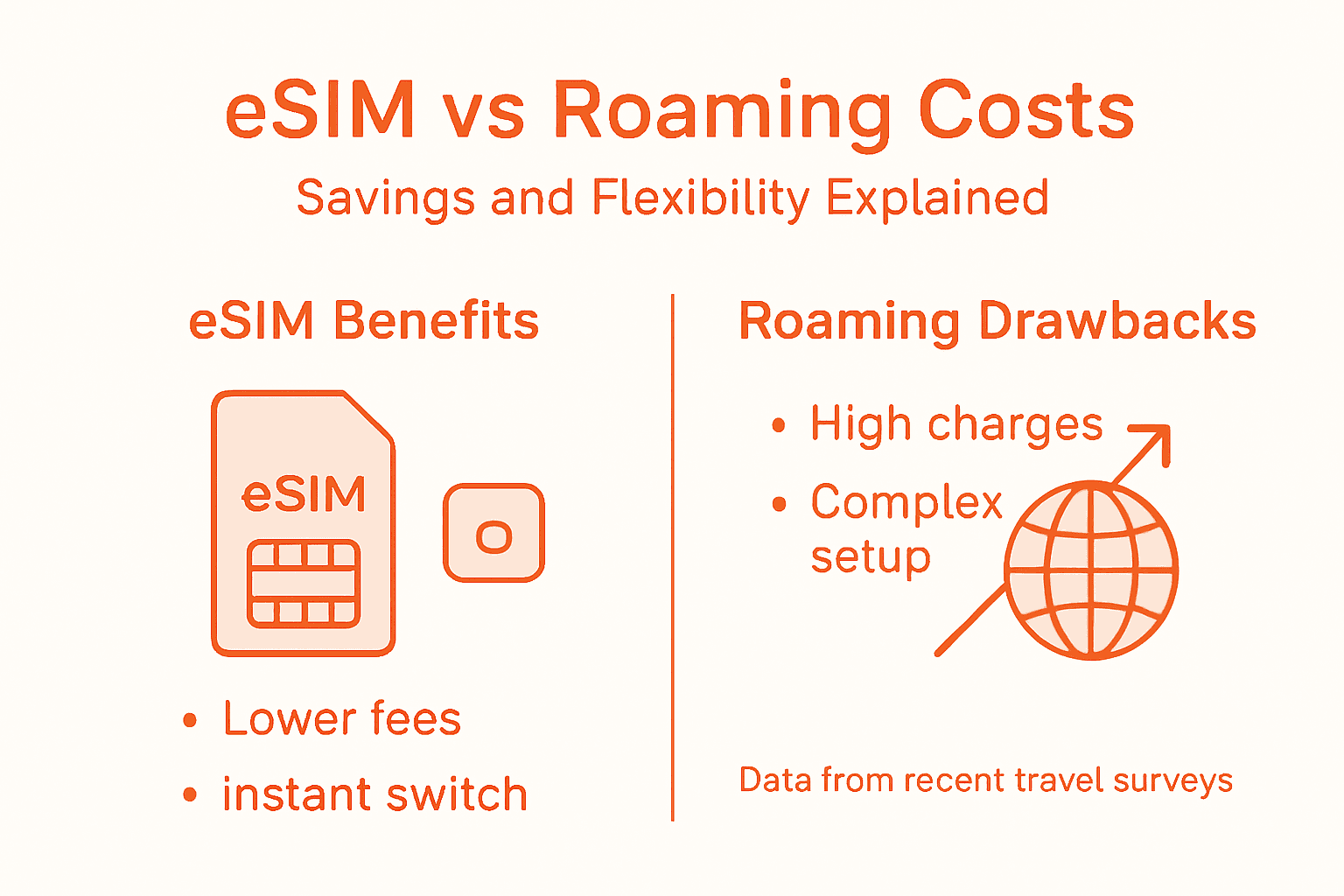
The cost difference between traditional roaming and eSIM is substantial. Where conventional roaming often charges exorbitant per-minute or per-megabyte rates, eSIM providers offer localized data plans that can be up to 75% cheaper. International travelers can now purchase precisely the amount of data they need, without overpriced packages or hidden fees that plague traditional carrier agreements.
Key cost advantages of eSIM over traditional roaming include:
- Transparent, upfront pricing without surprise charges
- Ability to purchase local data packages in smaller increments
- Elimination of expensive international roaming fees
- Direct connection to local networks at local rates
- Precise control over data consumption and spending
The digital nature of eSIM fundamentally transforms mobile connectivity economics. By removing complex international agreements and reducing operational overhead, eSIM providers can offer more competitive pricing. Travelers benefit from a straightforward, predictable model that treats mobile data as a flexible, on-demand resource rather than an expensive, complicated service.
Pro tip: Calculate your expected data usage before traveling and purchase a targeted eSIM package to maximize cost savings and avoid unnecessary expenses.
Key Challenges and What Travelers Should Know
eSIM technology is not without its complexities, and travelers should approach this innovative connectivity solution with informed expectations. Global adoption challenges persist across different regions, creating potential hurdles for seamless international use. Network compatibility, regulatory variations, and inconsistent standards mean travelers cannot assume universal functionality.
Consumer awareness remains a significant barrier to widespread eSIM adoption. Many travelers are unfamiliar with the technology, leading to hesitation and misconceptions about setup complexity and potential costs. Despite the clear advantages, a knowledge gap prevents many potential users from exploring this more flexible mobile connectivity option.
Key challenges travelers should understand include:
- Varying device compatibility across smartphone models
- Inconsistent network support in different countries
- Potential complexity in initial profile setup
- Limited understanding of eSIM technical capabilities
- Regional regulatory differences affecting implementation
Consumer survey data reveals significant adoption barriers that travelers must navigate. Network operators and device manufacturers are gradually addressing these challenges, but users should remain proactive in researching their specific travel requirements and device capabilities before relying exclusively on eSIM technology.
Pro tip: Before international travel, verify your device’s eSIM compatibility and research local network support in your destination countries to ensure smooth connectivity.
Unlock Seamless Global Connectivity With Lumo’s All-in-One eSIM Solution
Travelers today face real challenges such as unpredictable roaming costs, complex SIM swaps, and limited network options—problems clearly laid out in the article on the critical role of eSIM in connectivity. If you want to avoid the hassle of physical SIM cards and enjoy instant access to multiple local networks, Lumo understands your pain points. Our platform is designed to empower you with flexible data plans, instant eSIM activation, and multiple profile support across over 160 countries.
Experience the freedom of switching carriers remotely without ever removing a SIM card. Visit Lumo’s website now to explore how you can take control of your mobile connectivity. Join thousands of modern travelers and digital nomads who are staying connected on their own terms with Lumo’s global eSIM solutions. Act now to eliminate roaming surprises and enjoy high-speed 5G/4G connectivity wherever your journey takes you.
Frequently Asked Questions
What is an eSIM and how does it work?
An eSIM (embedded SIM) is a digital alternative to traditional physical SIM cards, enabling devices to manage mobile connectivity through software, allowing users to store multiple network profiles and switch carriers without physical SIM swaps.
What are the main advantages of using eSIM technology for travelers?
The main advantages of eSIM technology for travelers include instant activation of local data plans, cost-effective options without expensive roaming fees, no need for physical SIM swaps, and enhanced security through digital profile management.
How does eSIM technology enhance cost predictability compared to traditional roaming?
eSIM technology enhances cost predictability by offering transparent, upfront pricing without surprise charges and allowing users to purchase local data packages in smaller increments, making mobile expenses easier to manage and forecast.
What challenges should travelers be aware of when using eSIM technology?
Travelers should be aware of varying device compatibility, inconsistent network support, and potential complexities in initial profile setup when using eSIM technology, as well as the need for awareness about eSIM capabilities.
Recommended
Related Topics
Stay Connected Anywhere
Get instant eSIM data plans for 160+ countries. No physical SIM required.