What Are eSIM Data Plans and Why They Matter

Switching networks in seconds is no longer a luxury for the constant American traveler. Staying connected from Paris to Tokyo matters most when your work depends on fast, reliable data and avoiding those sky-high roaming fees. With eSIM plans, you gain freedom to activate local data right from your phone, simplify travel logistics, and protect your privacy. Discover how flexible eSIM technology streamlines connectivity without juggling multiple physical SIM cards.
Table of Contents
- Understanding eSIM Data Plans And Core Concepts
- Types Of eSIM Data Plans Explained
- How eSIM Activation And Usage Work
- Comparing eSIM Plans With Physical SIMs
- Costs, Risks, And Common Pitfalls
Key Takeaways
| Point | Details |
|---|---|
| Flexibility of eSIM | eSIMs offer the ability to store multiple carrier profiles, allowing for effortless network switching and international connectivity without physical SIM cards. |
| Types of eSIM Plans | Various eSIM data plans, including prepaid, postpaid, and data-only options, cater to different user needs and travel scenarios. |
| Activation Process | eSIMs can be activated digitally via QR codes or mobile apps, simplifying the process and eliminating the need for physical card manipulation. |
| Risks and Compatibility | Users should be cautious of compatibility issues and the potential for restrictive activation procedures that may complicate setup with certain carriers. |
Understanding eSIM Data Plans and Core Concepts
An eSIM (embedded SIM) represents a revolutionary digital alternative to traditional physical SIM cards, offering unprecedented flexibility for modern travelers and remote workers. Unlike physical SIM cards that require manual insertion and swapping, eSIMs are built directly into device hardware, enabling remote SIM provisioning with just a few digital steps.
The core technology behind eSIMs involves a specialized electronic chip embedded within devices like smartphones, tablets, and wearables. This digital chip can store multiple carrier profiles simultaneously, allowing users to switch networks or activate international data plans without physically changing SIM cards. Federal Communications Commission guidelines highlight that eSIMs improve accessibility by eliminating the need to handle tiny physical cards, which can be particularly challenging for users with limited dexterity.
Key features of eSIM technology include instantaneous network switching, enhanced security protocols, and simplified international connectivity. Travelers can now purchase and activate local data plans digitally, eliminating expensive roaming charges and reducing the complexity of managing multiple physical SIM cards. The technology supports dual SIM functionality, meaning users can maintain both a primary home number and an international travel number simultaneously.
Pro tip: Before international travel, research and pre-download eSIM data plans for your destination to ensure seamless connectivity and avoid unexpected roaming charges.
Types of eSIM Data Plans Explained
eSIM data plans offer unprecedented flexibility for modern travelers and digital professionals, with various options designed to meet diverse connectivity needs. Carrier-specific data plans range from consumer mobile services to specialized Internet of Things (IoT) solutions, allowing users to select precisely the right connectivity package for their specific requirements.
The primary categories of eSIM data plans include consumer mobile plans, which can be further subdivided into several key types:
- Prepaid Plans: Perfect for short-term travelers, offering fixed data amounts with predetermined expiration dates
- Postpaid Plans: Traditional monthly subscriptions with recurring billing and potential overage charges
- Data-Only Plans: Ideal for tablets, laptops, and devices requiring internet connectivity without voice services
- Regional Roaming Plans: Designed for travelers needing connectivity across multiple countries within a specific geographic region
Beyond consumer applications, machine-to-machine eSIM plans have emerged as a critical technology for IoT devices, enabling long-term, maintenance-free connectivity for smart sensors, industrial equipment, and autonomous systems. These specialized plans support continuous data transmission without requiring physical SIM card interventions, representing a significant advancement in networked device management.
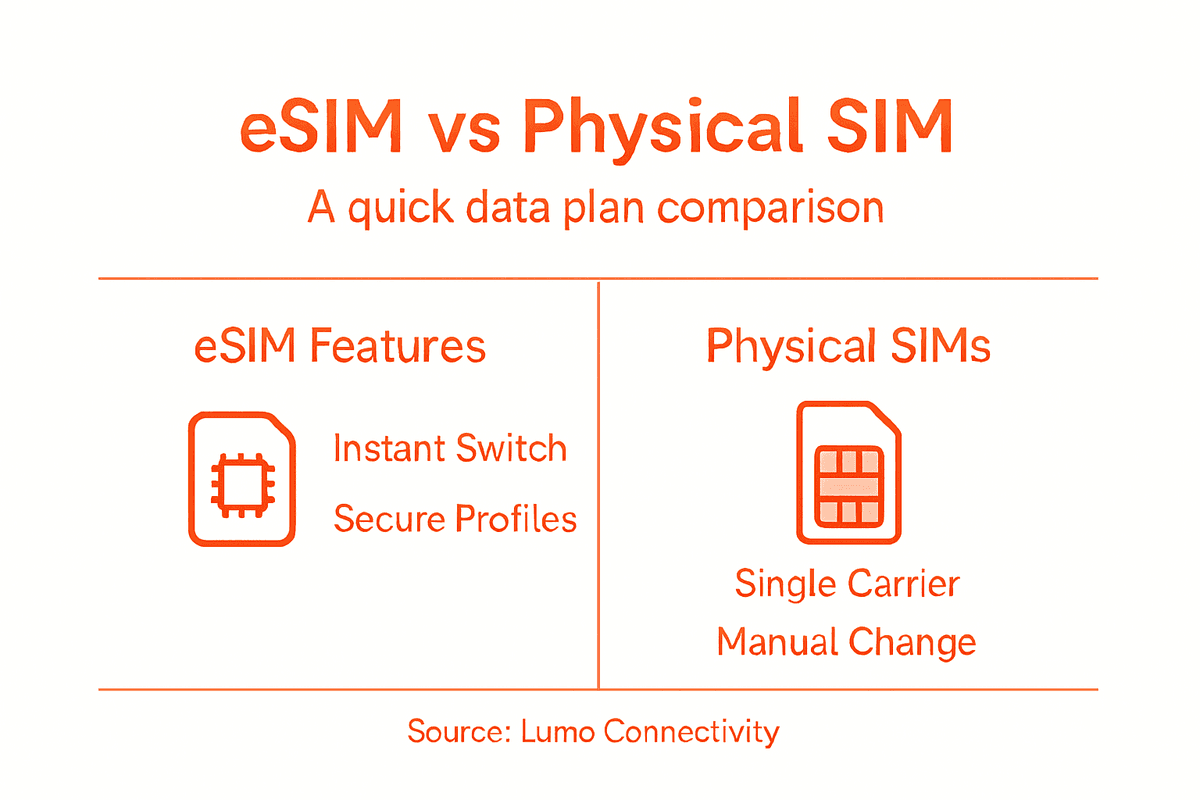
Here is a summary of the major eSIM data plan types and their best use cases:
| Plan Type | Key Benefit | Ideal User | Common Limitation |
|---|---|---|---|
| Prepaid | Cost control, no contract | Short-term traveler | Limited duration, no rollover |
| Postpaid | Monthly data flexibility | Frequent mobile user | Overage charges possible |
| Data-Only | Internet access only | Tablet/laptop owner | No voice/SMS |
| Regional Roaming | Multi-country coverage | International traveler | Higher price in some regions |
| M2M/IoT | Long-term device connectivity | Industrial, smart sensors | Device-specific activation |
Pro tip: Before selecting an eSIM data plan, carefully analyze your specific connectivity needs, considering factors like destination, data volume, duration of use, and potential network coverage.
How eSIM Activation and Usage Work
The activation process for eSIM technology represents a significant leap forward in mobile connectivity, eliminating traditional barriers associated with physical SIM cards. Remote SIM provisioning enables users to activate carrier profiles instantly through digital methods, typically involving a simple QR code scan or mobile app download that directly transfers network credentials to the device’s embedded chip.
The technical workflow for eSIM activation typically follows these key steps:
- Device Compatibility Check: Verify your smartphone, tablet, or wearable supports eSIM technology
- Carrier Selection: Choose a carrier offering eSIM services in your desired region
- Profile Download: Scan the provided QR code or use the carrier’s dedicated mobile app
- Profile Confirmation: Verify and accept the downloaded network profile
- Network Activation: Complete final configuration and connect to the mobile network
Electronic SIM chip technology allows for multiple carrier profiles to be securely stored simultaneously, providing unprecedented flexibility for travelers and professionals who require seamless network switching. This capability means users can maintain home country and international travel profiles without physically changing SIM cards, dramatically simplifying global connectivity management.

Pro tip: Always screenshot or securely save your eSIM activation QR code, as it might be needed for future profile redownloads or troubleshooting.
Comparing eSIM Plans with Physical SIMs
The evolution of mobile connectivity has brought significant changes in how we manage network access, with physical SIM versus eSIM technologies representing two distinct approaches to mobile communication. Traditional physical SIM cards require manual insertion and removal, while eSIMs are embedded directly into device hardware, offering a more streamlined and flexible connectivity experience.
Key differences between physical SIMs and eSIMs include:
- Portability: Physical SIMs are removable and can be lost, whereas eSIMs are securely integrated into device hardware
- Activation: Physical SIMs require manual swapping, while eSIMs can be activated instantly through digital methods
- Carrier Switching: eSIMs enable rapid network profile changes without physical intervention
- Security: Electronic SIM technology provides enhanced protection against theft and unauthorized access
- Device Compatibility: Physical SIMs work in most devices, while eSIM adoption is still expanding across different manufacturers
The most significant advantage of eSIM technology lies in its ability to support multiple network profiles simultaneously. Travelers can maintain their home country number while adding local data plans, effectively eliminating the complexity of traditional roaming and physical SIM management. This flexibility transforms how professionals and frequent travelers manage their global connectivity, reducing both cost and logistical challenges associated with traditional mobile networks.
The following table highlights practical differences between eSIM and physical SIM for mobile users:
| Attribute | eSIM | Physical SIM | Impact for User |
|---|---|---|---|
| Profile Storage | Multiple profiles supported | Single profile per card | Easy network switching |
| Setup Flexibility | Remote, instant activation | Manual card swap | Faster setup and recovery |
| Security Level | Embedded, hard to steal | Removable, can be lost | Improved theft protection |
| International Use | Supports instant local plans | Requires local SIM purchase | Simplifies global travel |
Pro tip: Before traveling internationally, confirm your device supports eSIM technology and check carrier compatibility to ensure seamless network access.
Costs, Risks, and Common Pitfalls
Navigating the world of eSIM technology requires a nuanced understanding of potential challenges and cybersecurity implications. While eSIMs offer significant advantages, users must remain vigilant about potential risks that could compromise their digital connectivity and personal data security.
Common risks and potential pitfalls associated with eSIM technology include:
- Compatibility Limitations: Not all devices or carriers support eSIM technology
- Activation Complexity: Some carriers impose restrictive activation procedures
- Data Privacy Concerns: Increased digital profile management introduces potential vulnerabilities
- Network Dependency: Instant activation relies on strong internet connectivity
- Potential Higher Costs: Specialized eSIM plans might be more expensive than traditional options
Carrier activation restrictions represent a significant challenge for users. Some mobile providers implement stringent verification processes that can complicate eSIM setup, potentially requiring additional documentation or verification steps. This complexity can be particularly frustrating for travelers seeking rapid, seamless connectivity. Users must carefully research carrier-specific requirements and ensure their devices are fully compatible before attempting eSIM activation.
Pro tip: Always maintain a backup communication method and screenshot your eSIM activation details in case of unexpected technical complications during international travel.
Experience True Freedom with eSIM Data Plans and Lumo’s Global Connectivity Solutions
Navigating the complexities of international travel and remote work can be stressful when dealing with multiple SIM cards and costly roaming charges. This article highlights how eSIM technology offers flexible, instant network switching and the freedom to manage multiple profiles on one device. If you have ever struggled with activation complexity, coverage gaps, or managing data plans across countries like a frequent traveler or digital nomad, you are not alone. Lumo understands these challenges and delivers a simple, all-in-one platform that takes the hassle out of eSIM activation while providing extensive coverage in over 160 countries.
Ready to avoid roaming surprises and activate your personalized eSIM plan with ease Right now is the perfect time to discover how Lumo’s rapid QR code activation and reliable 5G/4G connectivity can empower your next adventure or remote work setup. Learn more about Lumo’s innovative eSIM solutions and take control of your global mobile connectivity today. Stop juggling physical SIM cards and experience seamless digital freedom through instant activation and flexible data plans at Lumo. Visit https://lumo.to and transform how you stay connected anywhere in the world.
Frequently Asked Questions
What is an eSIM?
An eSIM (embedded SIM) is a digital alternative to traditional physical SIM cards. It is built into the device hardware, allowing for remote SIM provisioning without the need for manual swapping.
How do eSIM data plans differ from traditional SIM plans?
eSIM data plans provide more flexibility, as they allow users to store multiple carrier profiles on the same embedded chip, enabling users to switch networks without physically changing SIM cards.
What are the main types of eSIM data plans available?
The main types of eSIM data plans include prepaid plans, postpaid plans, data-only plans, regional roaming plans, and machine-to-machine (M2M) plans, suitable for various connectivity needs and usage scenarios.
How is the activation process for eSIM different from physical SIMs?
The activation process for eSIMs is digital and instantaneous, usually involving scanning a QR code or using a mobile app, compared to physical SIMs that require manual insertion and configuration.
Recommended
Related Topics
Stay Connected Anywhere
Prepaid eSIM data plans for 180+ countries and territories. No physical SIM required.