Roaming Fees vs eSIM – How Modern Travelers Save

Every American traveler knows the pain of returning home to a phone bill packed with unexpected roaming charges. Some international roaming fees can spike travel costs by more than $300 per trip, disrupting even well-planned adventures. For frequent flyers and digital nomads, finding transparent, affordable data solutions abroad is more than a convenience—it is a necessity. This guide breaks down how eSIM technology offers a smarter alternative, letting you stay connected worldwide without draining your bank account.
Table of Contents
- Defining Roaming Fees And Esim Technology
- How Roaming And Esim Plans Work Abroad
- Cost Comparison: Roaming Charges Vs Esim Plans
- Device Compatibility And Setup Requirements
- Convenience, Flexibility, And Common Pitfalls
Key Takeaways
| Point | Details |
|---|---|
| Roaming Fees Can Be Costly | Traditional roaming charges can range from $10 to $50 per day, leading to unexpected expenses during international travel. |
| eSIM Technology Offers Flexibility | eSIM allows users to switch networks instantly and purchase local data plans digitally, significantly reducing costs. |
| Check Device Compatibility | Ensure your smartphone supports eSIM and is unlocked for seamless activation before traveling internationally. |
| Plan Ahead to Avoid Issues | Research regional data options and download eSIM profiles before departure to maximize savings and connectivity. |
Defining Roaming Fees and eSIM Technology
International travelers have long struggled with exorbitant mobile connectivity costs, primarily through traditional roaming charges. Roaming fees represent the additional expenses incurred when using a mobile device outside your home carrier’s network, often resulting in shocking phone bills that can quickly derail a travel budget. These charges emerge when your smartphone connects to a foreign cellular network, triggering per-minute, per-text, or per-megabyte billing that can accumulate rapidly.
In contrast, eSIM technology represents a revolutionary solution to these connectivity challenges. Digital embedded SIM capabilities allow travelers to switch networks instantly without physically changing SIM cards. Unlike traditional physical SIM cards, eSIMs are programmable digital profiles stored directly in your device, enabling seamless network transitions and significantly reducing international communication expenses.
The core advantage of eSIM technology lies in its flexibility and global accessibility. Travelers can now purchase local data plans digitally, eliminating expensive roaming charges by selecting cost-effective regional networks. This approach transforms how mobile connectivity works for international travelers, providing unprecedented control over data usage and expenses. Modern smartphones increasingly support eSIM technology, making it easier than ever to stay connected without financial penalties.
Pro tip: Before traveling internationally, research your device’s eSIM compatibility and download a regional data plan to avoid unexpected roaming charges.
How Roaming and eSIM Plans Work Abroad
Traditional roaming operates through complex agreements between mobile carriers, where your home network charges premium rates for international service. When travelers cross borders, their mobile devices automatically connect to partner networks, triggering expensive per-minute or per-megabyte billing that can quickly escalate travel expenses. These roaming charges vary dramatically between carriers and destinations, often catching travelers off guard with unexpected and substantial phone bills.
eSIM technology fundamentally transforms this connectivity model by enabling digital network switching without physical SIM card changes. Travelers can now purchase local data plans directly on their smartphones, selecting region-specific packages that dramatically reduce communication costs. The process involves downloading a digital eSIM profile through a simple QR code scan, which instantly activates a new mobile network profile without requiring a physical store visit or carrier intervention.

The practical implementation of eSIM plans involves several key steps. Users typically download an eSIM profile from a supported provider, verify their device compatibility, and select a data package matching their travel duration and anticipated usage. These digital plans offer unprecedented flexibility, allowing travelers to switch between multiple regional networks, compare pricing in real-time, and maintain continuous connectivity without the traditional roaming fee complexities. Most modern smartphones now support this technology, making international data management significantly more straightforward and cost-effective.
Pro tip: Always verify your device’s eSIM compatibility and download regional data plans before international travel to minimize unexpected connectivity expenses.
Cost Comparison: Roaming Charges vs eSIM Plans
Traditional roaming charges represent a significant financial burden for international travelers, with mobile carriers imposing exorbitant rates that can transform a modest communication budget into a financial nightmare. Typical roaming fees can range from $10 to $50 per day, depending on the destination and carrier, creating unexpected expenses that quickly accumulate during international trips. These charges often include astronomical per-minute call rates, per-text messaging fees, and data consumption costs that bear little relationship to actual service delivery expenses.
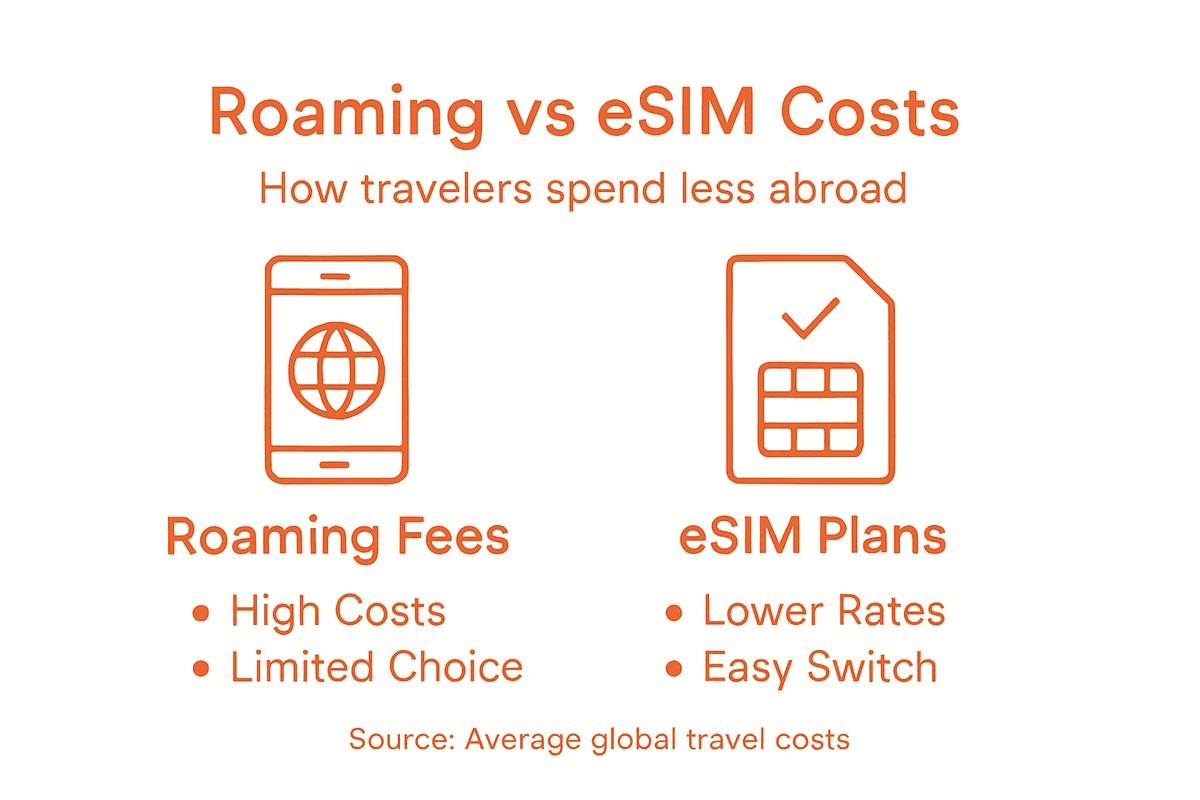
In stark contrast, digital eSIM technologies dramatically reduce connectivity costs by connecting directly to local carrier networks. The wholesale pricing model eliminates multiple intermediary markups, allowing travelers to access regional data plans at substantially lower rates. Research indicates that eSIM users can save approximately 75% per gigabyte of data compared to traditional roaming, transforming international communication from a luxury expense to an affordable necessity.
The cost differences become even more pronounced when examining long-term travel scenarios. While traditional roaming might charge $20 per day for limited data access, eSIM plans frequently offer comprehensive regional coverage for a flat rate between $5 and $15, depending on the destination and duration. These digital plans provide predictable pricing structures, allowing travelers to budget precisely for their communication needs without fear of receiving shocking post-trip billing statements. The transparent, upfront pricing model represents a revolutionary approach to international mobile connectivity.
Here’s a concise comparison of traditional roaming and eSIM plans for international travelers:
| Aspect | Traditional Roaming | eSIM Plans |
|---|---|---|
| Activation | Automatic network connection | Digital profile download |
| Typical Cost per Day | $10–$50, variable | $5–$15, flat rate |
| Flexibility | Limited to carrier plans | Switch between providers |
| Billing Surprise Risk | High with unexpected fees | Low with upfront pricing |
Pro tip: Compare multiple eSIM providers and purchase regional data packages before traveling to maximize potential savings and avoid unexpected roaming charges.
Device Compatibility and Setup Requirements
Device compatibility represents a critical first step for travelers considering eSIM technology. Modern smartphones increasingly support this digital connectivity solution, with major manufacturers like Apple, Samsung, and Google leading the way in integrating eSIM capabilities. Smartphone requirements typically include running recent operating system versions iOS 12.1 or higher for Apple devices, and Android 10 or newer for Google and Samsung models. Not all devices are created equal, making it essential to verify specific model compatibility before planning an international trip.
Smartphone eSIM activation process involves several straightforward steps that most tech-savvy travelers can easily navigate. Users typically download an eSIM profile through a dedicated mobile app or scan a provided QR code, which instantly provisions the new digital SIM. The setup requires enabling data roaming for the eSIM while simultaneously disabling roaming on the primary physical SIM to prevent conflicting network connections. Most modern devices support dual SIM functionality, allowing travelers to maintain their home number while using an international eSIM data plan.
Technical considerations extend beyond basic device support. Travelers must ensure their smartphone has an unlocked status, meaning it can accept carrier-independent SIM profiles. Some carriers implement restrictions that prevent eSIM activation on locked devices, potentially complicating international connectivity. Additionally, users should check their device’s specific eSIM slot configurations, as some phones support only single eSIM profiles while others allow multiple international plans to be stored simultaneously. Software updates play a crucial role in maintaining eSIM functionality, making it essential to keep device operating systems current to ensure smooth digital connectivity.
Below is a quick reference on key device requirements for eSIM activation:
| Requirement | Apple Devices | Android Devices | Additional Notes |
|---|---|---|---|
| OS Version | iOS 12.1 or newer | Android 10 or newer | Ensure device is unlocked |
| eSIM Support | iPhone XS and newer | Major recent models | Not all phones support multiple eSIMs |
| Dual SIM Functionality | Yes, digital + physical SIM | Yes, varies by model | Check manufacturer specs |
Pro tip: Check your smartphone’s specific eSIM compatibility and update its operating system before traveling to guarantee seamless international connectivity.
Convenience, Flexibility, and Common Pitfalls
eSIM technology represents a paradigm shift in international mobile connectivity, offering unprecedented flexibility for modern travelers. The ability to switch networks instantly without physical SIM changes fundamentally transforms how individuals manage communication during international travel. Users can now purchase and activate regional data plans within minutes, eliminating the complex logistics of traditional roaming or purchasing local physical SIM cards in each destination.
However, the convenience of eSIM technology comes with several critical considerations. Travelers must navigate potential challenges such as limited voice and text support on some digital plans, and the inherent dependency on device battery power for maintaining connectivity. Network coverage varies significantly between providers, making thorough research essential before relying solely on an eSIM plan. Some digital plans offer pay-as-you-go options, while others require predetermined data packages, creating a need for careful planning and understanding of individual communication requirements.
The most successful eSIM users develop a strategic approach to managing their digital connectivity. This involves understanding device settings, carefully selecting appropriate data plans, and maintaining awareness of potential technical limitations. Occasional connectivity issues can typically be resolved through simple troubleshooting techniques like toggling airplane mode or manually selecting available networks. Travelers should also maintain awareness of their data consumption, as some eSIM plans include strict data limits that can result in unexpected service interruptions if exceeded.
Pro tip: Always download and test your eSIM profile before traveling to identify and resolve potential connectivity issues in advance.
Simplify Your International Connectivity with Lumo’s eSIM Solution
Travelers face the constant challenge of unexpected roaming fees and complicated network switches while abroad. This article clearly highlights how traditional roaming charges can drain your budget and how eSIM technology offers an affordable alternative by allowing instant access to local carriers. If you want the freedom to save significantly on data costs and avoid confusing billing surprises, embracing digital eSIM plans is essential. Lumo understands these pain points by providing a seamless platform that delivers instant activation, flexible plans, and coverage in over 160 countries.
Experience the convenience of switching networks effortlessly with Lumo’s all-in-one eSIM solution. Whether you need high-speed 4G/5G connectivity for your smartphone, tablet, or laptop, Lumo makes global data access affordable and hassle-free. Don’t wait until you land and face steep roaming charges. Visit Lumo now to explore flexible plans, enjoy rapid QR code activation, and stay connected worldwide. Start your journey with smart connectivity and save more on every trip today.
Frequently Asked Questions
What are roaming fees?
Roaming fees are additional charges incurred when using a mobile device outside of your home carrier’s network. These fees can include charges for calls, texts, and data that can quickly add up while traveling internationally.
How does eSIM technology work?
eSIM technology allows travelers to digitally switch networks without physically changing SIM cards. Users can download a digital eSIM profile onto their device, enabling them to select local data plans directly from their smartphones, which helps reduce international communication expenses.
What are the main advantages of using an eSIM instead of traditional roaming?
The main advantages of using an eSIM include significant cost savings, as eSIM plans can be much cheaper than traditional roaming fees. eSIMs also offer flexibility in selecting local networks and data plans, allowing for seamless connectivity without unexpected charges.
How do I ensure my device is compatible with eSIM?
To ensure your device is compatible with eSIM, check that it supports recent operating systems (iOS 12.1 or higher for Apple, Android 10 or newer for Android devices) and confirm that it is unlocked. Research your specific phone model for eSIM capabilities as well, since not all devices support this technology.
Recommended
- 7 Key Advantages of Global eSIM Plans for Travelers | Lumo eSIM Store
- How to Avoid Roaming Fees and Stay Connected Abroad | Lumo eSIM Store
- Why Business Travelers Need eSIM Solutions | Lumo eSIM Store
- What Is eSIM Profile and How It Simplifies Travel | Lumo eSIM Store
- Cost-Efficiency in Communication: The VoIP Advantage - Cloudology
- Role of Mobile Booking Apps: Saving Time and Money - PilotTravelDeals.com
Related Topics
Stay Connected Anywhere
Prepaid eSIM data plans for 180+ countries and territories. No physical SIM required.