Wheelchair access in El Salvador: What to realistically expect
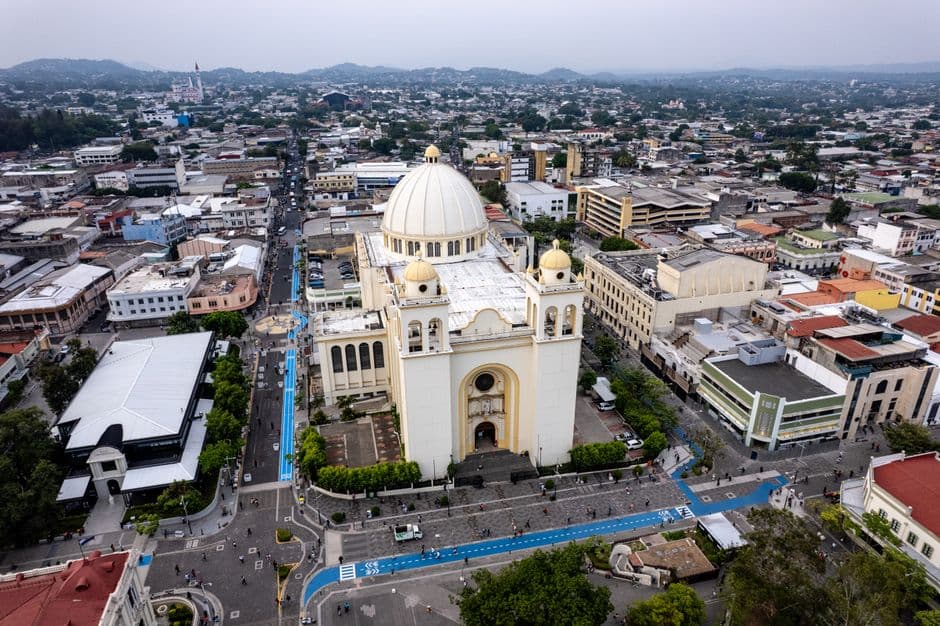
El Salvador is not an easy destination for reduced-mobility travelers: a disability anti-discrimination law exists, but it's poorly enforced, and step-free infrastructure is the exception rather than the rule. That said, San Salvador offers noticeably better options than the rest of the country, and careful planning with private transport can make a visit workable.
How accessible is transit and getting around?
Public transportation is not a realistic option for wheelchair or mobility aid users. Mini-buses, regular buses, and taxis are generally poorly maintained, with steep pickups and bumpy interiors that make boarding and riding difficult. Private transfer is the safest and most reliable way to get around for anyone with mobility needs, and it's worth arranging in advance rather than relying on street transport.
What's the terrain like?
El Salvador is mountainous, and many roads — especially outside major urban areas — are unpaved, steep, and prone to flooding in heavy rain. During the rainy season, some steep roads are also vulnerable to landslides. Even in San Salvador, it's common to encounter large potholes, unmarked speedbumps, and objects left in the roadway, all of which are hazards for anyone using a wheelchair, cane, or other mobility aid. Sidewalks and street-level infrastructure shouldn't be assumed to be smooth or predictable anywhere in the country.
Are major sites and buildings accessible?
Accessibility is inconsistent and tends to track with how new a building is — newer infrastructure is more likely to include ramps or adapted features, and the San Salvador area is generally more accessible than the rest of the country. There are almost no access ramps or accommodations for people with sight or hearing disabilities nationwide, so don't expect tactile paving, audio signals, or similar provisions at most sites. One standout: the Francisco Gavidia National Library in San Salvador has wheelchair ramps, elevators, adapted restrooms, and staff trained in Salvadoran Sign Language — it's held up as a model of inclusion precisely because it's uncommon. Beyond this, there's no comprehensive accessibility picture available for major tourist attractions, so it's wise to verify conditions directly before visiting any specific site.
Who can help with planning?
Because enforcement of disability access rules is weak and resources for it are limited — particularly around education, employment, and transportation — travelers shouldn't expect standardized accessible services. The U.S. embassy in El Salvador can provide a list of accessible service providers, which is a useful starting point for arranging vetted transport and accommodation before you travel.
If you're planning connectivity for the trip, it's worth sorting out an eSIM or data plan in advance so you can coordinate private transfers and confirm accessibility details with venues directly — see /destinations/el-salvador for general destination info.
FAQ
Can I rely on public buses if I use a wheelchair? No — buses and mini-buses are poorly maintained with steep pickups and bumpy roads, making them unsuitable for wheelchair or mobility aid users. Private transfer is recommended instead.
Is San Salvador more accessible than rural areas? Yes — the capital area has comparatively better accessibility, especially in newer buildings, while rural roads are often unpaved, steep, and flood-prone.
Are there any accessible landmark buildings? The Francisco Gavidia National Library in San Salvador has ramps, elevators, adapted restrooms, and sign-language-trained staff, though it's noted as an exception rather than the norm.
Sources
Related Topics
Stay Connected Anywhere
Prepaid eSIM data plans for 180+ countries and territories. No physical SIM required.