Business travel tech essentials for global connectivity
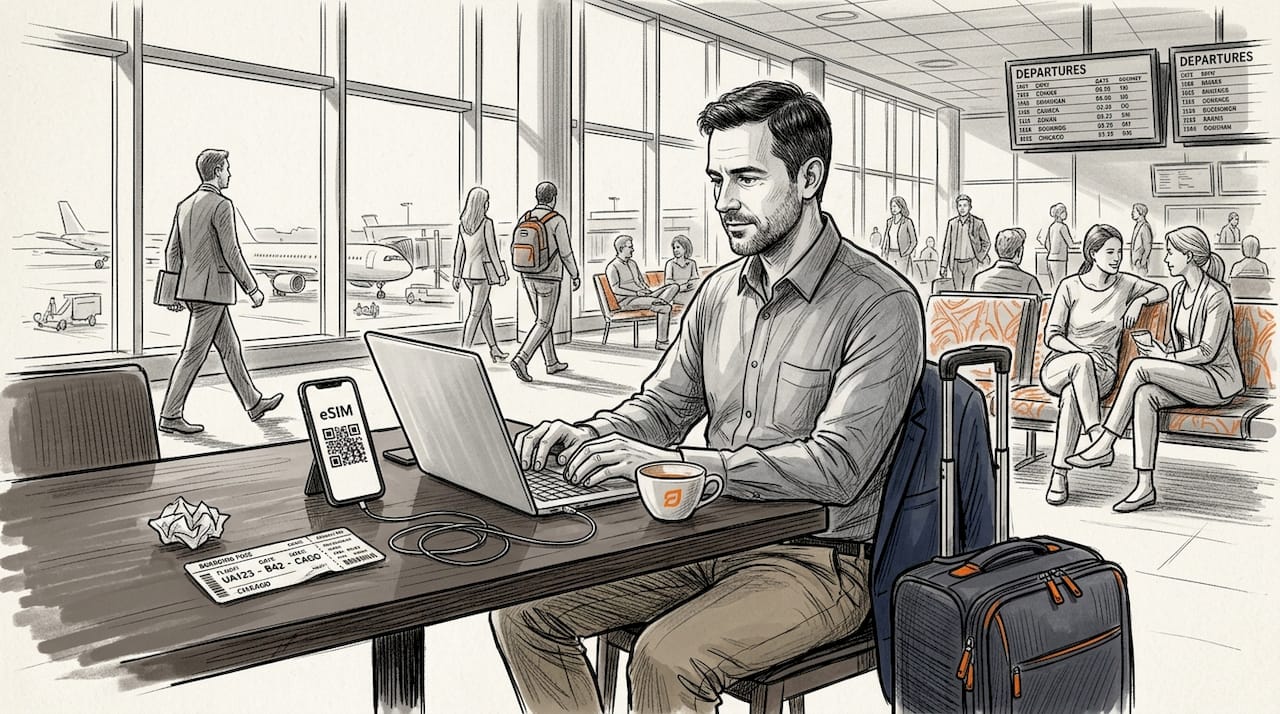
Selecting the right connectivity technology can make or break your international business trip. Modern business travelers face a maze of options, from eSIMs to portable WiFi devices, each promising seamless global communication and data access. The stakes are high because unreliable connectivity means missed video calls, delayed project updates, and lost productivity. This article cuts through the complexity by providing an expert framework for evaluating connectivity solutions, comparing your main technology options, and troubleshooting common issues so you can stay connected wherever business takes you.
Table of Contents
- Key takeaways
- Criteria for choosing business travel connectivity tech
- Top connectivity options: eSIMs and portable WiFi devices
- How to handle connectivity challenges and avoid disruptions
- Comparing data plans and costs: unlimited versus metered solutions
- Discover Lumo eSIM for your business travel needs
- Frequently asked questions
Key Takeaways
| Point | Details |
|---|---|
| Multi network access | Ensure your device automatically switches between local carriers to prevent dead zones during critical calls and updates. |
| Low latency target | Aim for latency under 60 ms to keep video conferences and cloud apps responsive, and verify performance with Speedtest after activation. |
| Data cap awareness | Unlimited plans can throttle or impose hidden limits, so review daily data use and tethering rules. |
| eSIM cost advantage | For solo travelers, eSIMs cost three to five times less than portable WiFi rentals and avoid deposits and damage fees. |
| Offline maps backup | Download essential maps and documents before travel to stay productive during outages. |
Criteria for choosing business travel connectivity tech
Your connectivity solution needs to deliver consistent performance across multiple countries and network conditions. Multi-network access ensures your device automatically switches between local carriers, preventing dead zones that could interrupt critical business communications. This redundancy is essential because single-network providers often leave you stranded in areas where their partner carrier has weak coverage.
Latency directly impacts your ability to conduct video conferences and access cloud applications in real time. Target providers offering latency under 60ms for stable video calls, as anything higher introduces noticeable delays that disrupt natural conversation flow. Test your connection speed immediately after activation using Speedtest.net to verify you’re getting advertised performance levels before you depend on it for important meetings.
Data caps and throttling policies deserve careful scrutiny because unlimited plans aren’t always truly unlimited. Most business travelers consume 3-5GB daily for email, video calls, document sharing, and light browsing. Review hotspot allowances if you plan to share connectivity with tablets or laptops, since some providers restrict or charge extra for tethering. Understanding these limitations upfront prevents frustrating surprises when you’re trying to share a presentation from your laptop during a client meeting.
Pro Tip: Download offline maps and essential documents before your trip as a backup, even with reliable connectivity planned. This safety net keeps you productive during unexpected network outages or while transitioning between coverage areas.
Beyond technical specifications, consider the provider’s coverage footprint in your specific destinations. A solution offering 160 countries sounds impressive until you discover it lacks strong partnerships in the three countries on your itinerary. Cross-reference your travel plans with detailed coverage maps, and prioritize providers with established local carrier relationships in your target markets. For business travelers who need connectivity for seamless communication, choosing a solution that aligns with why business travelers need eSIM technology makes practical sense.
Top connectivity options: eSIMs and portable WiFi devices
eSIM technology integrates directly into your smartphone, tablet, or laptop without requiring a physical card swap. This digital approach eliminates the hassle of finding local SIM vendors, negotiating in unfamiliar languages, and carrying multiple physical cards for different regions. You activate service through a simple QR code scan, often completing setup in under five minutes from your hotel room or airport lounge.
The cost advantage for solo business travelers is substantial. eSIMs cost 3-5x less than renting portable WiFi devices, particularly for trips spanning multiple countries where pocket WiFi rental fees compound quickly. You avoid daily rental charges, deposit requirements, and the risk of damage fees that rental companies impose. This pricing structure makes eSIMs the economical choice when you’re the only person needing connectivity.
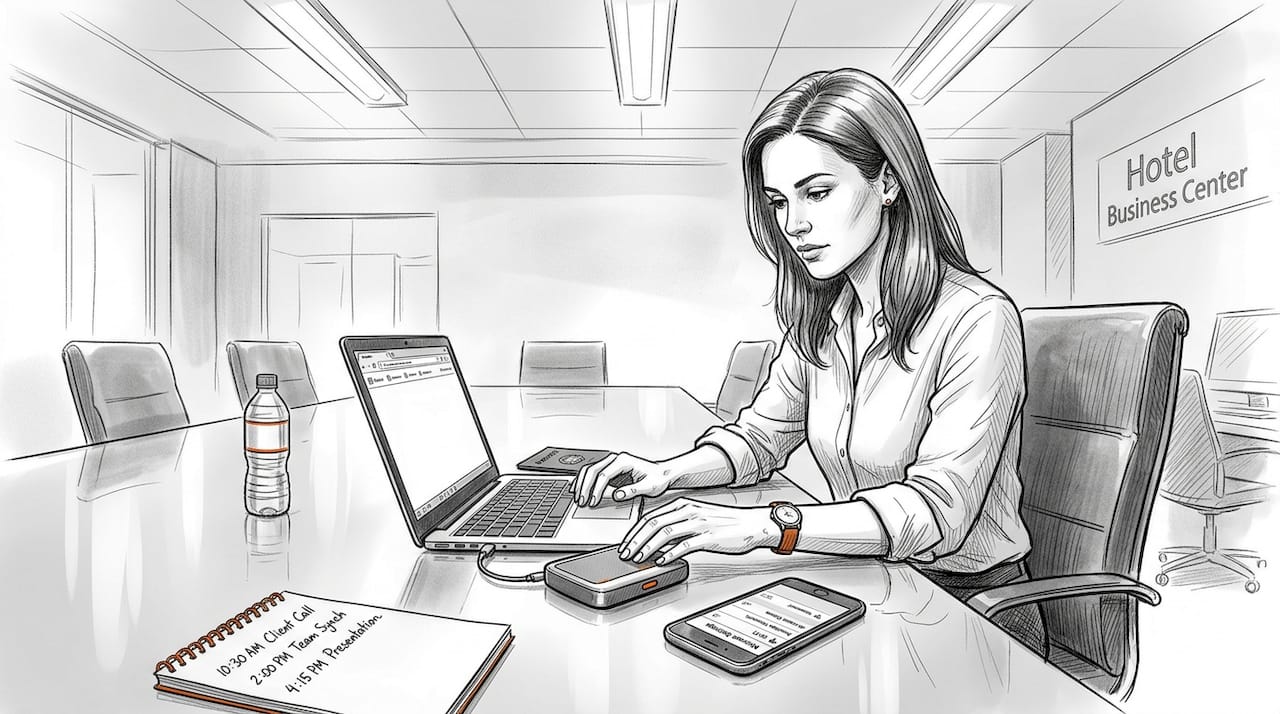
Portable WiFi devices shine in specific scenarios despite their higher costs. If you’re traveling with colleagues who all need simultaneous internet access, a single pocket WiFi unit serving three or more devices becomes cost-effective compared to purchasing separate eSIM plans. These devices create a private WiFi network that multiple team members can join, simplifying expense tracking and ensuring everyone maintains connectivity during group activities.
Battery life presents a practical challenge with portable WiFi devices on extended business days. Most units require recharging every 6-8 hours of active use, meaning you’ll need to carry charging cables and find power outlets throughout your day. The device itself adds weight and bulk to your carry items, and you must remember to return it after your trip to avoid hefty non-return penalties. Understanding the role of eSIMs in business travel helps clarify when the convenience of integrated connectivity outweighs the shared access benefits of portable devices.
Your device compatibility determines which option works for your existing hardware. Modern smartphones from 2020 onward typically support eSIM, but verify your specific model before committing to this approach. Portable WiFi works with any WiFi-enabled device regardless of age, making it a universal fallback when your phone lacks eSIM capability or when you need to connect older laptops that don’t have built-in cellular modems.
How to handle connectivity challenges and avoid disruptions
Most connectivity failures stem from simple misconfigurations rather than fundamental service problems. When your eSIM won’t connect after arrival, the issue typically involves incorrect APN settings, disabled data roaming, or your device stubbornly clinging to a weak network instead of switching to a stronger alternative. Recognizing these common culprits helps you resolve problems in minutes rather than hours.
Pre-installing and testing your eSIM while still at home on WiFi reduces activation failures by 41%. This proactive approach lets you troubleshoot any setup issues with your provider’s support team before you’re standing in a foreign airport with no backup connectivity. Download the eSIM profile, verify it appears in your cellular settings, but keep it deactivated until you land to avoid accidentally consuming data on your home network.
Follow this systematic troubleshooting sequence when connectivity fails:
- Toggle airplane mode on for 10 seconds, then off to force your device to re-scan available networks
- Navigate to cellular settings and manually select a network rather than relying on automatic selection
- Verify data roaming is enabled in your device settings, as many phones disable this by default
- Check your APN settings match your provider’s specifications, editing if necessary
- Restart your device completely to clear any cached network configurations
- Contact your eSIM provider’s support if issues persist after these steps
Pro Tip: Screenshot your provider’s APN settings and support contact information before departure. You’ll have this critical troubleshooting data accessible even without internet connectivity.
Device locks create invisible barriers that prevent eSIM activation on some carrier-locked phones. Contact your home carrier before traveling to confirm your device is unlocked for international use, as this restriction won’t become apparent until you attempt to activate your eSIM abroad. Rural areas and remote business locations may simply lack adequate cellular infrastructure regardless of your technology choice, so research connectivity availability for off-the-beaten-path destinations and arrange backup communication methods when necessary. Having a comprehensive troubleshooting guide for eSIM connectivity accessible during your trip provides additional problem-solving resources when standard fixes don’t resolve your issue.
Comparing data plans and costs: unlimited versus metered solutions
Unlimited data plans sound appealing but come with hidden limitations that affect heavy users. Most providers implement daily throttling around 4.5GB, reducing your speed dramatically once you cross this threshold. You’ll still have connectivity, but downloads that took seconds now require minutes, and video calls become choppy or impossible. This throttling resets daily, so you start fresh each morning, but it fundamentally changes what unlimited actually means in practice.
Metered plans charge based on specific data allotments, offering better value for travelers with light to moderate usage patterns. If your typical business day involves checking email, joining a few video calls, and accessing cloud documents, you’ll likely consume 2-3GB rather than approaching throttling limits. Paying for exactly what you need eliminates waste and often costs 30-40% less than unlimited plans when your usage stays moderate.
| Plan Type | Best For | Typical Cost | Daily Limit | Speed After Limit |
|---|---|---|---|---|
| Unlimited | Heavy users, video streaming, large file transfers | $8-12/day | 4.5GB high-speed | Throttled to 512kbps |
| Metered 3GB | Light users, email and browsing | $4-6/day | 3GB total | Service stops |
| Metered 5GB | Moderate users, occasional video calls | $6-8/day | 5GB total | Service stops |
| Metered 10GB | Business users, frequent video, cloud work | $10-14/day | 10GB total | Service stops |
Hotspot allowances vary significantly between providers and plan types. Some unlimited plans prohibit tethering entirely, while others allow it but count hotspot usage more heavily against your daily limit. Metered plans typically permit hotspot use within your total data allocation, giving you flexibility to share connectivity with your laptop or tablet without additional restrictions. Verify these terms before purchasing if you plan to work from multiple devices.
Cost optimization requires matching your plan to realistic usage patterns rather than worst-case scenarios. Track your data consumption for a typical work week using your phone’s built-in monitoring tools to establish a baseline. Add 20-30% buffer for increased usage while traveling, when you might rely more heavily on navigation, translation apps, and researching local business customs. This data-driven approach prevents both overpaying for unused capacity and running out of data during critical business activities. Learning strategies for avoiding roaming fees helps you make informed decisions about plan selection and usage management.
Discover Lumo eSIM for your business travel needs
Business travelers need connectivity solutions that work immediately without complicated setup or unreliable performance. Lumo delivers instant global eSIM data plans designed specifically for professionals who can’t afford downtime during international trips. Our multi-network approach automatically connects you to the strongest available carrier in over 160 countries, eliminating dead zones that interrupt video calls or prevent access to critical business applications.
Flexible plan options let you choose between unlimited and metered data based on your actual usage patterns rather than forcing you into one-size-fits-all solutions. Activate service through our user-friendly app with simple QR code scanning, and manage multiple eSIM profiles when your travel spans different regions. Our 24/7 customer support team helps resolve any connectivity issues quickly, so you stay productive regardless of where business takes you. Explore Lumo eSIM data plans to find the right connectivity solution for your next international trip.
Frequently asked questions
What connectivity technology do business travelers need most?
Business travelers need eSIM technology or portable WiFi devices that provide reliable multi-network access across their destination countries. eSIMs work best for solo travelers due to lower costs and integrated convenience, while portable WiFi suits groups needing shared connectivity. Prioritize solutions offering latency under 60ms for video calls and clear data policies to avoid unexpected throttling.
How much daily data does typical business travel require?
Most business travelers consume 3-5GB daily for email, video conferencing, cloud document access, and light browsing. Heavy users who frequently transfer large files or stream video content may approach 8-10GB daily. Track your usage for a week at home to establish your baseline, then add 20-30% buffer for increased navigation and research needs while traveling.
What should I do when my eSIM won’t connect abroad?
Start by toggling airplane mode on for 10 seconds then off to force network re-scanning. Manually select a network in cellular settings rather than using automatic selection, and verify data roaming is enabled. Check that your APN settings match your provider’s specifications and restart your device completely if issues persist. Pre-installing your eSIM on WiFi before departure reduces activation problems significantly.
Are unlimited data plans worth the extra cost for business travel?
Unlimited plans suit heavy users but often throttle speeds after 4.5GB daily, which may disrupt your work during high-usage periods. Metered plans offer better value if you consistently use under 5GB daily, saving 30-40% compared to unlimited options. Calculate your typical usage and choose plans matching your actual needs rather than paying for unlimited capacity you won’t fully utilize.
How do eSIMs compare to keeping my home SIM active while traveling?
eSIMs cost significantly less than international roaming charges from home carriers, typically saving 60-80% on data costs. They provide local network access with better speeds and reliability compared to roaming on your home carrier’s international partnerships. You can keep your home SIM active for receiving calls and texts while using the eSIM exclusively for data, giving you the best of both connectivity options. Understanding why eSIM adoption is rising helps explain these advantages in the broader context of modern travel connectivity.
Recommended
Related Topics
Stay Connected Anywhere
Get instant eSIM data plans for 160+ countries. No physical SIM required.