eSIM for Expats: Keep Your Home Number and Avoid a Service Gap

An eSIM is usually the right call for expats who need flexible, reliable mobile data and move between countries often. Before relying on one, check two things: whether your device supports eSIM and is unlocked, and whether you need to keep an active home-country line for banking or two-factor codes. If both check out, a short test plan from a provider like Lumo is a low-risk way to confirm it works for your setup.
TL;DR:
- Travel eSIM plans often include data only, so keep your home line active or verify calling over Wi Fi works abroad before relying on banking codes.
- Test your phone before departure, confirm eSIM support and carrier unlocking, then activate a short plan over wireless internet to catch setup problems.
- For a fixed stay, country or regional bundles usually cost less than global plans; global coverage avoids buying a new plan at each border.
- Light users typically need 1 to 3 GB monthly, while phone tethering for remote work requires more; track usage before buying a longer plan.
Table of Contents
- What an eSIM is and why it matters to expats
- eSIM vs local SIM vs roaming: practical tradeoffs for expats
- Device compatibility and unlocking: pre-departure checklist
- Keeping your home-country number: dual SIM, Wi-Fi calling, and virtual-number options
- How to buy, activate, and manage an eSIM abroad (step-by-step)
- Costs, plans, and budgeting: estimate what an expat will pay
- Security and privacy best practices for using eSIMs abroad
- Why a single integrated eSIM platform often simplifies expat life
- Try Lumo: quick next steps to buy and activate an eSIM
- FAQ
- Sources
What an eSIM is and why it matters to expats
An eSIM is a digital version of a physical SIM card built into your device, letting you switch mobile providers or add a local data plan without swapping a physical card, according to the FCC’s eSIM guidance. For an expat, that distinction changes daily life more than it sounds like it would. You are not hunting for a kiosk in an unfamiliar city or waiting for a new card to arrive in the mail.
The practical upside shows up in a few specific ways:
- You activate a new plan in minutes by scanning a QR code, without visiting a store.
- You can hold several eSIM profiles on one phone and switch between them as you cross borders.
- You manage your plan, top-ups, and renewals from an app instead of a counter transaction.
- You avoid losing your physical home SIM, since it stays in place while a travel eSIM runs alongside it.
The GSMA has tracked this shift as part of a broader move toward digital-first connectivity, where the value chain moves closer to the traveler through apps rather than retail visits, per its market deployment research. That said, an eSIM is not automatically compatible with every network. Your phone still needs to support the specific spectrum and air-interface technology used in your destination country, which the FCC’s international roaming guide flags as a check worth doing before you assume full coverage.
eSIM vs local SIM vs roaming: practical tradeoffs for expats
Each option solves a different problem, and most expats end up combining two of them rather than picking one permanently.
A local physical SIM usually offers the cheapest in-country data and a real local number, but you have to find a shop, show identification in some markets, and swap it out again when you leave. Roaming through your home carrier keeps your existing number and settings untouched, but it depends entirely on the agreements your carrier has in the country you are visiting, and those rates vary widely. A travel eSIM sits between the two: you get flexible regional or global coverage without a physical swap, and you can layer multiple country or region plans on the same device.
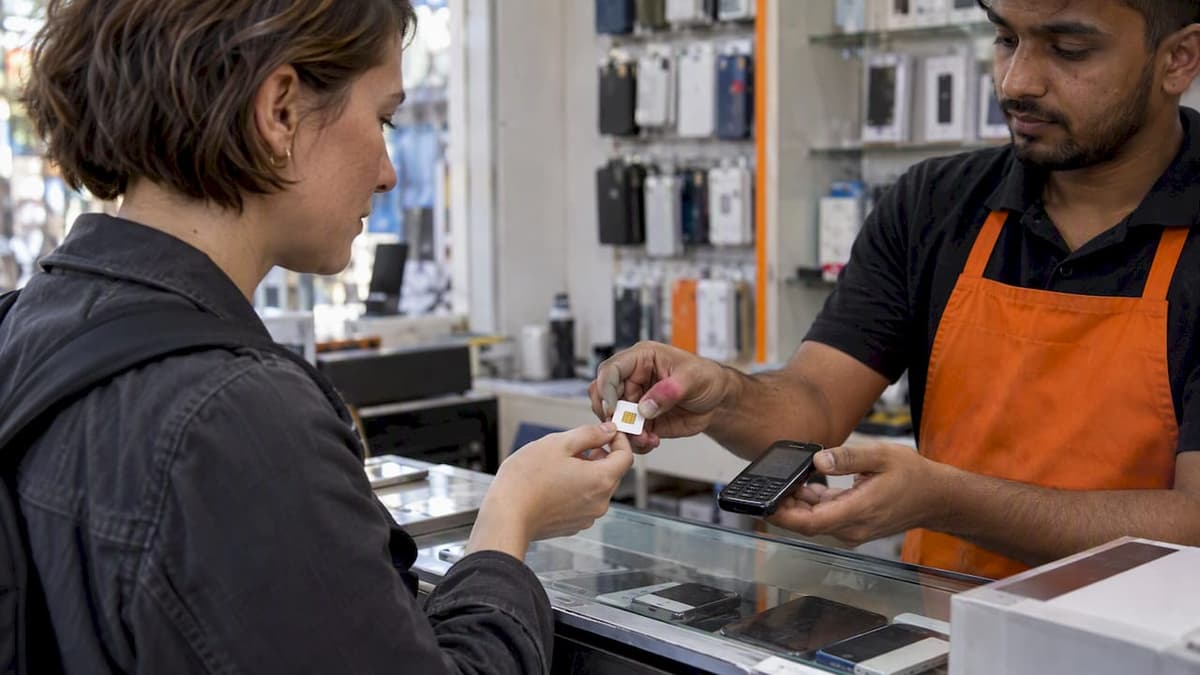
The voice and SMS question trips up a lot of newcomers to eSIM. Many travel eSIM plans are data-only, which matters if you rely on your phone number to receive banking codes or take calls from family. Consumer Reports notes that travel eSIMs handle data well but rarely include a local phone number for calls, so keeping your primary SIM active, or using Wi-Fi calling where your carrier supports it, often remains necessary alongside a data eSIM.
On cost, the models differ in shape more than in headline price:
- Per-GB plans suit short trips where you know roughly how much data you will use.
- Fixed-duration bundles (7, 15, or 30 days) suit predictable stays in one place.
- Regional bundles cover several countries under one allowance, useful if you hop between neighboring countries.
- Global plans trade a slightly higher per-GB rate for not having to buy a new plan at every border.
GSMA Intelligence research points to rising adoption of travel eSIMs as the leading use case driving eSIM uptake generally, with clear acceleration across major markets including the US. For frequent cross-border movers, that bundling flexibility is usually where eSIM beats both local SIMs and roaming on convenience, even when a local SIM wins on raw price for a single destination.
Device compatibility and unlocking: pre-departure checklist
Not every phone supports eSIM, and not every eSIM-capable phone is unlocked enough to use one freely. Apple and Google both publish device-specific support guidance on which models handle eSIM and Dual SIM Dual Standby, and Pixel’s dual SIM documentation shows how support varies by model, with some newer phones shipping eSIM-only.
Before you travel, work through these checks in order:
- Confirm your model supports eSIM through your device manufacturer’s settings or support page.
- Check your IMEI and carrier-lock status directly with your carrier, since a locked phone will not accept a local or travel eSIM even if the hardware supports it.
- Request an unlock from your carrier if needed. The FCC’s unlocking rules require carriers to unlock eligible devices on request, though you may need to supply an account number or proof the device is paid off.
- Update your phone’s operating system, since older software versions sometimes lack current eSIM provisioning features.
- Back up your current SIM settings and note your home carrier’s APN details in case you need to restore them.
- Buy a short, low-data test plan and activate it before a trip to confirm everything installs and connects cleanly.
Checking IMEI compatibility and unlock status takes a few minutes and avoids the worst-case scenario: landing with no working data and no way to fix it until you reach a carrier store.
Pro Tip: Screenshot your home carrier’s APN settings before you leave. You will need them if you ever have to manually restore your original SIM profile.
Keeping your home-country number: dual SIM, Wi-Fi calling, and virtual-number options
Losing access to your home number mid-trip is more than an inconvenience when that number is tied to your bank’s two-factor authentication. Dual SIM Dual Standby lets your phone keep your home line active for calls and texts while a travel eSIM handles data, but Apple’s own guidance notes that switching data to the travel line can sometimes interrupt iMessage, FaceTime, or visual voicemail tied to the home SIM, so testing both lines before you depart matters.
You generally have four ways to stay reachable:
- Keep your physical home SIM inserted alongside the travel eSIM, so calls and SMS still arrive.
- Keep a home eSIM profile active if your carrier offers one, rather than relying on a physical card.
- Turn on Wi-Fi calling if your home carrier supports it, letting calls and texts route over any internet connection.
- Use a virtual-number service specifically for two-factor codes, separate from your main line.
Test SMS reception and Wi-Fi calling before you leave, not after. A quick call to your carrier to confirm Wi-Fi calling works abroad on your plan can help avoid frustration after you arrive.
How to buy, activate, and manage an eSIM abroad (step-by-step)
Activation is straightforward once your device is confirmed compatible and unlocked. The sequence rarely changes across providers:
- Verify your device supports eSIM and is carrier-unlocked, using the checks above.
- Choose a plan shape, country-specific, regional, or global, based on where you are headed and for how long.
- Install the eSIM profile, usually by scanning a QR code or through the provider’s app, which provisions the profile via SM-DP+ servers in the background.
- Set your travel eSIM as the default for data and adjust roaming preferences so you are not accidentally billed on your home line.
Most profiles activate within minutes of installation, though some networks take longer to register the new SIM on local towers. If a profile fails to install, a weak Wi-Fi connection during setup is the most common cause. If you have signal bars but no data after a successful install, check that your Access Point Name (APN) settings match what the provider specifies and that your device has selected the correct network band. Our step-by-step guide to switching networks abroad walks through these checks in more detail.
When you add a new country or region, you can usually run multiple eSIM profiles side by side and switch the active data line in your settings without deleting anything. Remove old profiles only once you are certain you will not need to reinstall them, since some providers limit how many times a single QR code can be redeemed.
Pro Tip: Keep your original home eSIM or physical SIM profile installed even after switching your default data line. Deleting it too early can mean a new activation fee if you need it again.
Costs, plans, and budgeting: estimate what an expat will pay
Travel eSIM pricing usually follows one of two shapes: a fixed data allowance for a set number of days, or a per-GB rate within a longer window. Regional and global bundles trade a slightly higher per-GB cost for not having to rebuy a plan every time you cross a border.
To estimate a realistic monthly cost, start with your usage pattern rather than a generic average:
- A light user (messaging, maps, occasional browsing) typically needs 1 to 3 GB per month.
- A moderate user who streams music and video calls regularly often needs more data.
- A tethering-heavy user working remotely from a phone connection needs considerably more, and a dedicated data plan sized accordingly.
Adoption of travel eSIMs has accelerated sharply across major markets as awareness grows, according to GSMA Intelligence research, a trend tied directly to cost savings over traditional roaming.
To keep costs down, favor regional plans over global ones when you know your route, track usage inside your provider’s app rather than guessing, lean on Wi-Fi for large downloads or updates, and buy a short plan first to confirm the fit before committing to a longer one. Our breakdown of roaming fees versus eSIM costs walks through concrete savings scenarios if you want to run your own numbers.
Security and privacy best practices for using eSIMs abroad
Embedded eSIMs are harder to physically remove or swap than a traditional SIM card, which reduces one common attack vector, but the account-level risks shift to your provider login and your phone number itself. SIM swap fraud and account takeover remain real concerns regardless of SIM type, and Consumer Reports recommends confirming your carrier account security settings before and during travel.
A few habits reduce most of the risk:
- Use an app-based authenticator instead of SMS codes where a service offers the choice.
- Secure your eSIM provider account with a strong, unique password.
- Only scan QR codes sent directly by your provider, never ones forwarded through unofficial channels.
- Contact your provider immediately if you see an account change or new device you did not authorize.
Pro Tip: Save your eSIM provider’s support contact in your phone before you travel, so you are not searching for it after something goes wrong.
If you ever see unexpected charges or a profile you did not activate, contact the provider directly with your account email and the device’s IMEI ready. The FCC’s eSIM FAQ outlines consumer protections around eSIM account changes if you need to escalate further.
Why a single integrated eSIM platform often simplifies expat life
The honest case for a single eSIM platform is not that it is cheaper per gigabyte than every local alternative. It often is not, especially in countries where a local SIM is genuinely dirt cheap. The case is that expats may not stay in one network environment long enough for the cheapest local option to matter more than not having to solve this problem again.
Someone relocating countries, taking frequent short work trips, or managing a remote job from changing cities does not benefit from re-learning a new carrier’s app and store policy every time. What matters more is a single place to buy, activate, and swap profiles without starting from zero, and instant QR activation with coverage across 160+ destinations and support for multiple device profiles removes most of that friction.
The lowest-risk way to find out if this fits your situation is to buy a short-duration plan before a move or trip, confirm it installs cleanly on your device, and check that coverage holds up where you are actually going, rather than committing to a long plan on faith.
— Theo Wheeler
Try Lumo: quick next steps to buy and activate an eSIM
We built Lumo around the two things expats actually need: a plan that matches where you are going, and activation that does not require a store visit or a new account you will forget the password to. Checkout does not require registration, and delivery is instant: scan the QR code and you are online within minutes in most cases.
Picking a plan comes down to your route. If you are settling in one region for a while, a country or region-specific option like our Europe eSIM Plans or Asia eSIM Plans usually fits better than a global bundle. If you are moving between several countries over weeks, our Global eSIM Plans cover 160+ destinations.
Before you buy, confirm your device is unlocked and eSIM-capable using the checklist earlier in this guide, then check our coverage lookup for your destination’s networks. If you are not sure a long plan is right yet, start with a short one to confirm fit, then scale up once you know it works on your device and route.
FAQ
Which eSIM is best for international travel?
The best option depends on your route: a global plan suits travelers crossing multiple countries, while a regional or single-country plan is usually cheaper for a fixed stay. Providers offering 160+ country coverage and instant QR activation, such as Lumo’s Global eSIM Plans from $7 one-off, cover most multi-country itineraries on a single profile.
What is the downside of eSIM?
Most travel eSIM plans are data-only, so they typically do not include a local phone number for calls or SMS, according to Consumer Reports. Your phone also needs to be unlocked and eSIM-compatible, which some older or carrier-locked devices are not.
Are eSIMs worth it for international travel?
For most travelers, yes, since eSIMs let you avoid high roaming fees that remain a primary connectivity barrier for a large share of travelers, according to the FCC. The main tradeoff is confirming device compatibility and deciding how you will keep your home number reachable for calls or verification codes.
Which eSIM provider is best for international travel?
A good provider offers broad country coverage, instant activation without lengthy registration, and support for multiple device profiles. We built Lumo around instant QR activation, broad country coverage, and fast support, which covers most expat and frequent-traveler scenarios without needing a different provider per country.
How do I activate an eSIM abroad?
You install the eSIM profile by scanning a QR code or through the provider’s app once your device confirms eSIM support and your carrier confirms it is unlocked. Most profiles activate within minutes, though registering on local towers can occasionally take a bit longer depending on the network.
Sources
These sources cover the technical and regulatory points referenced throughout this guide, including eSIM basics, device unlocking rules, Dual SIM behavior, and market adoption data.
Recommended
- Keep Your Number Abroad in 15 Minutes for Travelers
- Dual SIM Travel Setup: Keep Your Number, Skip Roaming Bills
- How to Avoid Roaming Fees and Stay Connected Abroad
- eSIM Benefits for Travelers: Seamless Global Connectivity
Related Topics
Stay Connected Anywhere
Prepaid eSIM data plans for 180+ countries and territories. No physical SIM required.