Flexible Data Planning: What Travelers Need to Know

TL;DR:
- Flexible data planning automatically adjusts data tiers, enforces cost caps, and activates backup connectivity based on real-time usage. This approach helps travelers and businesses manage mobile connectivity across borders more reliably and predictably.
Flexible data planning is defined as a mobile data management approach that automatically scales data tiers, enforces cost ceilings, and activates backup connectivity based on real-time usage. Unlike fixed bundles that force you to predict your monthly consumption, flexible plans respond to volatility instead of punishing you for it. For travelers, remote workers, and businesses managing mobile connectivity across borders, this shift is significant. Lumo and other eSIM providers have built adaptive plan structures around this principle, making predictable global connectivity far more achievable.
What is flexible data planning and how does it work?
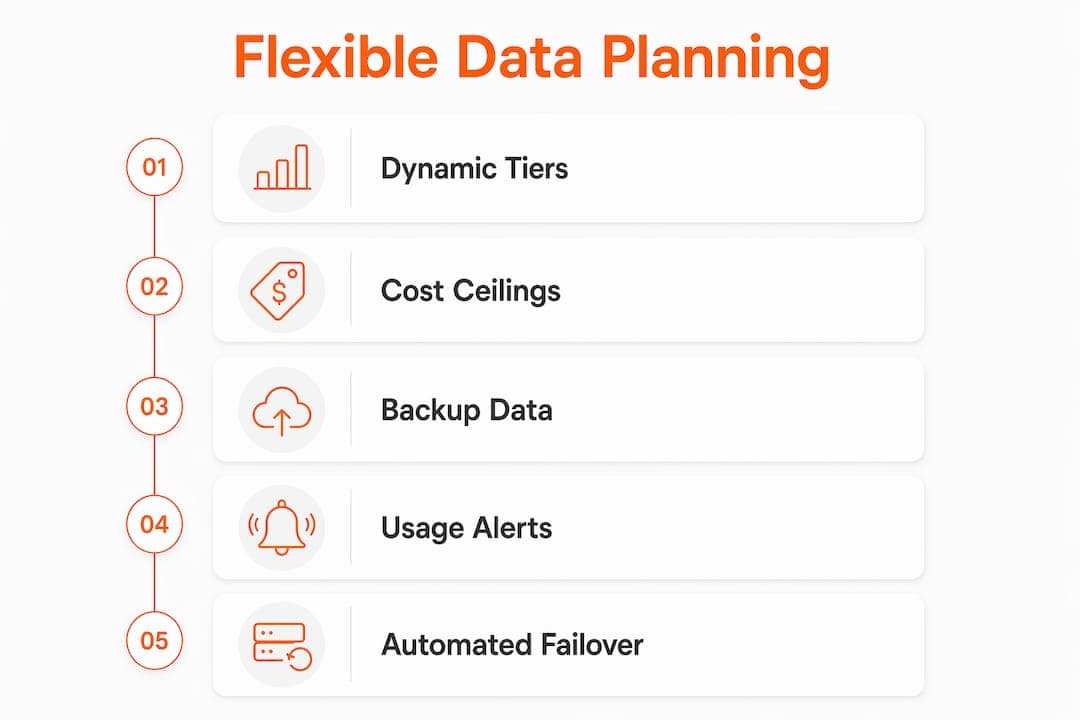
Flexible data planning works through three core mechanisms: dynamic data tiers, hard cost ceilings, and automated backup connectivity. Each one removes a specific source of stress that fixed plans create.
Dynamic data tiers scale your allocation up or down based on actual usage. You do not lock in a fixed gigabyte amount at the start of the month. Instead, the plan tracks consumption in real time and adjusts your tier accordingly.
Cost ceilings are the financial safety net. Modern flexible plans typically cap monthly charges between $85 and $95, regardless of how much data you use. That cap means a heavy-usage month during a conference or a work sprint does not produce a shocking bill.

Emergency backup data activates automatically when your main allocation runs out. Some eSIM providers include roughly 1 GB of backup connectivity monthly that triggers without any user input. You stay connected for essential tasks until you top up or your plan resets.
Pro Tip: Set a data usage alert at 80% of your tier threshold inside your device settings. You get a warning before the plan scales up, giving you time to decide whether to reduce usage or accept the next tier.
The combination of these three features means you spend less time calculating remaining data and more time actually working or traveling. Flexible plans reduce cognitive load by removing the constant micro-decisions about whether to stream, download, or hold back.
What are the common types of flexible data plans in 2026?
Three main plan models dominate the flexible data market today. Each suits a different usage profile.
| Plan type | How it works | Best for | Typical cost structure |
|---|---|---|---|
| Fixed bundle | Set GB amount per month, no scaling | Light, predictable users | Low flat rate, overage fees apply |
| Responsive tier | Scales in GB increments based on usage | Travelers with variable needs | Monthly cost cap around $85–$95 |
| Unlimited with fair use | Uncapped data with speed throttling after threshold | Heavy users, video calls | Flat monthly fee, speed drops after limit |
The responsive tier model is the clearest example of true data flexibility. Plans like the FairPlay FLEX structure start at 5 GB and scale in increments with a defined monthly cost cap, resetting each month regardless of prior consumption. That monthly reset matters because it prevents rollover debt and keeps billing predictable.
The “always-on” emergency data feature appears most often in responsive tier plans. Backup data activates automatically after the main subscription expires, maintaining essential connectivity without requiring any setup from the user.
Pro Tip: If you travel across multiple countries each month, choose a responsive tier plan with a global cost cap rather than buying separate country-specific bundles. You avoid the mental overhead of managing multiple plans and the risk of gaps in coverage.
For a broader look at how these plan types compare across providers, the top global data solutions guide covers the leading options for travelers in 2026.
How does flexible data management handle policy enforcement?
The technical backbone of flexible data management is policy enforcement combined with automatic network failover. This is where flexible data strategy moves beyond consumer convenience and into enterprise-grade reliability.
Data usage thresholds trigger specific actions when consumption hits defined levels. Granular policy enforcement enables automatic SIM failover between a primary and secondary SIM profile to avoid exceeding data caps. The device switches to the backup SIM without any manual input. When usage drops back below the threshold, failback returns the connection to the primary SIM.
For businesses managing fleets of devices across multiple countries, this automation matters enormously. Automated policy enforcement reduces manual oversight and prevents unexpected costs at scale. A field team in five different countries does not need an IT manager watching each device. The policy runs itself.
Visual monitoring tools support this automation. Data usage meters and bar graphs alert users and administrators when consumption approaches thresholds. That visibility is what makes the system trustworthy. You can see exactly where your data is going before a threshold triggers a failover.
Key technical features that support flexible data management include:
- Threshold-based failover: Switches SIM profiles automatically when a data cap is reached
- Failback logic: Returns to the primary SIM once usage normalizes
- Real-time usage meters: Visual dashboards showing consumption trends by device or user
- Granular policy rules: Per-device or per-user data caps enforced without manual intervention
For businesses that also manage cloud infrastructure costs, the same principle applies. Active usage monitoring prevents overspend whether the resource is cellular data or cloud compute.
Practical tips for using flexible data plans effectively
Choosing the right plan starts with honest self-assessment. Track your actual data usage over two or three months before committing to a plan tier. Most people underestimate usage during travel and overestimate it during routine weeks at home.
- Match the plan to your usage pattern. If your monthly data swings between 3 GB and 20 GB depending on travel, a responsive tier plan with a cost cap fits better than either a small fixed bundle or an expensive unlimited plan.
- Use your device’s built-in data monitor. Both iOS and Android track usage by app. Check it weekly, not monthly, so you catch unexpected background data drains early.
- Activate cost ceiling alerts. Many eSIM platforms send notifications when you approach your monthly cap. Turn these on before you travel, not after you receive a bill.
- Keep emergency backup data for genuine emergencies. That 1 GB backup is not a bonus tier for streaming. Reserve it for navigation, messaging, and work calls when your main allocation runs out unexpectedly.
- For businesses, enforce per-device policies. Do not rely on employees to self-manage data. Set hard thresholds at the account level and use automatic failover to prevent any single device from consuming a disproportionate share of the plan.
Pro Tip: Remote workers on eSIM plans for remote workers should pair a responsive tier plan with a local Wi-Fi backup strategy. Use cellular data for mobility and switch to Wi-Fi for large file transfers or video calls whenever possible.
Key Takeaways
Flexible data planning works best when cost ceilings, real-time monitoring, and automated failover operate together as a single system rather than separate features.
| Point | Details |
|---|---|
| Core definition | Flexible data planning scales data tiers and costs automatically based on real usage, not predictions. |
| Cost control | Hard monthly cost ceilings, typically $85–$95, prevent unexpected charges during high-usage periods. |
| Emergency backup | Roughly 1 GB of backup data activates automatically when the main allocation runs out. |
| Business automation | Threshold-based SIM failover removes manual oversight and enforces data policies across device fleets. |
| Plan selection | Match your plan to actual usage volatility, not average usage, to avoid overpaying or running short. |
Why flexible data planning changes how I think about connectivity
The biggest mistake I see travelers and remote workers make is treating data like a fixed resource. They buy a 10 GB bundle, ration it anxiously for three weeks, then blow through the rest in the final days. That behavior is a symptom of the wrong plan type, not poor discipline.
Flexible data strategy shifts the mental model entirely. When a plan is built to absorb volatility, you stop rationing and start using data the way you actually need to. A two-hour video call with a client does not feel like a gamble. A day of heavy navigation through an unfamiliar city does not trigger anxiety about running out.
What I find most underappreciated is the business case. Companies that deploy flexible data management across mobile teams do not just save money on overage charges. They free up IT and operations staff from reactive firefighting. Automated failover and policy enforcement handle the edge cases that used to require manual intervention.
The shift from fixed bundles to adaptive subscriptions is not a minor product update. It reflects a genuine change in how mobile networks and billing systems are designed. Travelers and businesses that recognize this early will spend less, stress less, and stay connected more reliably than those still buying static bundles and hoping for the best.
— Bogdan
Lumo eSIM: global flexible data plans, ready instantly
Lumo offers adaptive global eSIM plans covering over 160 countries, with instant QR code activation and no physical SIM required. Plans are built for travelers and remote workers who need data flexibility without the complexity of managing multiple carrier accounts.
Lumo’s plan structure supports the core features of flexible data management: scalable data tiers, cost-predictable pricing, and 5G/4G connectivity across major global networks. Activation takes minutes, and 24/7 customer support is available if anything needs adjusting mid-trip. For digital nomads comparing current options, the eSIM plans for digital nomads guide covers the top-rated plans available in 2026.
FAQ
What is flexible data planning in simple terms?
Flexible data planning is a mobile data approach that automatically adjusts your data tier and cost based on actual usage each month. It replaces fixed bundles with plans that scale up or down without requiring you to predict consumption in advance.
How does a cost ceiling work in a flexible data plan?
A cost ceiling sets a hard maximum monthly charge, typically around $85–$95, regardless of how much data you use. Once you hit the cap, your data continues without additional charges until the plan resets.
What happens when my flexible data plan runs out?
Many flexible plans activate an emergency backup allocation, often around 1 GB, automatically when the main subscription expires. This backup requires no setup and maintains essential connectivity for navigation, messaging, and calls.
Are flexible data plans better for businesses than fixed plans?
Flexible data plans suit businesses with variable or unpredictable usage better than fixed plans. Automated policy enforcement and SIM failover reduce manual oversight and prevent unexpected overage charges across device fleets.
Can I use a flexible data plan across multiple countries?
Yes. eSIM-based flexible data plans, including those offered by Lumo, are designed for multi-country use. A single plan with global coverage removes the need to buy separate country-specific SIMs for each destination.
Recommended
Related Topics
Stay Connected Anywhere
Prepaid eSIM data plans for 180+ countries and territories. No physical SIM required.