Why flexible data plans matter for travelers in 2026

International data costs drop by up to 80% with flexible data plans, yet most travelers still overpay for roaming. Flexible data plans give you control over coverage, duration, and cost, eliminating surprise charges and rigid contracts. Whether you’re a remote worker hopping between cities or a frequent flyer seeking seamless connectivity, understanding these plans transforms how you stay connected abroad. This guide breaks down what makes flexible data plans essential, how they work, and why they’re the smart choice for modern travelers.
Table of Contents
- Introduction To Flexible Data Plans
- How Flexible Data Plans Work
- Financial Benefits Of Flexible Data Plans
- Technology Behind Flexible Data Plans
- Impact On Remote Work Productivity
- Common Misconceptions About Flexible Data Plans
- Tradeoffs And Decision Criteria For Choosing Flexible Data Plans
- Practical Tips For Using Flexible Data Plans Effectively
- Discover Flexible Esim Plans With Lumo
- FAQ
Key takeaways
| Point | Details |
|---|---|
| Cost savings | Flexible data plans reduce international data costs by 60-80% compared to traditional roaming. |
| Instant activation | QR code technology activates plans in minutes, supporting last-minute travel changes. |
| Multi-device support | Share data across phones, tablets, and laptops using multiple eSIM profiles. |
| Customizable coverage | Adjust data volume, duration, and geographic regions to match your exact travel needs. |
| Productivity boost | Remote workers report 40% fewer connectivity disruptions with flexible plans. |
Introduction to flexible data plans
Flexible data plans are mobile connectivity solutions that let you customize data volume, coverage duration, and geographic regions based on your travel patterns. Unlike traditional carrier plans locked into monthly contracts and fixed data allowances, flexible plans adapt to your needs. They’re built on eSIM technology, which means no physical SIM cards to swap or wait for in the mail.
The primary users are frequent travelers, remote workers, and digital nomads who cross borders regularly and need reliable connectivity without paying excessive roaming fees. A survey of digital nomads found 72% prioritize flexible data plans as critical to their lifestyle, citing freedom from long-term contracts and cost savings as primary factors.
eSIM technology is the backbone of flexible data plans. An eSIM is a digital SIM embedded in your device that can store multiple carrier profiles simultaneously. You activate plans instantly via QR codes, switch between carriers without changing hardware, and maintain separate profiles for different countries or purposes. This eliminates the hassle of hunting for local SIM cards at airports or dealing with compatibility issues.
Key features that define flexible data plans:
- Customizable data packages tailored to trip length and usage patterns
- No long-term contracts or monthly commitments
- Instant activation through QR codes or app downloads
- Coverage across multiple countries with a single plan
- Ability to purchase additional data mid-trip if needed
For travelers tired of bill shock and connectivity gaps, flexible data plans represent a fundamental shift in how we access mobile data abroad. They put control back in your hands, letting you pay only for what you need when you need it. Understanding what are eSIM data plans helps clarify how this technology enables such flexibility.
How flexible data plans work
Flexible data plans operate through a combination of eSIM technology, carrier partnerships, and digital activation methods that give you unprecedented control over your mobile connectivity. The mechanics are straightforward once you understand the components.
Plan customization starts with choosing your data volume, typically ranging from 1GB for light browsing to 50GB or more for heavy streaming and video calls. You select coverage duration from single days to full months, matching your travel timeline exactly. Geographic scope varies from single-country plans to regional packages covering entire continents or global bundles spanning 160+ countries.
Flexible data plans enhance user experience by providing customizable data packages, allowing adjustment of data volume, duration, and geographic coverage to match specific travel routines. This customization prevents both overbuying unused data and running out mid-trip.

Instant activation happens through QR codes sent via email or displayed in mobile apps. You scan the code with your device camera, and the eSIM profile downloads automatically. The entire process takes 2-3 minutes, even while sitting in an airport lounge. No need to visit stores, wait for shipping, or fumble with tiny SIM card trays.
Multi-profile support is where flexible plans truly shine. Your device can store 5-10 eSIM profiles simultaneously, though only one data plan stays active at a time. You might have:
- A European regional plan for business trips
- A US-specific plan for client visits
- A global backup plan for unexpected destinations
- Your home carrier profile for domestic use
Switching between profiles takes seconds through your device settings. This flexibility means you’re never caught without connectivity options, regardless of where travel takes you.
Adjustable coverage lets you modify plans as circumstances change. Extended your Paris stay by a week? Purchase additional data for France without reactivating a whole new plan. Decided to add a weekend in Rome? Upgrade to a Europe-wide package that includes Italy. The ability to adapt prevents waste and keeps costs aligned with actual usage.
These operational features make flexible data plans practical for real-world travel scenarios where plans change, trips extend, and connectivity needs fluctuate. Learning about instant eSIM activation global connectivity reveals how this seamless process works behind the scenes. The technical foundation of eSIM data plans enables all these flexible features to function smoothly.
Financial benefits of flexible data plans
The cost advantages of flexible data plans become clear when you compare them against traditional roaming charges and fixed international packages. Real savings emerge from paying only for data you actually use, avoiding carrier markup, and eliminating surprise fees.
Typical savings range from 60-80% on international data costs compared to activating your home carrier’s roaming service. A week in Japan might cost $120 with standard roaming but only $25-30 with a flexible eSIM plan offering the same data volume. Over multiple trips annually, these savings compound significantly.
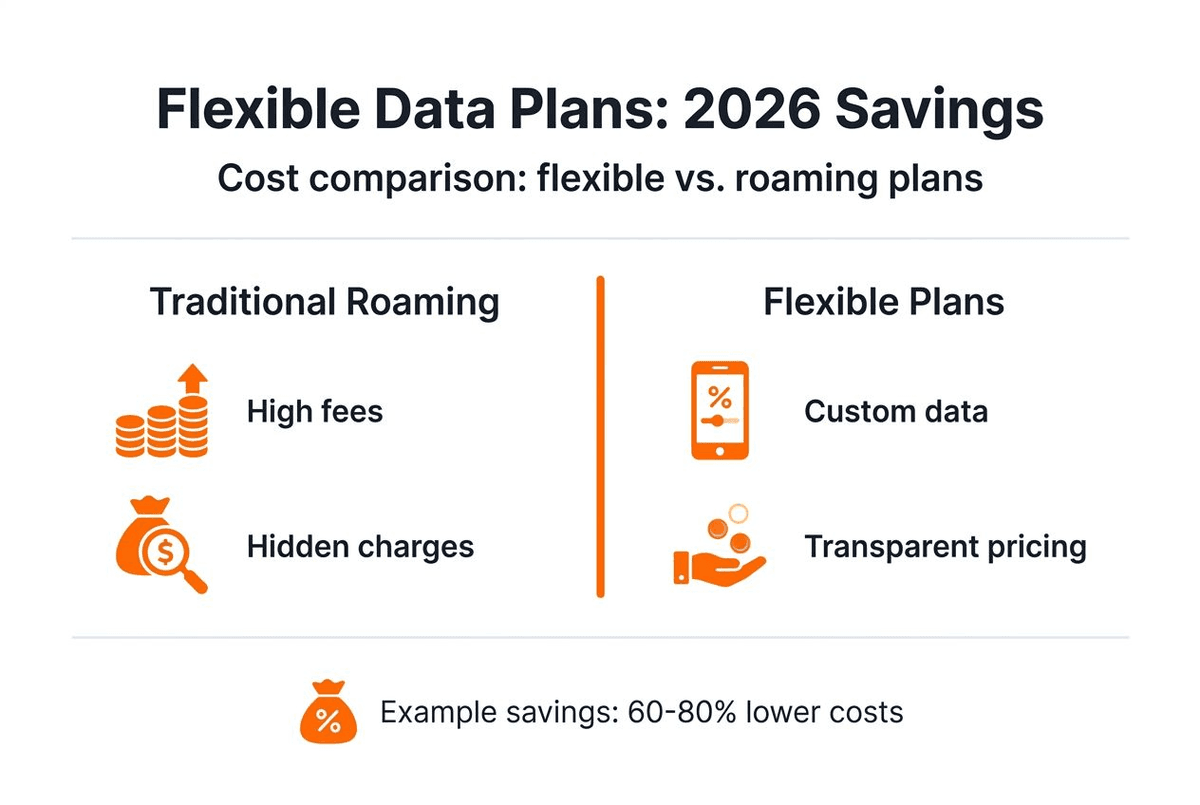
Cost per megabyte drops by approximately 50% with flexible plans versus traditional roaming packages. Home carriers charge premium rates because they’re routing your data through international agreements and infrastructure. Flexible plans connect you directly to local carriers at near-local rates, cutting out intermediary costs.
Avoidance of surprise charges represents substantial value beyond base pricing. Traditional roaming plans often have hidden triggers, throttling policies, or overage fees that appear unexpectedly on bills. Flexible plans give you fixed costs upfront with clear data limits and no automatic overages.
Here’s how costs compare across different scenarios:
| Scenario | Traditional Roaming | Flexible Data Plan | Savings |
|---|---|---|---|
| 5GB Europe (1 week) | $150 | $35 | 77% |
| 10GB Asia (2 weeks) | $280 | $65 | 77% |
| 3GB Global (10 days) | $180 | $45 | 75% |
| 20GB Multi-region (1 month) | $450 | $120 | 73% |
Value extends beyond simple dollar savings. Flexible plans let you right-size data purchases to match actual consumption patterns. If you typically use 8GB monthly but travel requires 15GB, you buy exactly 15GB for that month rather than upgrading to an unlimited plan permanently.
Key financial advantages:
- Elimination of monthly commitment fees and contract penalties
- No activation charges or international roaming setup fees
- Transparent pricing with costs known before purchase
- Ability to share data budgets across multiple devices, reducing redundant purchases
- Options to buy data in smaller increments as needed rather than large bundles
Pro Tip: Track your typical data usage for a month before traveling using your device’s built-in monitoring tools. This baseline helps you purchase the right plan size, avoiding both overpaying for unused data and scrambling to buy emergency top-ups mid-trip.
The financial case strengthens when you travel frequently. Someone taking four international trips yearly might spend $600-800 on roaming fees with traditional carriers but only $150-200 with flexible plans for equivalent coverage. That’s $500+ in annual savings, enough to fund an additional trip.
Exploring affordable travel data plans reveals additional strategies for maximizing value. The international data plan checklist 2026 walks through selecting cost-effective options for your specific travel patterns.
Technology behind flexible data plans
The technical infrastructure enabling flexible data plans combines eSIM hardware, cloud-based activation systems, and extensive carrier partnerships that work together to deliver instant global connectivity. Understanding these components clarifies why flexible plans outperform traditional options.
eSIM instant activation across 160+ countries relies on pre-negotiated agreements between eSIM platforms and local mobile network operators worldwide. When you purchase a plan, the system identifies which local carriers provide optimal coverage in your destination and assigns your eSIM profile to connect through their network. This happens automatically without requiring you to research or choose carriers manually.
Local carrier switching optimizes both cost and coverage quality. The eSIM platform continuously evaluates network performance, congestion levels, and pricing across available carriers in each region. If you’re traveling through multiple countries, your device seamlessly switches to the best local provider in each location, maintaining connectivity without manual intervention.
QR code activation reduces setup time from hours or days down to minutes, enhancing travelers’ ability to maintain connectivity even during unplanned destination changes. The QR code contains encrypted credentials that authenticate your device with the carrier network and download the eSIM profile directly to your device’s embedded SIM chip.
Multi-profile and multi-device support stems from eSIM hardware capabilities. Modern smartphones, tablets, and laptops include eSIM chips that can store 5-10 carrier profiles simultaneously. Each profile contains:
- Carrier network credentials and authentication keys
- Plan details including data allowance and expiration
- Network configuration settings for optimal connectivity
- Roaming permissions and access restrictions
You activate or deactivate profiles through device settings, switching between plans in seconds. This means you can maintain your home carrier profile for calls and texts while using a flexible data plan for internet access, or keep separate work and personal data profiles active simultaneously.
Technology advantages that enable flexibility:
- Cloud-based management systems that sync plans across devices instantly
- Real-time data usage tracking accessible through mobile apps
- Automated carrier selection algorithms that optimize performance
- Remote plan modification without requiring new downloads or QR codes
- Built-in redundancy with multiple carrier fallback options
Pro Tip: Before departing, download your eSIM profile while connected to WiFi to avoid any potential activation delays at your destination. The profile installs in minutes but having it ready means connectivity the moment you land.
Security measures protect your data and credentials throughout the process. eSIM profiles use encrypted authentication protocols that prevent unauthorized access to carrier networks. Unlike physical SIM cards that can be removed and cloned, eSIM credentials remain locked to your specific device hardware.
The technical foundation also supports advanced features like data pooling across devices. If you have both a phone and tablet with eSIM capability, a single flexible plan can provide data to both devices, automatically balancing allocation based on usage patterns. This eliminates the need to purchase separate plans for each device.
Understanding QR code activation global eSIM setup provides deeper insight into the activation process. The broader eSIM benefits for travelers explores how this technology transforms mobile connectivity. Technical details about instant eSIM activation reveal the infrastructure that makes split-second carrier switching possible.
Impact on remote work productivity
Flexible data plans directly address connectivity challenges that undermine remote work effectiveness during travel. The ability to maintain stable internet access across locations, devices, and time zones keeps distributed teams productive regardless of physical location.
Remote workers report 40% fewer connectivity disruptions when using flexible data plans compared to traditional roaming or hunting for WiFi hotspots. Consistent connectivity means fewer dropped video calls, interrupted file uploads, or missed messages during critical work hours. The reliability comes from having dedicated data allocation rather than competing for bandwidth on shared hotel or cafe WiFi networks.
Data sharing across laptops, phones, and tablets enhances productivity by enabling true mobile workstations. You can:
- Join video conferences on your laptop using eSIM data while your phone handles messages
- Upload client deliverables from your tablet during transit without WiFi dependency
- Maintain access to cloud tools and documents across all devices simultaneously
- Avoid productivity gaps when moving between locations throughout the day
Customizable plans fit diverse travel and work schedules more effectively than fixed monthly allocations. A remote worker spending two weeks in Southeast Asia followed by a week in Europe can purchase region-specific plans for each leg rather than maintaining expensive global coverage for the entire month. This targeted approach reduces costs while ensuring adequate data where and when it’s needed.
Work-specific advantages include:
- Ability to schedule calls and meetings confidently without connectivity uncertainty
- Access to VPNs and secure corporate networks through reliable data connections
- Real-time collaboration on documents and projects without lag or interruption
- Flexibility to extend work sessions beyond café closing times or hotel check-out
- Backup connectivity option when primary networks experience outages
The productivity gains extend beyond avoiding disruptions. Having reliable connectivity removes mental overhead spent worrying about finding WiFi, conserving data, or explaining connection problems to colleagues. This cognitive load reduction lets you focus energy on actual work rather than connectivity logistics.
For teams with distributed members, flexible data plans create equity by ensuring everyone maintains similar connectivity quality regardless of location. A team member working from Bali gets the same reliable video call quality as someone in a traditional office, maintaining cohesion and reducing friction in async communication.
Exploring global data usage tips for remote workers offers strategies for maximizing plan effectiveness while maintaining productivity across time zones and locations.
Common misconceptions about flexible data plans
Several persistent myths prevent travelers and remote workers from adopting flexible data plans, despite clear evidence of their advantages. Addressing these misconceptions helps make informed decisions about international connectivity.
Myth: Home carrier roaming packages offer the best value because they’re convenient and familiar. Reality: Most carrier roaming plans charge 3-5x more than flexible eSIM alternatives for equivalent data volumes. The convenience premium rarely justifies the cost difference, especially for trips longer than a few days. Carriers mark up international data significantly because customers assume switching is complicated.
Myth: You need technical expertise to set up and use eSIM data plans. Reality: QR code activation takes less time than swapping a physical SIM card and requires no technical knowledge beyond pointing your camera at a code. The setup process walks users through each step with clear instructions. If you can install an app, you can activate an eSIM.
Myth: Flexible plans force you to buy more data than you need because they only sell large bundles. Reality: Most flexible plan providers offer packages starting from 1GB, with incremental options letting you purchase exactly the amount your usage patterns require. You’re not locked into oversized bundles designed to maximize provider revenue.
Misunderstandings about multi-device usage also persist. Many travelers believe they need separate plans for each device, not realizing that modern flexible plans support data sharing across multiple devices through a single purchase. This capability means one 10GB plan can serve both your phone and laptop rather than requiring two separate 5GB plans at higher total cost.
Common false assumptions:
- Flexible plans only work in major cities and tourist areas, not remote regions
- Coverage quality suffers compared to major carrier networks
- You lose access to your home phone number when using an eSIM data plan
- Switching back to your home carrier after travel is complicated or requires technical support
- Emergency services and local numbers won’t work properly with eSIM plans
The reality: Flexible plans connect through the same carrier networks your home provider would use for roaming, delivering identical coverage and speed. Your home number remains active and accessible while using a separate eSIM profile for data. Switching between profiles or removing eSIM plans takes seconds through device settings with no provider assistance needed.
Another misconception centers on data speed and quality. Travelers sometimes assume flexible plans throttle speeds or prioritize local subscribers over visiting eSIM users. In practice, flexible plans typically deliver full 4G/5G speeds identical to what local residents experience because you’re connecting as a standard customer of the local carrier network.
Understanding these realities removes barriers to adoption and helps travelers make choices based on actual benefits rather than outdated assumptions about how international connectivity works.
Tradeoffs and decision criteria for choosing flexible data plans
While flexible data plans offer significant advantages, thoughtful evaluation of tradeoffs and decision factors ensures you select options aligned with your specific needs and travel patterns. No solution fits every scenario perfectly.
Risk of overbuying data exists when estimating usage for unfamiliar destinations or trip types. First-time users often purchase more data than necessary out of caution, leaving unused allowances that expire. Monitoring usage during initial trips helps calibrate future purchases more accurately. Most providers offer usage tracking through apps, letting you check consumption in real-time.
Evaluating coverage breadth versus plan cost requires balancing comprehensiveness with actual travel destinations. Global plans covering 160+ countries cost more than regional packages but might be unnecessary if you’re only visiting two or three specific countries. Targeting plans to your precise itinerary maximizes value.
Balancing flexibility with plan complexity matters because too many options can overwhelm decision-making. Some providers offer dozens of plan variations across countries, regions, durations, and data volumes. While choice enables optimization, it also requires research and comparison.
Key decision criteria:
- Trip duration and whether it aligns better with daily, weekly, or monthly plan structures
- Number of countries visited and whether a regional plan covers all destinations
- Expected data usage patterns based on work requirements and personal browsing habits
- Device compatibility and whether you need multi-device support
- Provider reputation and customer service quality for troubleshooting if needed
Here’s how different plan types compare:
| Plan Type | Best For | Potential Downside | Ideal User |
|---|---|---|---|
| Single-country | Extended stays in one location | Limited flexibility if plans change | Remote workers with stable itineraries |
| Regional | Multi-country trips within one continent | Higher cost than single-country if you stay put | Travelers covering several nearby countries |
| Global | Unpredictable multi-continent travel | Premium pricing for maximum flexibility | Frequent flyers with varied destinations |
| Short-term | Weekend trips or brief visits | Higher per-day cost than longer plans | Occasional travelers with infrequent trips |
Pro Tip: For your first flexible plan purchase, slightly overestimate your data needs by 20-30% to avoid mid-trip stress. Once you understand your actual consumption patterns, you can optimize future purchases more precisely.
Choosing plans that fit your travel style and frequency requires honest assessment of your patterns. Someone taking four short trips yearly has different optimization opportunities than a digital nomad spending six months abroad. The former benefits from trip-specific plans, while the latter might choose long-duration regional coverage.
Provider reliability varies significantly. Research customer reviews, check whether providers offer 24/7 support, and verify their coverage claims through independent sources before committing to longer-duration or higher-cost plans. Established providers with transparent pricing typically deliver better experiences.
The international data plan checklist 2026 guides evaluation of these tradeoffs systematically. Comparing options through affordable travel data plans resources helps identify the best value for your circumstances.
Practical tips for using flexible data plans effectively
Maximizing value from flexible data plans requires strategic usage practices that prevent waste, optimize coverage, and ensure connectivity when you need it most. These actionable tips help you get the most from your investment.
-
Monitor your data usage regularly through your device’s built-in tracking tools and your eSIM provider’s app. Check consumption daily during the first few days of travel to identify unexpected usage spikes from background apps or automatic updates. Adjust settings proactively rather than discovering overages after the fact.
-
Select plans matching your expected data needs and specific travel locations rather than defaulting to the largest available package. Review the past month’s usage on your home network as a baseline, then adjust for travel-specific needs like navigation apps, translation tools, or increased video calls.
-
Utilize multi-device support to optimize your data allocation across phones, tablets, and laptops. Instead of purchasing separate plans for each device, share a single larger plan that pools data efficiently. Configure your laptop to use eSIM data only when WiFi is unavailable, conserving allocation for essential mobile usage.
-
Leverage instant activation for last-minute travel changes by keeping backup regional or global plans ready but inactive in your eSIM profile list. If your itinerary shifts unexpectedly, you can activate pre-loaded plans in minutes without scrambling to research and purchase options during travel stress.
-
Disable automatic app updates and background refresh for non-essential apps before traveling to prevent silent data consumption. Configure cloud photo backups to occur only over WiFi, schedule email syncing to manual intervals, and pause video streaming apps that might auto-play content.
-
Purchase plans slightly before departure to activate them immediately upon arrival, ensuring connectivity from the moment you land. Download QR codes and installation instructions while still connected to home WiFi to avoid activation complications at your destination.
-
Track expiration dates for multi-week or monthly plans using calendar reminders set for 2-3 days before plans expire. This advance warning lets you purchase extensions or new plans proactively rather than losing connectivity unexpectedly.
Pro Tip: Enable low data mode in your device settings when using flexible plans to automatically reduce background consumption and extend your data allocation further without impacting essential app functionality.
Additional strategies:
- Test your eSIM plan activation the day before departure to troubleshoot any issues while still at home with reliable connectivity
- Save offline maps for your destinations to reduce navigation data usage by 80-90%
- Configure video call apps to use lower resolution settings, cutting bandwidth requirements by half without significantly impacting call quality
- Set data usage warnings at 50% and 80% of your plan allocation to trigger proactive monitoring
Understanding these practices prevents common frustrations and ensures your flexible data plan delivers reliable connectivity throughout your trip. The smart global data usage tips guide offers deeper strategies for optimizing consumption patterns. Cross-referencing with the international data plan checklist 2026 ensures you’ve covered all essential planning steps before departure.
Discover flexible eSIM plans with Lumo
Now that you understand how flexible data plans transform international connectivity, finding the right provider makes all the difference. Lumo delivers the flexibility, cost savings, and instant activation discussed throughout this guide through a platform built specifically for modern travelers and remote workers.
Lumo offers instant QR code activation across 160+ countries with plans customized to your exact travel needs. Whether you need 3GB for a weekend city break or 50GB for a month of remote work across Southeast Asia, you’ll find options that match your requirements without forcing you into oversized bundles or rigid contracts.
The platform supports multiple eSIM profiles and devices, letting you manage data across your phone, tablet, and laptop through a single account. Transparent pricing shows exactly what you’ll pay upfront, and 24/7 customer support ensures help is available whenever you need it, regardless of time zone.
Explore Lumo eSIM instant global data plans to find coverage for your next destination. The platform’s straightforward interface walks you through plan selection, instant activation, and usage monitoring without technical complexity. You’ll stay connected on your terms, paying only for the data you actually use.
FAQ
Are flexible data plans compatible with all smartphones?
Most recent smartphones released after 2020 support eSIM technology and work seamlessly with flexible data plans. Check your device specifications or settings menu for eSIM capability. Compatibility continues expanding as manufacturers adopt eSIM as standard hardware.
Can I share data from a flexible plan across multiple devices?
Many flexible plans support multi-device data sharing using multiple eSIM profiles linked to the same account. You can distribute your data allocation across phones, tablets, and laptops, optimizing usage without purchasing separate plans for each device. This feature significantly reduces total connectivity costs.
How do flexible data plans prevent unexpected roaming charges?
Customizable data limits and transparent pricing eliminate surprise fees by showing exact costs before purchase. Real-time usage tracking through mobile apps and automatic notifications when approaching your limit help maintain control. The international data plan checklist 2026 provides strategies for monitoring consumption effectively.
Is it difficult to activate flexible data plans while traveling?
QR code activation takes just minutes, even while on the go at airports or hotels. You scan a code with your camera, and the eSIM profile downloads automatically without requiring physical SIM cards or lengthy setup processes. The simplicity of QR code activation global eSIM setup makes it accessible for travelers of all technical skill levels.
Recommended
Related Topics
Stay Connected Anywhere
Prepaid eSIM data plans for 180+ countries and territories. No physical SIM required.