Global Data Plans: Seamless Travel Connectivity

Every Digital Nomad knows the headache of landing in a new country only to face confusing SIM cards, unreliable connections, or steep roaming charges. Keeping your workflow seamless across 160 destinations can feel impossible without the right plan. Understanding global data plan features and dispelling common myths means you can focus on your journey instead of stressing about connectivity. Get clear on how advanced solutions bring you hassle-free, cost-effective internet—no matter where your travels take you.
Table of Contents
- Defining Global Data Plans And Common Myths
- Types Of Global Data Plans For Travelers
- How Global Data Plans Work Across Borders
- Key Features And Benefits Of Esim Solutions
- Costs, Risks, And Common Pitfalls To Avoid
- Comparing Global, Regional, And Local Plans
Key Takeaways
| Point | Details |
|---|---|
| Global Data Plans Are Cost-Effective | These plans provide flexible connectivity without excessive roaming charges, making them ideal for travelers. |
| Myths Surrounding International Data | Many believe international data is always expensive or requires multiple SIM cards, but modern solutions offer affordable options and utilize eSIM technology. |
| Choice of Plan Types Matters | Selecting the right plan—be it prepaid SIM cards, roaming plans, or eSIM packages—depends on individual travel needs and usage patterns. |
| Risk Management is Essential | Travelers should understand potential risks, such as unexpected charges and security vulnerabilities, and have backup connectivity strategies in place. |
Defining Global Data Plans and Common Myths
A global data plan represents a flexible connectivity solution enabling travelers to access mobile internet services seamlessly across multiple countries without incurring excessive roaming charges. Unlike traditional mobile carrier plans, these modern digital solutions provide instant, affordable access to high-speed internet through advanced network technologies.
Understanding the fundamental characteristics of global data plans requires dispelling several persistent myths about international mobile connectivity. Critical data management standards reveal that many travelers misunderstand how digital connectivity actually functions across borders.
Common myths about global data plans include:
- Myth 1: International data is always expensive
- Myth 2: You need a separate SIM card for each country
- Myth 3: Global data plans offer slow or unreliable connections
- Myth 4: Setting up international data requires complex technical knowledge
The reality is far more nuanced. Modern global data plans leverage sophisticated data classification techniques to provide seamless, secure, and cost-effective connectivity. These plans utilize advanced eSIM technologies that allow instant network switching and provide transparent pricing structures.
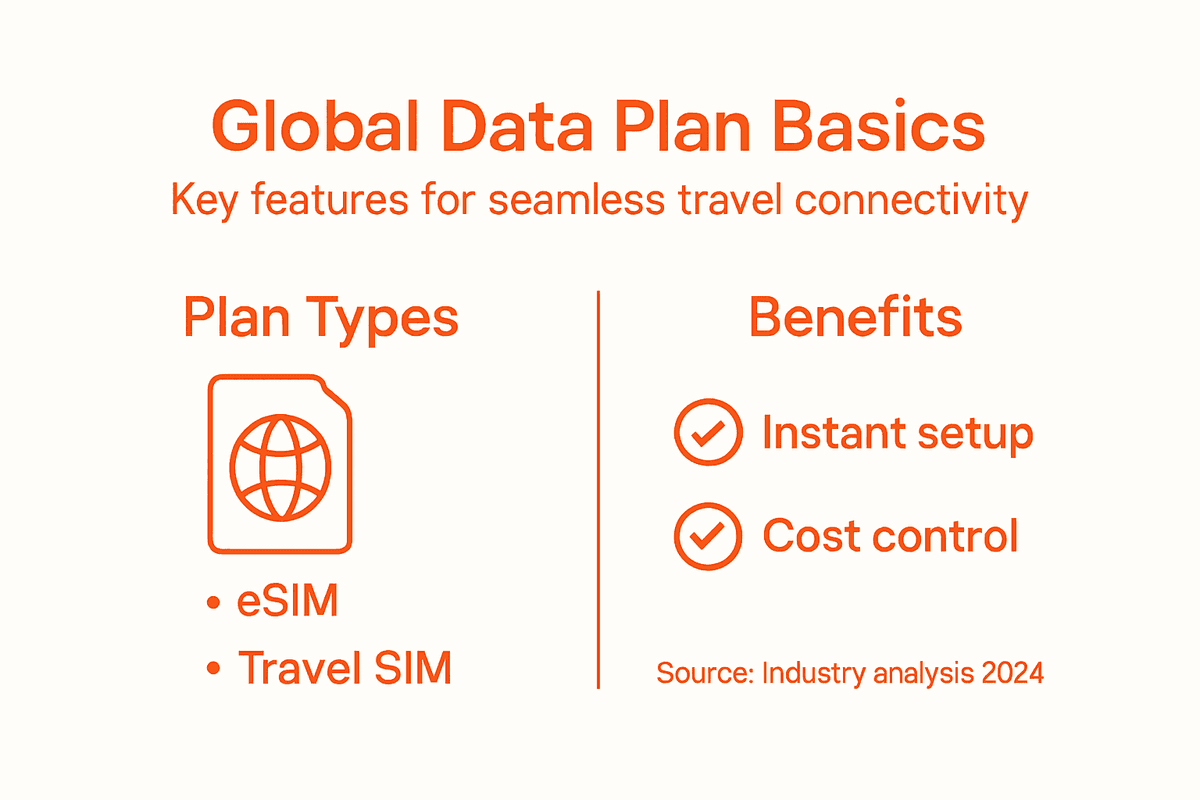
Digital nomads and remote workers now have unprecedented flexibility in managing their international connectivity. The key is understanding how these plans work and selecting options that match specific travel requirements and usage patterns.
Pro tip: Always research and compare global data plan options before international travel to ensure you have the most cost-effective and reliable connectivity solution for your specific destinations.
Types of Global Data Plans for Travelers
Travelers today have multiple global data plan options designed to provide flexible and cost-effective mobile connectivity across international borders. Travel connectivity research reveals several distinct categories of data plans tailored to different travel needs and usage patterns.
The primary types of global data plans include:
-
Prepaid Travel SIM Cards
- Fixed data volume
- Predetermined validity period
- Typically country or region-specific
-
Roaming Data Plans
- Offered directly by home mobile carriers
- Often more expensive
- Limited international coverage
-
Mobile Hotspot Rental Services
- Portable device providing internet access
- Supports multiple devices simultaneously
- Ideal for group travelers
-
eSIM Global Data Packages
- Digital SIM technology
- Instant activation
- Flexible data purchasing
Economic travel data analysis indicates that digital nomads and frequent international travelers increasingly prefer flexible, technology-driven connectivity solutions that transcend traditional telecommunications models.
Each global data plan type comes with unique advantages and limitations. The key is selecting a plan that matches your specific travel destination, data consumption requirements, and budget constraints. Modern travelers can now mix and match different plan types to create personalized connectivity strategies.
Here’s a concise comparison of major global data plan types and their best-use scenarios:
| Plan Type | Best For | Pricing Structure | Device Requirements |
|---|---|---|---|
| Prepaid Travel SIM | Short-term visitors | Fixed upfront cost | Unlocked phone, SIM slot |
| Roaming via Home Carrier | Occasional global travel | High variable charges | Existing SIM, enabled roaming |
| Hotspot Rental | Groups, multi-device | Daily/weekly fee | WiFi-enabled devices |
| eSIM Global Package | Frequent international | Flexible digital purchases | eSIM-compatible device |
Pro tip: Compare multiple global data plan options and consider purchasing a combination of plans to ensure comprehensive coverage during your international travels.
How Global Data Plans Work Across Borders
Global data plans represent a sophisticated network of international telecommunications technologies that enable seamless mobile connectivity across different countries and regulatory environments. Cross-border data transfer mechanisms have evolved to create intelligent systems that automatically navigate complex international communication infrastructures.
The core technological components enabling global data plans include:
-
Network Roaming Agreements
- Partnerships between international mobile carriers
- Allows data transmission across multiple countries
- Enables consistent connectivity
-
Mobile Virtual Network Operators (MVNOs)
- Leverage existing cellular infrastructure
- Provide more flexible international coverage
- Negotiate rates across multiple national networks
-
eSIM Technology
- Digital SIM card functionality
- Instant network switching
- Supports multiple carrier profiles
Advanced security architectures demonstrate how these plans maintain privacy and compliance while providing uninterrupted global connectivity. The technological infrastructure must simultaneously manage technical challenges and legal complexities across different jurisdictions.
Modern global data plans work by creating intelligent routing systems that automatically select the most cost-effective and reliable network based on your current geographic location. This dynamic approach ensures travelers receive consistent, high-quality internet access without manually configuring complex network settings.

Pro tip: Always verify your device’s international compatibility and understand your specific data plan’s roaming capabilities before traveling to minimize unexpected connectivity issues.
Key Features and Benefits of eSIM Solutions
eSIM technology represents a revolutionary approach to mobile connectivity, transforming how travelers and digital professionals manage their global communication networks. eSIM technological standards enable users to transition from traditional physical SIM cards to a more flexible, digital alternative that simplifies international communication.
The core features of eSIM solutions include:
-
Remote Provisioning
- Instant digital activation
- No physical SIM card required
- Immediate network connection
-
Multiple Profile Management
- Store multiple carrier profiles
- Switch networks without changing hardware
- Supports simultaneous international plans
-
Enhanced Security
- Built-in encryption technologies
- Reduced risk of physical SIM theft
- Centralized digital management
Global connectivity infrastructure demonstrates how eSIM technology is particularly transformative for remote and underserved regions. The digital nature of these solutions eliminates traditional barriers to mobile connectivity, enabling more people to access global communication networks.
The technological sophistication of eSIM solutions goes beyond simple convenience. By providing dynamic network selection, real-time profile updates, and seamless international roaming, these digital SIM technologies represent a fundamental shift in how mobile connectivity is conceived and delivered.
Use this feature summary to evaluate which eSIM benefits match your travel needs:
| eSIM Feature | Global Usage Impact | Security Benefit | Traveler Convenience |
|---|---|---|---|
| Remote Provision | Immediate worldwide access | No physical SIM exposure | Activate from anywhere instantly |
| Multiple Profiles | Manage networks easily | Centralized profile control | Switch plans without new hardware |
| Encryption | Secures data in transit | Prevents SIM theft risks | Peace of mind while abroad |
Pro tip: Before traveling, verify your device’s eSIM compatibility and research carrier support to ensure smooth international connectivity.
Costs, Risks, and Common Pitfalls to Avoid
Global data plans offer tremendous convenience, but travelers must understand the potential financial and operational risks associated with international connectivity. Cross-border data regulations reveal complex challenges that can impact mobile communication strategies.
Common financial and operational risks include:
-
Unexpected Roaming Charges
- Hidden network fees
- Automatic high-cost data connections
- Unclear billing structures
-
Data Security Vulnerabilities
- Unsecured public networks
- Potential privacy breaches
- Limited encryption protection
-
Technical Compatibility Issues
- Device network restrictions
- Incompatible carrier protocols
- Limited regional coverage
Data reliability challenges demonstrate the critical importance of understanding potential service interruptions and maintaining robust backup communication strategies. Travelers must proactively manage their connectivity to minimize potential disruptions.
Effective risk management requires comprehensive research, understanding specific carrier limitations, and developing flexible communication backup plans. Digital nomads should never rely exclusively on a single connectivity solution, especially when traveling through multiple international jurisdictions.
Pro tip: Always maintain multiple communication channels and purchase local SIM cards as a backup to your primary global data plan.
Comparing Global, Regional, and Local Plans
Travelers and digital professionals face increasingly complex choices when selecting mobile data plans that balance coverage, cost, and connectivity requirements. Internet connectivity strategies reveal nuanced differences between global, regional, and local data plan architectures.
Key characteristics of different data plan types include:
-
Global Data Plans
- Comprehensive international coverage
- Consistent pricing across multiple countries
- Higher per-gigabyte costs
- Ideal for frequent international travelers
-
Regional Data Plans
- Limited to specific geographic zones
- More affordable than global plans
- Tailored to specific continental networks
- Better performance within designated regions
-
Local Data Plans
- Country-specific mobile networks
- Lowest per-gigabyte pricing
- Maximum local network performance
- Requires multiple purchases for international travel
Multinational connectivity strategies demonstrate that the optimal plan depends on individual travel patterns, budget constraints, and specific connectivity requirements. Digital professionals must carefully evaluate their specific needs against each plan type’s strengths and limitations.
Understanding the nuanced trade-offs between global, regional, and local plans enables travelers to develop more sophisticated and cost-effective connectivity strategies. The right approach often involves combining multiple plan types to maximize coverage and minimize expenses.
Pro tip: Analyze your specific travel destinations and data usage patterns before selecting a mobile plan to optimize connectivity and minimize unnecessary expenses.
Experience True Seamless Connectivity on Your Global Journeys
If you have ever struggled with confusing roaming charges or managing multiple SIM cards during international travel, you are not alone. The challenge of finding flexible, affordable, and reliable global data plans that work effortlessly across borders is real. The article explains how eSIM technology and dynamic network switching can simplify this complexity, but putting that knowledge into practice requires an intuitive and powerful platform.
Lumo is designed exactly for travelers who want to avoid unexpected fees and technical headaches while enjoying instant activation and extensive coverage in over 160 Countries. With Lumo’s all-in-one eSIM solution, you can easily switch between local carriers and maintain multiple profiles on your smartphones, tablets, and laptops without any complicated setup. Whether you are a digital nomad, a remote worker, or simply a global explorer, Lumo ensures you stay connected at high-speed 5G and 4G networks with flexible data plans tailored to your travel needs.
Take control of your international connectivity today. Visit Lumo and discover how easy seamless global data plans can be. Don’t wait for unexpected roaming charges or unreliable service. Join the community of savvy travelers who trust Lumo to keep them connected around the world.
Frequently Asked Questions
What is a global data plan?
A global data plan is a flexible connectivity solution that allows travelers to access mobile internet services across multiple countries without incurring excessive roaming charges. It facilitates affordable, high-speed internet through advanced network technologies.
How do eSIM global data packages work?
eSIM global data packages utilize digital SIM technology for instant activation and allow users to store multiple carrier profiles. This enables seamless network switching and flexible data purchasing without the need for a physical SIM card.
What are the common types of global data plans?
The main types of global data plans include prepaid travel SIM cards, roaming data plans from home carriers, mobile hotspot rental services, and eSIM global data packages. Each has unique benefits tailored to different travel needs and usage patterns.
What risks should travelers consider when using global data plans?
Travelers should be aware of potential risks such as unexpected roaming charges, data security vulnerabilities on public networks, and technical compatibility issues with devices. It’s essential to have backup communication plans and thoroughly understand the terms of your chosen plan.
Recommended
- What Is a Data Plan and Why It Matters Abroad | Lumo eSIM Store
- Affordable Travel Data Plans: Smart Global Connectivity | Lumo eSIM Store
- Step-by-Step Guide to Global Data Plans for Travelers | Lumo eSIM Store
- 7 Essential Steps for a Travel Data Management Checklist | Lumo eSIM Store
- Galentine’s Guide: Why Your Travel Besties Needs a Bolstie – BOLSTIE TRAVEL PILLOW
- Read - 20 Best Men’s Travel Clothing Brands: Comfort & Style 2025. SLY Collective Underwear
Related Topics
Stay Connected Anywhere
Prepaid eSIM data plans for 180+ countries and territories. No physical SIM required.