QR Code Activation: Simplifying Global eSIM Setup

Switching between mobile networks while traveling in Europe or Asia can be a headache for anyone who relies on constant connectivity. For international travelers and digital nomads, the old hassle of physical SIM cards is replaced by the simplicity of QR code activation for eSIMs. This digital solution instantly connects your device to local networks, letting you skip store visits and avoid fiddling with tiny cards. Discover how easy it is to set up cost-effective mobile plans that keep you connected wherever you land.
Table of Contents
- QR Code Activation For eSIMs Explained
- Types Of QR Code Activation Processes
- Device Compatibility And Carrier Requirements
- Step-By-Step: Activating Your eSIM Via QR Code
- Security, Cost, And Common Mistakes
Key Takeaways
| Point | Details |
|---|---|
| QR Code Activation Simplifies Connectivity | QR code activation enables instant cellular connectivity without physical SIM cards, streamlining the onboarding process for users. |
| Multiple Activation Methods Available | Users have various options for QR code activation, including direct carrier portals, mobile apps, and email delivery. |
| Device Compatibility is Crucial | Ensuring your device is compatible with eSIM technology is essential for successful activation and usage. |
| Security Enhancements Over Traditional SIMs | eSIMs provide added security features that help protect against unauthorized access and SIM theft. |
QR Code Activation for eSIMs Explained
Understanding QR code activation for eSIMs represents a revolutionary approach to mobile connectivity that eliminates traditional SIM card limitations. Digital SIM technologies have transformed how travelers and digital professionals manage mobile networks, offering unprecedented flexibility and convenience.
A QR code for eSIM activation serves as a digital gateway to instant cellular connectivity. When scanned, these unique codes instantly transmit encrypted activation details to your device, downloading a carrier’s mobile profile without physical intervention. This process leverages advanced remote SIM provisioning standards, making global network access seamless.
The activation process typically involves several straightforward steps:
- Obtain a carrier-provided eSIM QR code
- Access your device’s cellular settings
- Select the option to add cellular plan
- Scan the QR code using your device’s camera
- Confirm the cellular plan installation
Key advantages of QR code eSIM activation include:
- Instant network setup
- No physical SIM card required
- Support for multiple cellular profiles
- Enhanced global roaming capabilities
- Simplified device management
Pro tip: Always screenshot or save your eSIM QR code as a backup in case you need to reinstall your cellular profile.
Types of QR Code Activation Processes
QR code activation for eSIMs represents a sophisticated technology with multiple implementation approaches across different mobile carriers and devices. Carrier-specific activation methods vary significantly, offering travelers and professionals diverse options for mobile connectivity.
The primary types of QR code activation processes typically include:
- Direct carrier portal activation
- Mobile app-based profile installation
- Email-delivered QR code activation
- Physical carrier card QR code scanning
- Device manufacturer settings activation
Carrier-specific activation processes often depend on several critical factors. QR code installation techniques require users to verify device compatibility, select an appropriate eSIM provider, and purchase a suitable mobile plan before receiving their activation code. This flexibility allows consumers to choose the most convenient activation method for their specific needs.
Here’s a comparison of common QR code-based eSIM activation methods and their unique characteristics:
| Activation Method | Delivery Channel | User Experience | Best Use Scenario |
|---|---|---|---|
| Direct Carrier Portal | Website dashboard | Quick self-service | Frequent travelers |
| Mobile App-Based Installation | Carrier mobile app | Guided process | Digital professionals |
| Email-Delivered QR Code | Email attachment | Remote setup | International users |
| Physical Card QR Code | Printed card | Offline convenience | In-store activations |
| Device Manufacturer Settings | System settings | Seamless integration | New device setup |
The activation workflow generally follows a standardized sequence:
- Check device eSIM compatibility
- Choose a mobile carrier or plan
- Purchase the cellular plan
- Receive the QR code via preferred method
- Scan and install the eSIM profile
- Confirm network connectivity
Successful eSIM activation depends on matching the right QR code to your specific device and carrier requirements.
Pro tip: Always keep digital and physical copies of your eSIM activation QR code to ensure quick reinstallation if needed.
Device Compatibility and Carrier Requirements
Device compatibility for eSIM technology is a critical factor in successful mobile connectivity. Smartphone hardware support determines whether users can leverage advanced eSIM activation methods, with newer devices offering more comprehensive features.
Key device compatibility considerations include:
- Minimum hardware generation requirements
- Processor and memory specifications
- Operating system version
- Network band support
- Built-in eSIM chip functionality
Carrier requirements represent another crucial aspect of eSIM activation. Different mobile networks impose specific technical and administrative constraints that directly impact user experience. These requirements often encompass:
- Network infrastructure readiness
- Proprietary activation protocols
- Regional regulatory compliance
- Authentication mechanisms
- Technical integration standards
The complexity of eSIM adoption varies dramatically across global markets. Technological limitations, regulatory frameworks, and carrier policies create a diverse landscape where compatibility is not guaranteed.

The table below summarizes essential technical factors for successful eSIM adoption across devices and carriers:
| Factor | Device Impact | Carrier Impact |
|---|---|---|
| Hardware Generation | Determines eSIM support | Influences provisioning speed |
| Operating System | Affects feature availability | Impacts compatibility settings |
| Authentication Method | Secures user access | Governs activation protocols |
| Regional Regulations | Limits certain functionalities | Controls network partnerships |
Successful eSIM activation demands precise alignment between device capabilities, carrier infrastructure, and regional technological standards.
Pro tip: Always verify your specific device model and carrier’s exact eSIM compatibility before attempting activation to prevent potential connectivity issues.
Step-by-Step: Activating Your eSIM via QR Code
eSIM activation using QR codes simplifies the process of setting up mobile connectivity for travelers and digital professionals. Secure activation methods enable users to quickly configure their devices without traditional SIM card hassles.
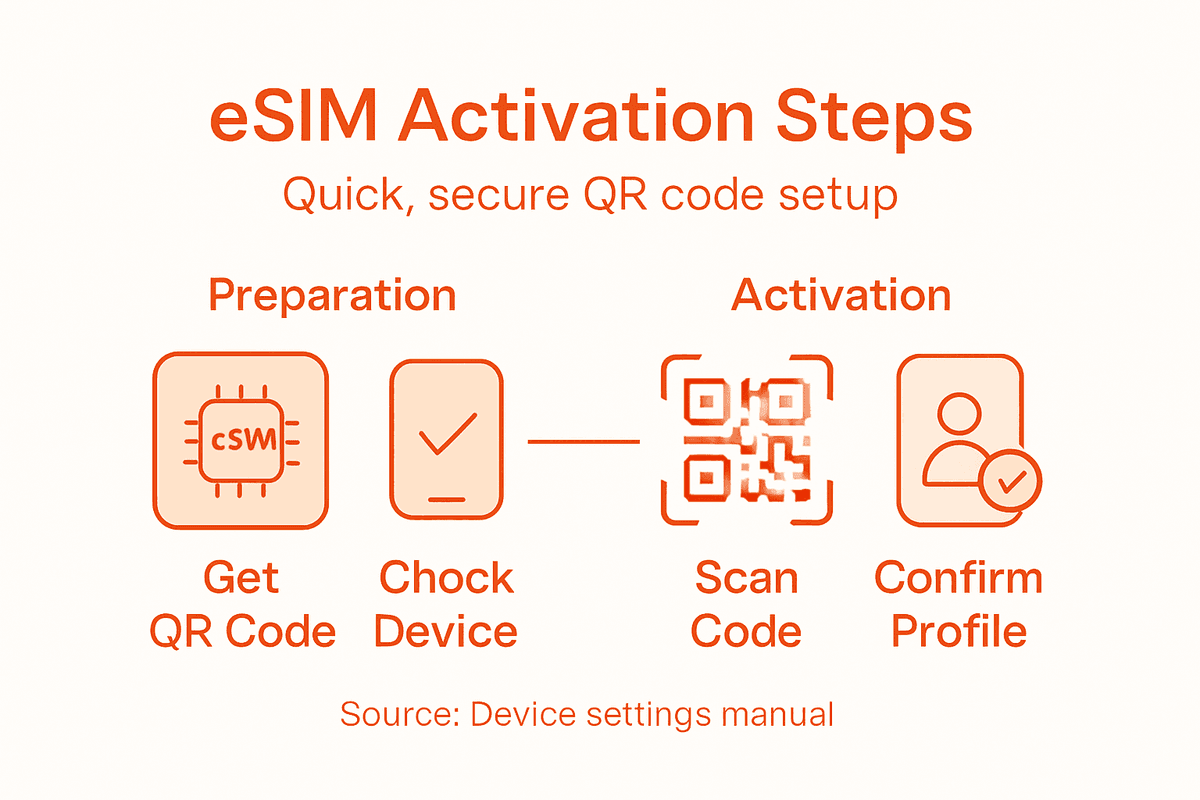
The comprehensive QR code activation process involves several crucial steps:
- Obtain your carrier-specific eSIM QR code
- Verify device compatibility
- Access cellular settings on your smartphone
- Select the option to add a new cellular plan
- Use your device’s camera to scan the QR code
- Confirm and complete the activation
Preparing for eSIM activation requires careful attention to device settings and carrier requirements. Travelers should ensure they have:
- A compatible smartphone
- Stable internet connection
- Updated device operating system
- Carrier-provided QR code
- Sufficient device storage
Precision during the QR code scanning process is critical to ensure successful eSIM profile installation and network connectivity.
Pro tip: Always capture a screenshot of your QR code and keep a digital backup to prevent potential activation challenges during travel.
Security, Cost, and Common Mistakes
eSIM security represents a significant advancement in mobile connectivity, offering enhanced protection against traditional vulnerabilities. Digital encryption techniques provide robust safeguards that minimize risks associated with physical SIM card theft or unauthorized access.
Common mistakes travelers encounter during eSIM activation include:
- Scanning damaged or unverified QR codes
- Failing to check device compatibility
- Skipping critical backup procedures
- Misunderstanding carrier-specific activation requirements
- Overlooking network coverage details
Cost considerations for eSIM technology demonstrate substantial advantages over traditional mobile plans. Carriers can reduce expenses by eliminating physical SIM card production and distribution, ultimately passing savings to consumers through more flexible and affordable data packages.
Successful eSIM adoption requires understanding both technological nuances and potential pitfalls in the activation process.
Pro tip: Always verify the authenticity of your QR code source and maintain a secure digital backup of your activation information to prevent potential connectivity disruptions.
Experience Effortless Global Connectivity with Lumo
Activating your eSIM through QR codes can be confusing and time-consuming, especially when juggling multiple carriers and device compatibility. This article highlights common pain points like managing different activation methods, verifying compatibility, and securely handling QR codes. It also emphasizes the need for a seamless, flexible solution that empowers travelers and digital professionals to stay connected without interruptions or roaming charges.
Lumo answers these challenges by offering an all-in-one eSIM platform designed for instant QR code activation and reliable worldwide coverage. With support for over 160 countries and multiple devices, you can switch local carriers easily and enjoy high-speed 5G/4G connectivity wherever you go. Avoid the hassle of traditional SIM cards and simplify your digital lifestyle with Lumo’s flexible data plans and 24/7 expert support.
Take control of your global mobile experience today by visiting Lumo’s official site. Discover how quick eSIM setup combined with affordable, reliable data packages can transform your travels and remote work. Don’t wait to unlock seamless worldwide connectivity backed by cutting-edge technology. Get started now at https://lumo.to and join thousands who rely on Lumo for smart, stress-free eSIM activation.
Frequently Asked Questions
What is QR code activation for eSIMs?
QR code activation for eSIMs is a digital method that allows users to set up mobile connectivity by scanning a unique QR code provided by their carrier. This process downloads the carrier’s mobile profile to the device without needing a physical SIM card.
How do I activate my eSIM using a QR code?
To activate your eSIM, obtain your carrier-specific QR code, access your device’s cellular settings, select the option to add a cellular plan, scan the QR code using your device’s camera, and confirm the installation of the cellular plan.
What should I do if my eSIM activation QR code is damaged or doesn’t work?
If your QR code is damaged or doesn’t work, contact your carrier to request a new QR code or seek assistance. Always ensure that the QR code is from a verified source to avoid issues during activation.
Are there any specific device requirements for using a QR code to activate an eSIM?
Yes, device requirements include having a compatible smartphone with an eSIM chip, an updated operating system, and sufficient storage space. Always check with your carrier to confirm your device’s compatibility before attempting activation.
Recommended
- Role of QR Codes in eSIM: Simplifying Global Connectivity | Lumo eSIM Store
- Instant eSIM Activation: Global Connectivity Simplified | Lumo eSIM Store
- How to Set Up eSIM for Seamless Global Connectivity | Lumo eSIM Store
- How to Set Up eSIM for Travel: Step-by-Step Success Guide | Lumo eSIM Store
- Mobeus Airstore
Related Topics
Stay Connected Anywhere
Prepaid eSIM data plans for 180+ countries and territories. No physical SIM required.