Remote Work and eSIM: Unlocking True Global Flexibility

Constantly switching SIM cards and hunting for dependable WiFi while crossing borders is a familiar struggle for many remote workers and digital nomads. Reliable, affordable mobile access is no longer a luxury but a must-have for keeping projects on track from anywhere, whether that is France, Japan, or Argentina. By understanding the basics of eSIM technology, professionals can unlock a smarter approach to global connectivity, combining seamless carrier switching and lower data costs into one streamlined experience.
Table of Contents
- Remote Work And eSIM Basics Defined
- Device Compatibility And Supported Variations
- How eSIM Technology Enables Mobility
- Real-World Uses For Digital Nomads And Teams
- Cost, Security, And Common Pitfalls To Avoid
Key Takeaways
| Point | Details |
|---|---|
| Remote Work Requires Reliable Connectivity | Professionals demand robust communication infrastructure, with strong emphasis on digital solutions like eSIM for global access. |
| eSIM Technology Offers Major Advantages | eSIMs allow for instant carrier switching without the need for physical SIM cards, reducing costs and enhancing mobility for remote workers. |
| Understanding Device Compatibility is Crucial | Users must ensure their devices support eSIM technology, assessing manufacturer specifications and network compatibility before international travel. |
| Security and Cost Considerations are Essential | Remote professionals should proactively manage risks associated with eSIMs, including unauthorized access and unexpected charges, to maintain a secure communication environment. |
Remote Work and eSIM Basics Defined
Remote work has transformed from a niche employment option to a global workforce strategy. As professionals increasingly seek flexibility, digital connectivity has become more than just a convenience—it’s now a critical professional requirement. The emergence of eSIM technology represents a pivotal innovation enabling seamless global communication for modern remote workers.
At its core, remote work represents a work arrangement allowing professionals to perform job responsibilities outside traditional office environments. Federal telework guidelines highlight the strategic importance of flexible work models, especially accelerated by recent global shifts. The technology enabling this transformation goes far beyond simple internet access—it requires robust, reliable, and adaptable communication infrastructure.
Key characteristics of effective remote work connectivity include:
- Instant global network access
- Ability to switch between multiple cellular networks
- High-speed data transmission
- Seamless device compatibility
- Cost-effective international communication
eSIM technology represents a quantum leap in mobile connectivity. Unlike traditional physical SIM cards, eSIMs are embedded digital SIM cards that can be programmed remotely, allowing users to switch carriers and data plans without physically changing hardware. For remote workers traversing multiple countries, this means:
- Eliminating expensive roaming charges
- Accessing local network rates instantly
- Managing multiple network profiles from a single device
- Maintaining consistent connectivity across international boundaries
International professionals now view reliable connectivity as essential as their laptop or professional credentials. eSIM technology transforms how workers maintain professional communication, breaking down traditional geographical barriers that once limited remote work opportunities.
Pro tip: Always research carrier compatibility and coverage maps before international travel to ensure seamless connectivity.
Here’s a quick reference comparing physical SIM and eSIM for remote professionals:
| Aspect | Physical SIM Card | eSIM Technology |
|---|---|---|
| Activation Process | Needs physical insertion | Activated digitally via software |
| Switching Carriers | Requires new SIM card | Immediate profile switching |
| Device Compatibility | Limited by SIM size/slot | Broad device software support |
| Roaming Charges | Often incurs high costs | Local rates without extra fees |
| Security Risk | Susceptible to loss/theft | Remote locking and management |
Device Compatibility and Supported Variations
The landscape of eSIM device compatibility continues to evolve rapidly, presenting remote workers with increasingly sophisticated connectivity options. Modern professionals require devices that seamlessly integrate advanced communication technologies across multiple platforms and geographic regions.

Apple device deployment guidelines reveal nuanced considerations for eSIM implementation, highlighting the complex technical ecosystem surrounding digital SIM technology. Variations in device compatibility depend on several critical factors, including manufacturer specifications, regional regulations, and cellular network infrastructure.
Key device compatibility characteristics include:
- Support for dual SIM functionality
- Unlocked device configuration
- International network compatibility
- Software version requirements
- Hardware-level eSIM support
Device compatibility can be categorized across several technological tiers:
- Fully eSIM-enabled devices
- Hybrid devices supporting physical and digital SIMs
- Devices with limited eSIM functionality
- Legacy devices without eSIM capabilities
Smartphone manufacturers are progressively integrating eSIM technologies, with leading brands like Apple, Samsung, and Google offering increasingly robust digital SIM support. The trend indicates a strategic shift toward more flexible, software-defined mobile connectivity solutions.
eSIM technology represents a fundamental transformation in how mobile devices connect to cellular networks, moving beyond traditional hardware limitations.
Understanding device compatibility requires examining multiple technical parameters. Factors such as device model, manufacturing region, cellular network infrastructure, and software versions significantly impact eSIM functionality and performance.
Pro tip: Verify your specific device model’s exact eSIM capabilities before international travel to prevent connectivity interruptions.
How eSIM Technology Enables Mobility
The digital revolution has fundamentally transformed how professionals approach work and travel, with eSIM technology emerging as a critical enabler of global mobility. Modern remote workers now demand communication solutions that transcend traditional geographic and technological limitations.
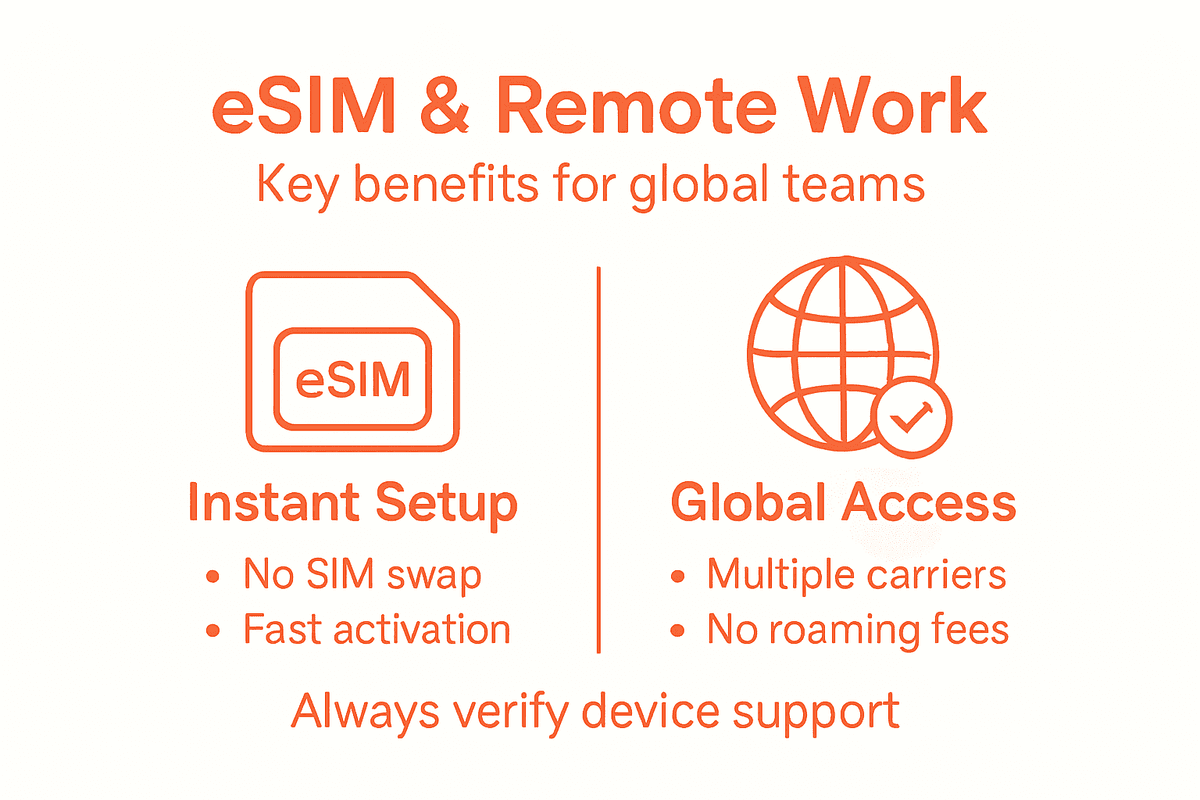
Global telecommunications shifts reveal a profound transformation in mobile connectivity, creating a software-defined approach to network access. This technological evolution allows professionals to maintain seamless communication across international boundaries without the complex logistics of traditional cellular infrastructure.
Key mobility advantages of eSIM technology include:
- Instant network switching
- Multiple carrier profile management
- No physical SIM card replacement
- Global coverage without roaming fees
- Simplified device configuration
The mobility ecosystem enabled by eSIM technology can be understood through several critical dimensions:
- Geographic flexibility
- Rapid network provisioning
- Cost-effective international communication
- Enhanced security protocols
- Streamlined device management
Digital nomads are particularly positioned to leverage these technological capabilities, transforming how professionals conceptualize work location and connectivity. The ability to seamlessly transition between networks represents a fundamental shift in mobile communication strategies.
eSIM technology eliminates traditional barriers, creating a borderless communication environment for global professionals.
Understanding the nuanced capabilities of eSIM requires examining its underlying technological infrastructure. Unlike traditional cellular technologies, eSIMs provide a dynamic, software-driven approach to network access that prioritizes user flexibility and technological adaptability.
Pro tip: Research carrier compatibility and download eSIM profiles before international travel to ensure uninterrupted connectivity.
Real-World Uses for Digital Nomads and Teams
The evolution of remote work technologies has created unprecedented opportunities for professionals seeking location-independent careers. Digital nomads and distributed teams now leverage advanced connectivity solutions that transform traditional workplace constraints.
Enterprise mobility strategies demonstrate how modern organizations are reimagining workforce connectivity through flexible technological infrastructure. eSIM technology emerges as a critical enabler, allowing teams to maintain seamless communication across diverse geographic landscapes.
Practical applications for digital nomads and teams include:
- Instant international project collaboration
- Reduced communication infrastructure costs
- Secure network transitions
- Real-time global team coordination
- Simplified device management for distributed workforce
The impact of eSIM technology can be categorized across multiple professional scenarios:
- Freelance professional travel
- Multinational team coordination
- Remote startup operations
- International consulting engagements
- Academic and research collaborations
Global teams are increasingly adopting eSIM technologies to create dynamic, responsive communication ecosystems. The ability to instantly provision network access across different countries eliminates traditional barriers to international work.
eSIM represents a fundamental shift from location-dependent to location-independent professional communication.
Understanding these technological capabilities requires recognizing how mobile connectivity has transformed from a logistical challenge to a strategic workforce enabler. Modern professionals can now operate with unprecedented geographic freedom, unencumbered by traditional telecommunication limitations.
Pro tip: Develop a comprehensive communication strategy that integrates eSIM capabilities before launching international team initiatives.
Cost, Security, and Common Pitfalls to Avoid
Navigating the eSIM ecosystem requires a strategic approach to managing potential risks and financial considerations. Digital professionals must understand the nuanced landscape of technological investment and security challenges inherent in modern mobile connectivity solutions.
eSIM security vulnerabilities represent a critical area of concern for remote workers and organizations seeking robust communication infrastructure. Understanding these risks is paramount to developing comprehensive digital security strategies.
Common cost and security challenges include:
- Unauthorized network access
- Data routing through third-party infrastructure
- Potential profile management vulnerabilities
- Unexpected international data charges
- Complex carrier compatibility issues
Key strategies for mitigating eSIM-related risks involve:
- Conducting thorough carrier compatibility research
- Implementing robust authentication protocols
- Monitoring data usage and network transitions
- Maintaining updated device software
- Understanding regional regulatory frameworks
Financial considerations extend beyond simple data plan pricing. Remote workers must evaluate total cost of ownership, including potential hidden fees, international network charges, and long-term connectivity investments.
Effective eSIM management requires a proactive approach to security and financial planning.
Understanding the complex ecosystem of mobile connectivity demands continuous learning and strategic adaptation. Professionals must remain vigilant about emerging technologies and potential security implications.
Pro tip: Develop a comprehensive digital security checklist that includes regular eSIM profile and network access reviews.
This table summarizes key security and cost considerations for eSIM users:
| Consideration | Common Risk | Recommended Action |
|---|---|---|
| Network Access | Unauthorized login attempts | Use strong authentication |
| Data Charges | Unplanned international fees | Monitor usage and rates |
| Profile Management | Accidental profile deletion | Regular profile backups |
| Regulatory Changes | Shifting regional requirements | Stay updated on local laws |
Experience True Global Flexibility with Lumo’s All-in-One eSIM Solution
The article highlights the challenges remote workers and digital nomads face such as high roaming charges, device compatibility issues, and the need for seamless connectivity across borders. These pain points can disrupt productivity and cause unexpected expenses. Lumo understands these struggles and offers a tailored platform that lets you manage multiple eSIM profiles instantly, switch between local carriers without hassle, and access high-speed 5G or 4G networks in over 160 countries. Say goodbye to physical SIM swaps and complex setups.
Take control of your international mobile connectivity today with Lumo’s innovative eSIM solution. Whether you are a remote professional, a global team member, or a frequent traveler, Lumo delivers convenience, affordability, and reliable coverage all in one place. Don’t let roaming fees or connectivity barriers hold you back. Discover how easy it can be to stay connected no matter where your work or adventures take you by visiting Lumo. Act now to unlock seamless global communication designed by travelers for travelers.
Frequently Asked Questions
What is eSIM technology and how does it benefit remote workers?
eSIM technology allows users to have embedded digital SIM cards that can be programmed remotely. This enables remote workers to switch carriers and data plans without needing a physical SIM card, eliminating high roaming charges and allowing access to local network rates instantly.
How does eSIM technology enhance connectivity for digital nomads?
eSIM technology provides digital nomads with the ability to switch between multiple cellular networks, manage several network profiles from a single device, and maintain seamless global coverage without incurring high roaming fees.
What should I consider regarding device compatibility with eSIM?
When considering eSIM compatibility, check for dual SIM functionality, unlocked device configuration, and whether the device meets the software version and hardware requirements for eSIM support. Ensure your specific device model is compatible with the eSIM functionality before traveling.
What security concerns should remote workers be aware of when using eSIM?
Remote workers should recognize potential security risks such as unauthorized network access and profile management vulnerabilities. Implementing robust authentication protocols, monitoring data usage, and maintaining updated device software are essential strategies for mitigating these risks.
Recommended
Related Topics
Stay Connected Anywhere
Prepaid eSIM data plans for 180+ countries and territories. No physical SIM required.