Role of eSIM in Telecommunication – Transforming Global Connectivity
Switching between local carriers every time you land in a new country can feel cumbersome and expensive. For travelers and digital nomads who rely on quick, uninterrupted data, the rise of embedded SIM (eSIM) technology is reshaping how mobile devices stay connected across borders. With eSIM, users gain flexible access to multiple networks and safe, instant carrier switching, minimizing roaming charges while keeping speeds fast. Discover how eSIM empowers smoother, smarter connectivity wherever your journey takes you.
Table of Contents
- eSIM In Telecommunication: Core Concepts
- Types Of eSIM And How They Differ
- How eSIM Technology Empowers Mobile Users
- Key Benefits For Travelers And Operators
- Challenges, Security Risks, And Market Barriers
- eSIM Vs. Physical SIM: Costs And Flexibility
Key Takeaways
| Point | Details |
|---|---|
| eSIM Technology Advantages | eSIM technology enables instant carrier switching and remote profile management, significantly enhancing user flexibility and control over mobile connectivity. |
| Diverse eSIM Architectures | Understanding the differences between Consumer eSIM, M2M eSIM, and IoT-Specific eSIM is essential for selecting the right solution based on industry needs. |
| Impact on Travelers and Operators | Travelers can benefit from reduced roaming costs and instant access to local networks, while operators can reduce logistics costs and improve service personalization. |
| Challenges in Adoption | The eSIM adoption faces hurdles such as regulatory complexity, security vulnerabilities, and resistance from traditional telecommunications operators. |
eSIM in Telecommunication: Core Concepts
The evolution of digital connectivity has introduced embedded SIM (eSIM) technology as a transformative solution in global telecommunications. Unlike traditional physical SIM cards, eSIMs represent a revolutionary approach to mobile network access, enabling devices to switch carriers and manage connectivity remotely. Embedded SIM technology supports advanced remote SIM provisioning, fundamentally changing how mobile devices connect to networks worldwide.
At its core, an eSIM functions as a programmable chip integrated directly into mobile devices, eliminating the need for physical SIM card swapping. Key characteristics of eSIM technology include:
- Digital profile management across multiple cellular networks
- Secure, tamper-resistant embedded hardware
- Instant carrier switching without physical intervention
- Support for multiple operator profiles simultaneously
- Enhanced flexibility for international travelers
The technical infrastructure of eSIM relies on standardized protocols developed by the GSMA, ensuring compatibility and security across different manufacturers and telecommunications providers. Remote SIM provisioning standards enable seamless digital activation and management of cellular connectivity, representing a significant leap forward in telecommunications technology.
By decoupling hardware from network services, eSIM technology empowers consumers with unprecedented control over their mobile connectivity. Devices can now dynamically select and switch networks based on signal strength, cost, and availability, creating a more intelligent and responsive telecommunications ecosystem.
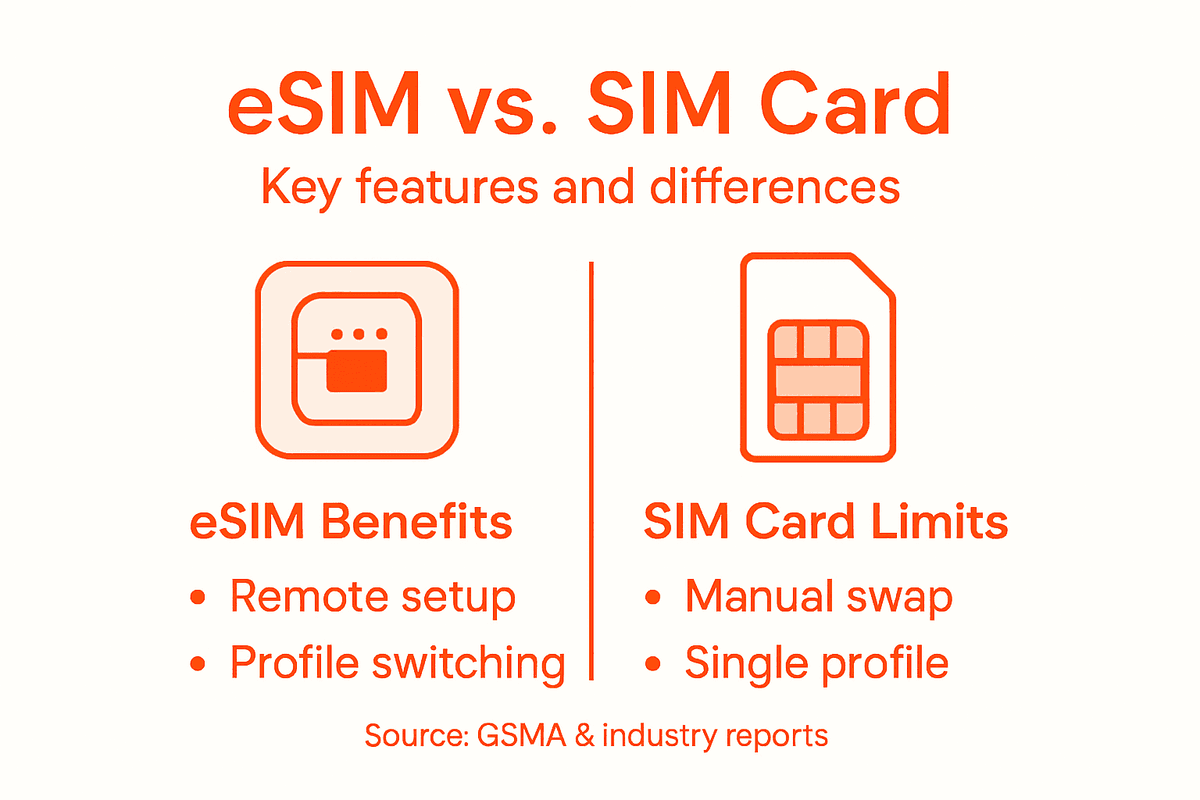
Pro tip: When purchasing a device with eSIM capabilities, verify its international compatibility to maximize your global connectivity options.
Types of eSIM and How They Differ
eSIM technology is not a one-size-fits-all solution, but rather a diverse ecosystem with distinct architectural approaches tailored to different technological needs. eSIM architectures can be categorized into three primary types, each designed to address specific connectivity requirements across various industries and device types.
The main categories of eSIM architectures include:
- Consumer eSIM: Provides end-users with direct control over profile management
- Machine-to-Machine (M2M) eSIM: Designed for industrial and automotive Internet of Things (IoT) applications
- IoT-Specific eSIM: Optimized for low-throughput and constrained device interfaces
Each architecture brings unique capabilities to the telecommunications landscape. The Consumer eSIM empowers users with the ability to switch carriers digitally, eliminating the need for physical SIM card replacements. In contrast, M2M eSIMs are primarily managed by operators, focusing on seamless connectivity for complex industrial systems like smart vehicles and remote monitoring equipment.
Here’s a comparison of major eSIM types and their primary industry applications:
| eSIM Type | Primary Users | Key Industry Focus | Device Example |
|---|---|---|---|
| Consumer eSIM | Individual consumers | Mobile phones, tablets | Smartphones |
| M2M eSIM | Enterprises, OEMs | Industrial automation, IoT | Connected vehicles |
| IoT-Specific eSIM | Device distributors | Sensor networks, wearables | Smart meters |
IoT device authentication represents a critical differentiator among these eSIM types. IoT-specific architectures emphasize secure mutual authentication and remote provisioning, enabling sophisticated network management for devices with limited computational resources. This approach allows for dynamic profile downloading and management, ensuring robust security and scalability across diverse technological ecosystems.
Pro tip: When selecting an eSIM solution, carefully evaluate your specific connectivity requirements to choose the most appropriate architectural type.
How eSIM Technology Empowers Mobile Users
eSIM technology represents a transformative leap in mobile connectivity, fundamentally reshaping how users interact with cellular networks. Mobile subscription flexibility now extends beyond traditional limitations, enabling unprecedented control and personalization for digital consumers.
Key ways eSIM empowers mobile users include:
- Instant network switching without physical SIM cards
- Multiple carrier profiles on a single device
- Elimination of roaming charges through local data plans
- Enhanced privacy and security features
- Simplified international travel connectivity
The technological breakthrough lies in remote provisioning, which allows users to download and activate mobile plans directly through digital interfaces. This means travelers can seamlessly switch between local carriers without visiting physical stores or waiting for traditional SIM card deliveries. The digital nature of eSIM transforms mobile subscriptions from rigid, contract-based services to flexible, on-demand connectivity solutions.

Moreover, eSIM technology democratizes mobile services by enabling third-party providers to offer innovative subscription models. Users can now select from a wider range of mobile plans, compare options instantly, and customize their connectivity experience with unprecedented granularity. The traditional telecommunications ecosystem is being disrupted, putting more power directly into consumers’ hands.
Pro tip: Before international travel, research and pre-download eSIM profiles for your destination to ensure seamless connectivity upon arrival.
Key Benefits for Travelers and Operators
eSIM technology introduces transformative advantages that simultaneously benefit both mobile travelers and telecommunications operators. Global network switching represents a pivotal innovation that fundamentally redesigns connectivity experiences across international markets.
Key benefits for travelers include:
- Instant network access in multiple countries
- Elimination of physical SIM card management
- Reduced international roaming expenses
- Seamless connectivity without carrier limitations
- Enhanced privacy and security controls
For telecommunications operators, eSIM technology unlocks unprecedented opportunities for service innovation and customer engagement. The ability to provision network profiles remotely reduces operational costs associated with traditional SIM card logistics, while creating new monetization channels through flexible, on-demand connectivity models.
Remote provisioning enables operators to offer more personalized and dynamic services. Operator connectivity models are being reimagined, allowing for multi-profile management and more granular control over network access. This technological shift empowers both consumers and service providers to create more responsive, adaptable telecommunications ecosystems that transcend traditional infrastructure limitations.
Pro tip: Research carrier eSIM compatibility before international travel to maximize your connectivity options and minimize unexpected network challenges.
Challenges, Security Risks, and Market Barriers
The widespread adoption of eSIM technology faces significant hurdles that extend beyond technical implementation. Trust relationships in telecom represent a complex landscape of challenges involving multiple stakeholders and intricate security considerations.
Key challenges and market barriers include:
- Complex stakeholder trust negotiations
- Regulatory uncertainty across different regions
- Potential security vulnerabilities in profile management
- Device and operating system fragmentation
- Resistance from traditional telecommunications operators
Security risks emerge prominently in the eSIM ecosystem, with potential vulnerabilities such as profile cloning and unauthorized network provisioning. Third-party access challenges create additional complexity, as carriers maintain strict control over network access and OS security restrictions limit flexible implementation.
The regulatory landscape further complicates eSIM deployment, with varying standards and protocols across different countries. Telecommunications providers must navigate intricate legal frameworks, privacy regulations, and technical standards that differ significantly between markets. This fragmentation creates substantial barriers to universal eSIM implementation, requiring substantial collaboration and standardization efforts from industry stakeholders.
Pro tip: Carefully review the security protocols and carrier compatibility of any eSIM solution before implementation to mitigate potential risks and ensure seamless connectivity.
eSIM vs. Physical SIM: Costs and Flexibility
The evolution of mobile connectivity has sparked a significant transformation in how devices manage network access, with eSIM technology challenging traditional physical SIM card paradigms. Mobile communication technologies are rapidly shifting toward more flexible, efficient solutions that fundamentally reimagine network connectivity.
Key differences between eSIM and physical SIM include:
- Elimination of physical card replacement
- Remote profile management capabilities
- Reduced manufacturing and distribution costs
- Enhanced device design flexibility
- Multiple network profile support
- Faster network switching mechanisms
Physical SIM cards have long represented a mechanical bottleneck in mobile communications, requiring manual insertion and presenting potential points of mechanical failure. eSIM technology circumvents these limitations by embedding network credentials directly into device hardware, enabling seamless, software-driven network transitions that dramatically improve user experience and operational efficiency.
The cost implications of eSIM extend beyond simple hardware considerations. Telecommunications operators can significantly reduce logistical expenses associated with manufacturing, shipping, and managing physical SIM inventory. For consumers, the ability to switch carriers digitally without purchasing new physical cards represents a substantial economic and convenience advantage, transforming how mobile services are consumed and delivered.
Below is a summary of business impacts comparing eSIM and physical SIM:
| Aspect | eSIM Business Impact | Physical SIM Business Impact |
|---|---|---|
| Logistics | Eliminates shipping needs | Requires physical card delivery |
| Customer Acquisition | Enables instant onboarding | Delays due to SIM procurement |
| Device Design Flexibility | Supports smaller devices | Limited by SIM slot requirement |
| Plan Management | Facilitates remote updates | Manual replacement needed |
Pro tip: When comparing mobile plans, prioritize carriers offering comprehensive eSIM support to maximize device flexibility and minimize potential connectivity limitations.
Unlock True Global Connectivity with Lumo’s All-in-One eSIM Solution
The article highlights the challenges of traditional SIM cards and roaming fees for travelers and digital users seeking seamless network access worldwide. If you want to avoid the hassle of physical SIM swaps, costly roaming, and limited carrier options, Lumo is designed to solve exactly those pain points. Experience instant activation, support for multiple eSIM profiles, and extensive coverage across over 160 countries that empower you with the freedom to switch networks anytime without restrictions.
Take control of your mobile connectivity by choosing Lumo’s innovative platform. Get fast 5G/4G data, simple QR code activation, and 24/7 support that makes international travel and remote work truly effortless. Don’t wait to simplify your connection and save on roaming costs. Explore how Lumo redefines digital mobility now at Lumo and start your journey toward smarter global connectivity today.
Frequently Asked Questions
What is an eSIM and how does it differ from a physical SIM card?
An eSIM, or embedded SIM, is a programmable chip integrated into mobile devices that allows users to manage cellular connectivity without needing a physical SIM card. Unlike traditional SIM cards that can be swapped out, eSIMs enable digital profile management and instant carrier switching.
What are the key benefits of using eSIM technology?
Key benefits of eSIM technology include instant network switching, multiple carrier profiles on one device, elimination of roaming charges through local data plans, enhanced privacy and security features, and simplified connectivity for international travel.
How does eSIM technology support international travelers?
eSIM technology allows travelers to access local networks instantly without needing a physical SIM card. Users can download and activate local data plans, which helps reduce international roaming expenses and provides seamless connectivity without carrier limitations.
What challenges does eSIM technology face in the telecommunications market?
Challenges include complex stakeholder trust negotiations, regulatory uncertainties, potential security vulnerabilities, device fragmentation, and resistance from traditional telecommunications operators, all of which complicate widespread adoption of eSIM technology.
Recommended
- Role of eSIM in Connectivity – Why It Matters Now | Lumo eSIM Store
- Role of Customer Support in eSIM Success | Lumo eSIM Store
- eSIM Compatibility: Empowering Global Travelers | Lumo eSIM Store
- How eSIM Transforms International Travel for Professionals | Lumo eSIM Store
- what are the 4 main areas of digital transformation
Related Topics
Stay Connected Anywhere
Prepaid eSIM data plans for 180+ countries and territories. No physical SIM required.