Role of Customer Support in eSIM Success

Struggling with patchy connections while changing countries can disrupt any remote work routine. As eSIM technology transforms how Canadian and American travelers connect across borders, the right kind of customer support becomes a lifeline for reliable global service. This guide explains how seamless digital activation and technical support empower European and North American digital nomads to travel confidently, stay online, and focus on what matters most wherever work takes them.
Table of Contents
- Understanding eSIM and How It Works
- Why Customer Support Matters for eSIM Users
- Essential Customer Support Types in eSIM Services
- Key Challenges in eSIM Customer Support
- Improving the eSIM Support Experience Globally
Key Takeaways
| Point | Details |
|---|---|
| eSIM Technology | eSIM is an embedded chip that allows digital management of cellular profiles, facilitating instant carrier switching without physical SIM cards. |
| Customer Support Importance | Specialized customer support is essential for eSIM users, focusing on digital activation, profile management, and prompt technical assistance. |
| Challenges for Support Teams | Support teams must tackle diverse device compatibility, complex digital profile management, and evolving security concerns in the eSIM landscape. |
| Global Strategy Enhancement | Implementing multilingual resources and standardized activation processes can improve global eSIM support quality and user satisfaction. |
Understanding eSIM and How It Works
The embedded SIM (eSIM) represents a revolutionary leap in mobile connectivity technology. Unlike traditional physical SIM cards, an eSIM is a small chip integrated directly into mobile devices that enables digital management of cellular profiles without requiring physical card replacement.
The core functionality of eSIM technology relies on remote SIM provisioning standards developed by global telecommunications authorities. This digital approach allows users to switch carriers, manage multiple network profiles, and activate cellular services instantaneously through software configurations.
Key characteristics of eSIM technology include:
- Permanently embedded hardware chip within devices
- Remote programmability without physical intervention
- Secure digital profile management
- Instant carrier switching capabilities
- Support for multiple cellular profiles simultaneously
The technical architecture of eSIM involves a secure element that stores encrypted carrier information. When a user wants to change networks, they can download a new carrier profile directly to the embedded chip, eliminating the need to physically swap SIM cards.
Technological Advantages:
- Reduces physical waste from traditional SIM cards
- Enables smaller device form factors
- Provides enhanced security through digital encryption
- Supports Internet of Things (IoT) device connectivity
Pro tip: Before traveling internationally, verify your device’s eSIM compatibility and research carrier support in your destination countries.
Here is a summary of eSIM versus traditional SIM card capabilities and business implications:
| Aspect | eSIM Technology | Traditional SIM Card | Business Impact |
|---|---|---|---|
| Setup | Digital, remote provisioning | Manual card insertion | Faster customer onboarding |
| Device Size | Supports smaller designs | Requires physical slot | Enables miniaturization |
| Profile Switching | Instant, software-based | Card swap required | Greater user flexibility |
| Security | Encrypted digital management | Physical security only | Reduced data breach risks |
| Environmental Impact | Minimizes plastic waste | Generates physical waste | Enhances sustainability |
Why Customer Support Matters for eSIM Users
Customer support has become a critical component in the successful adoption and utilization of eSIM technology. As mobile connectivity evolves, users require specialized assistance to navigate the complexities of digital SIM management and support complex connectivity challenges.
The transition to eSIM represents a significant shift in how users interact with cellular networks. Unlike traditional SIM cards, eSIM technology demands more nuanced customer support that addresses digital activation, profile management, and technical troubleshooting. This requires support teams to develop advanced technical skills and comprehensive understanding of emerging digital connectivity solutions.
Key aspects of effective eSIM customer support include:
- Rapid technical problem resolution
- Comprehensive device compatibility guidance
- Digital profile management assistance
- Security and privacy support
- Seamless carrier switching guidance
Mobile providers must invest in training and technological infrastructure to deliver exceptional support experiences. Customer confidence directly correlates with the quality of technical assistance, especially when users are navigating unfamiliar digital activation processes.
Customer support channels for eSIM users typically encompass:
- 24/7 digital chat support
- Comprehensive online knowledge bases
- Dedicated technical support hotlines
- Video tutorial resources
- Real-time device configuration assistance
Effective customer support transforms technological complexity into user-friendly experiences, bridging the gap between advanced technology and user understanding.
Pro tip: Always document your eSIM activation process and keep support contact information readily accessible for quick troubleshooting.
Essential Customer Support Types in eSIM Services
As eSIM technology continues to transform mobile connectivity, specialized customer support becomes crucial for ensuring smooth user experiences. Essential support services must address the unique challenges presented by digital SIM management and connectivity.

Customer support for eSIM services encompasses a comprehensive range of technical and user-oriented assistance. Support channels must be designed to handle complex technical issues while providing clear, accessible guidance for users navigating new digital connectivity technologies.
Key customer support types for eSIM services include:
- Technical activation assistance
- Device compatibility consultation
- Profile management support
- Security and privacy guidance
- Carrier switching troubleshooting
- Multi-device eSIM configuration
For different user segments, support requirements vary significantly. Consumer users typically need:
- Instant activation support
- Simplified troubleshooting guides
- Real-time chat assistance
- Online knowledge bases
- Step-by-step configuration tutorials
Effective eSIM customer support transforms technological complexity into user-friendly experiences, bridging the gap between advanced technology and user understanding.
Enterprises and Internet of Things (IoT) deployments require even more specialized support, including large-scale provisioning, ongoing profile management, and comprehensive interoperability testing.
Pro tip: Maintain a detailed record of your eSIM activation process and support interactions to expedite future troubleshooting.
Key Challenges in eSIM Customer Support
The transition to eSIM technology introduces complex challenges for customer support teams, requiring sophisticated approaches to managing digital connectivity issues. These challenges extend beyond traditional technical support, demanding a comprehensive understanding of digital identity, device compatibility, and evolving technological ecosystems.
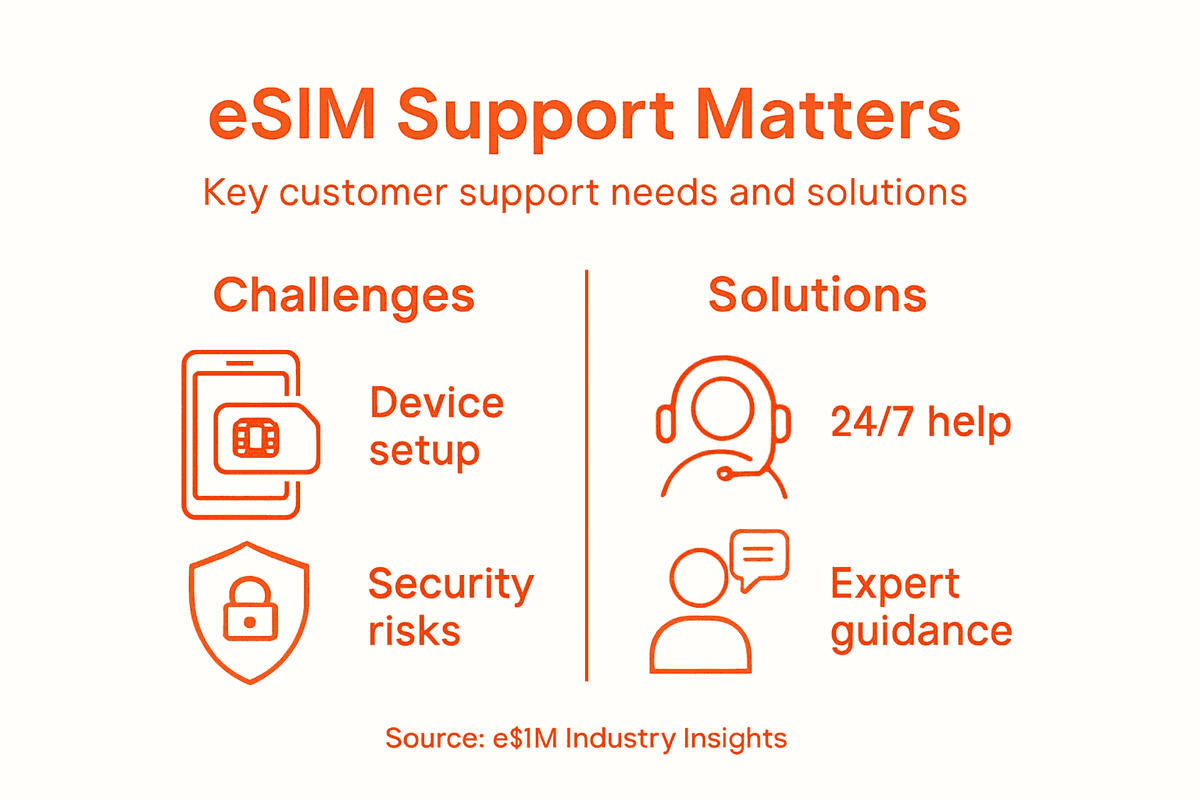
Customer support for eSIM services must navigate a complex landscape of technical and user experience challenges. Technical complexity remains the primary obstacle, with support teams required to address intricate digital provisioning processes, diverse device compatibility scenarios, and emerging security concerns.
Key challenges in eSIM customer support include:
- Diverse device compatibility issues
- Complex digital profile management
- Security and privacy concerns
- Rapid technological changes
- Inconsistent global regulatory environments
- High customer expectations for instant resolution
The potential for increased customer churn presents another significant challenge. Unlike traditional SIM technologies, eSIM enables users to switch providers more easily, placing additional pressure on support teams to deliver exceptional experiences and retain customers.
Support teams must be prepared to address multiple critical areas:
- Technical activation troubleshooting
- Security risk management
- Device compatibility verification
- Digital profile configuration
- Regulatory compliance guidance
Effective eSIM customer support requires continuous learning, technological adaptability, and a proactive approach to emerging digital connectivity challenges.
Pro tip: Develop a comprehensive knowledge base and invest in ongoing technical training to stay ahead of eSIM technological evolvement.
Improving the eSIM Support Experience Globally
The global eSIM ecosystem requires strategic approaches to standardizing digital support infrastructure. As mobile connectivity becomes increasingly complex, support teams must develop comprehensive strategies that address diverse technological and user experience challenges across international markets.
Improving eSIM support demands a multifaceted approach that goes beyond traditional technical assistance. Global support frameworks must incorporate advanced technological understanding, cultural sensitivity, and adaptive problem-solving techniques to effectively serve diverse user populations.
Key strategies for enhancing global eSIM support include:
- Developing multilingual support resources
- Creating comprehensive digital knowledge bases
- Implementing automated troubleshooting systems
- Offering localized technical guidance
- Standardizing activation processes
- Providing cross-platform compatibility support
Support teams must focus on critical improvement areas:
- User education and awareness
- Seamless digital onboarding
- Proactive technical guidance
- Rapid issue resolution
- Continuous technology training
Successful global eSIM support transcends technical solutions, requiring a holistic approach that prioritizes user empowerment and technological adaptability.
International collaboration and cross-industry partnerships play crucial roles in developing robust, scalable support ecosystems that can address emerging technological challenges and user expectations.
Pro tip: Invest in continuous learning programs that keep support teams updated on the latest eSIM technological developments and global connectivity trends.
The following table outlines global strategies to boost eSIM customer support quality:
| Strategy | Purpose | Global Benefit |
|---|---|---|
| Multilingual Resources | Support diverse languages | Higher international accessibility |
| Automated Troubleshooting | Swift issue resolution | Consistent global response |
| Localized Technical Guidance | Adapt to regional variations | Increased user satisfaction |
| Standardized Activation Flow | Simplify onboarding | Reduced complexity worldwide |
Enhance Your eSIM Experience with Expert Support from Lumo
The article highlights the critical challenges users face with eSIM technology including complex digital activation, seamless profile management, and trusted customer support. If you have ever felt overwhelmed by switching carriers or managing multiple eSIM profiles while traveling or working remotely, you are not alone. Lumo understands these pain points and offers a powerful platform designed to simplify your global connectivity with instant activation and multi-device flexibility.
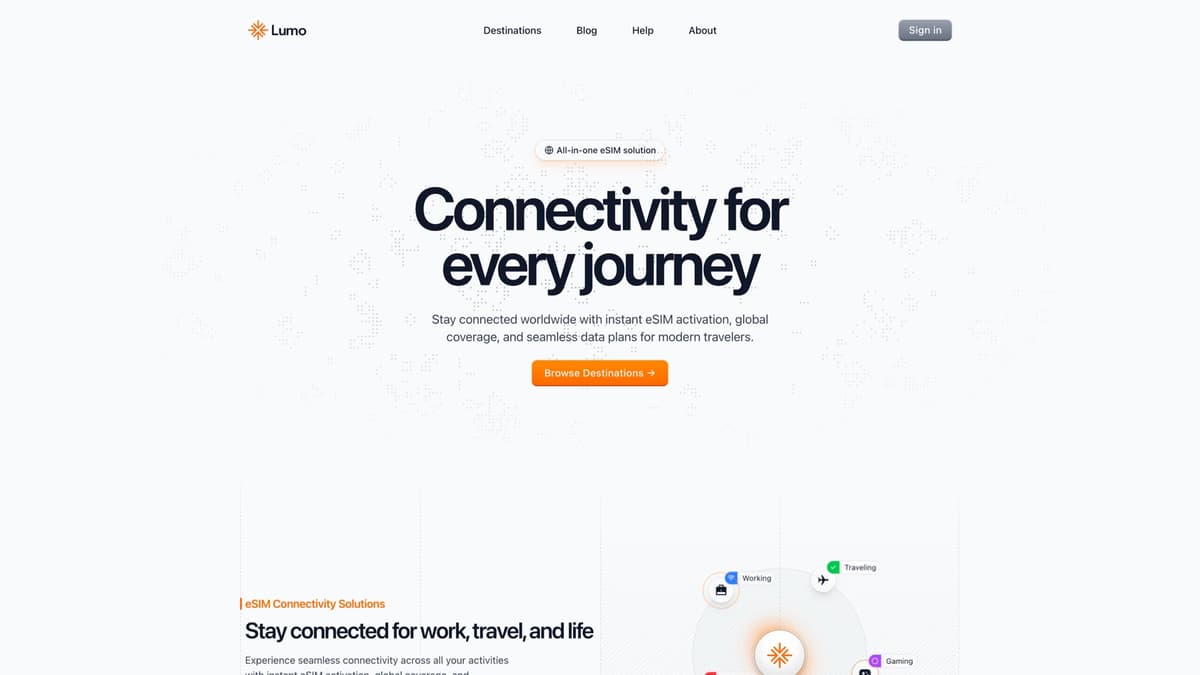
Experience peace of mind with Lumo’s reliable 24/7 customer support that matches the article’s call for rapid technical assistance and device compatibility guidance. Join thousands of users who enjoy affordable, high-speed 4G and 5G coverage in over 160 countries without worrying about complicated setups or roaming fees. Take control of your international data plans today by visiting Lumo’s all-in-one eSIM solution and start connecting smarter. Don’t let technical complexities slow you down when expert help and seamless switching are just a click away.
Frequently Asked Questions
What is eSIM technology?
An eSIM, or embedded SIM, is a small chip integrated into devices that allows users to manage cellular profiles digitally without needing to replace a physical SIM card.
How does eSIM customer support differ from traditional SIM support?
eSIM customer support focuses on digital activation, profile management, and technical troubleshooting, requiring specialized knowledge of digital connectivity, while traditional SIM support mainly addresses physical card-related issues.
What are the key challenges in providing eSIM customer support?
Challenges include handling diverse device compatibility issues, complex digital profile management, security concerns, rapid technology changes, and high customer expectations for quick resolutions.
Why is customer support important for the successful adoption of eSIM technology?
Quality customer support is crucial for building trust and confidence among users, as it helps them navigate the complexities of digital SIM management and enhances their overall experience with eSIM technology.
Recommended
- How to Troubleshoot eSIM Connectivity Issues Fast | Lumo eSIM Store
- How to Troubleshoot eSIM Issues for Seamless Connectivity | Lumo eSIM Store
- eSIM Compatibility: Empowering Global Travelers | Lumo eSIM Store
- How to Set Up eSIM for Seamless Global Connectivity | Lumo eSIM Store
- QuerySignal, Turn AI Visibility Into Clear Actions
Related Topics
Stay Connected Anywhere
Prepaid eSIM data plans for 180+ countries and territories. No physical SIM required.