Trips Under a Few Weeks: eSIM vs Local SIM for U.S. Travelers
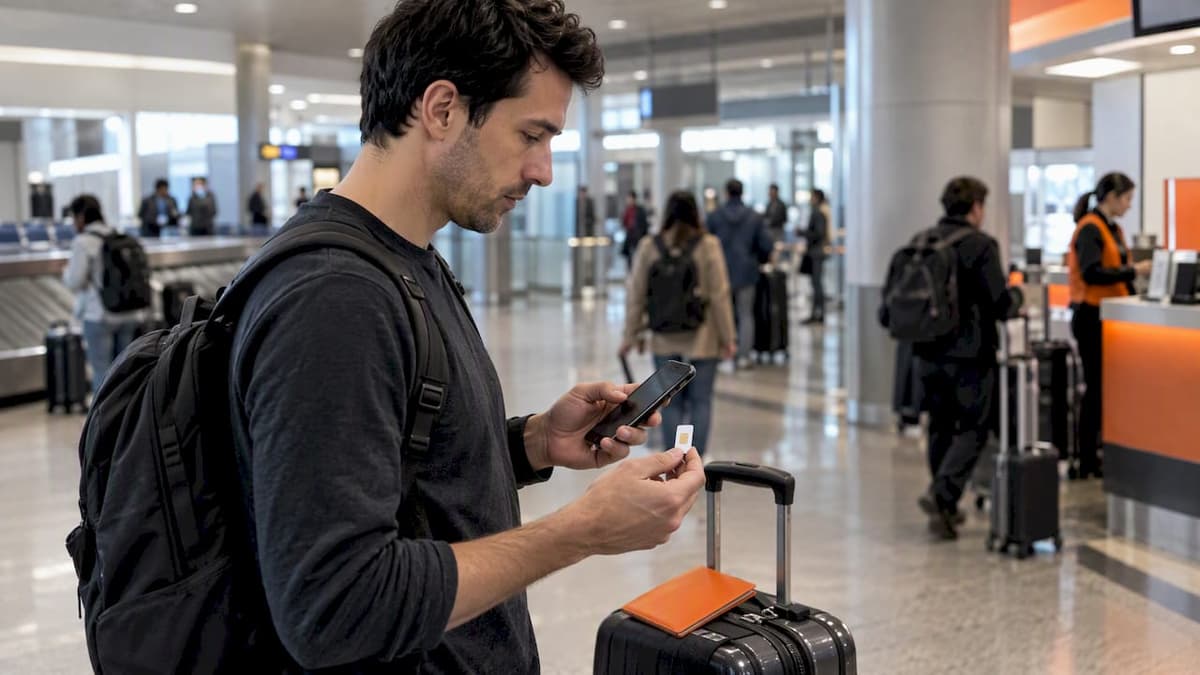
Most travelers should choose an eSIM for trips under a few weeks, since instant activation and no roaming fees outweigh the savings a local SIM offers. The main exception is a locked phone or a long stay where a local carrier’s per-gigabyte pricing beats any travel plan. Dual-SIM phones change the math further, since you can run both at once.
TL;DR:
- eSIMs are ideal for trips under a few weeks due to quick activation and no roaming fees, whereas local SIMs are more cost-effective for long stays with heavy data use.
- Compatibility issues and higher per-gigabyte costs can limit eSIM benefits, especially if the device isn’t unlocked or destination support is lacking.
- Local SIMs are necessary when a resident number is required or when travel exceeds a month, as local plans generally offer cheaper long-term rates.
- Activating an eSIM before departure and managing multiple profiles makes it suitable for multi-stop trips and privacy-conscious travelers.
- Travelers should verify their phone’s unlock status and radio band support before choosing between an eSIM and a local SIM.
Table of Contents
- eSIM vs local SIM: activation, cost, and coverage at a glance
- When an eSIM makes the most sense for your trip
- When a local physical SIM still beats an eSIM
- Device and compatibility checklist before you travel
- Avoiding roaming surprises and identity risks on the road
- How we think about travel connectivity at Lumo
- Which type of traveler should pick which option
- Get your travel eSIM activated in minutes
- FAQ
- Sources
eSIM vs local SIM: activation, cost, and coverage at a glance
An eSIM activates through a QR code scan, often before you even board a flight, and you can be online within minutes of landing. A physical SIM means finding a kiosk or carrier store, sometimes a line, and a short in-person setup once you arrive.
Cost shape depends heavily on trip length. For short trips or multi-country itineraries, an eSIM usually wins because you avoid home-carrier roaming charges entirely and pay once for the data you need. For a monthlong stay with heavy daily data use, a local SIM bought from an in-country carrier can undercut travel eSIM pricing per gigabyte, since local plans are built for local costs of living rather than travel margins.
Coverage and performance also diverge. A local SIM puts you directly on that country’s dominant network, which can mean marginally better signal in rural areas. An eSIM provider instead routes you through a partner network it has negotiated access to, which GSMA research notes is reshaping how travelers avoid traditional roaming altogether.
- Activation: scan a QR code (eSIM) versus visit a store and wait (local SIM).
- Cost: eSIM favors short or multi-stop trips; local SIM favors long stays with heavy data.
- Identity: local SIMs often require showing ID or a passport at purchase; eSIMs typically do not.
When an eSIM makes the most sense for your trip
An eSIM shines when you want to land and immediately get online, since you can install the profile before departure and simply switch it on. That makes it ideal for multi-stop itineraries, where buying a new physical SIM at every border would be a hassle, and for short vacations where you only need data for a handful of days.
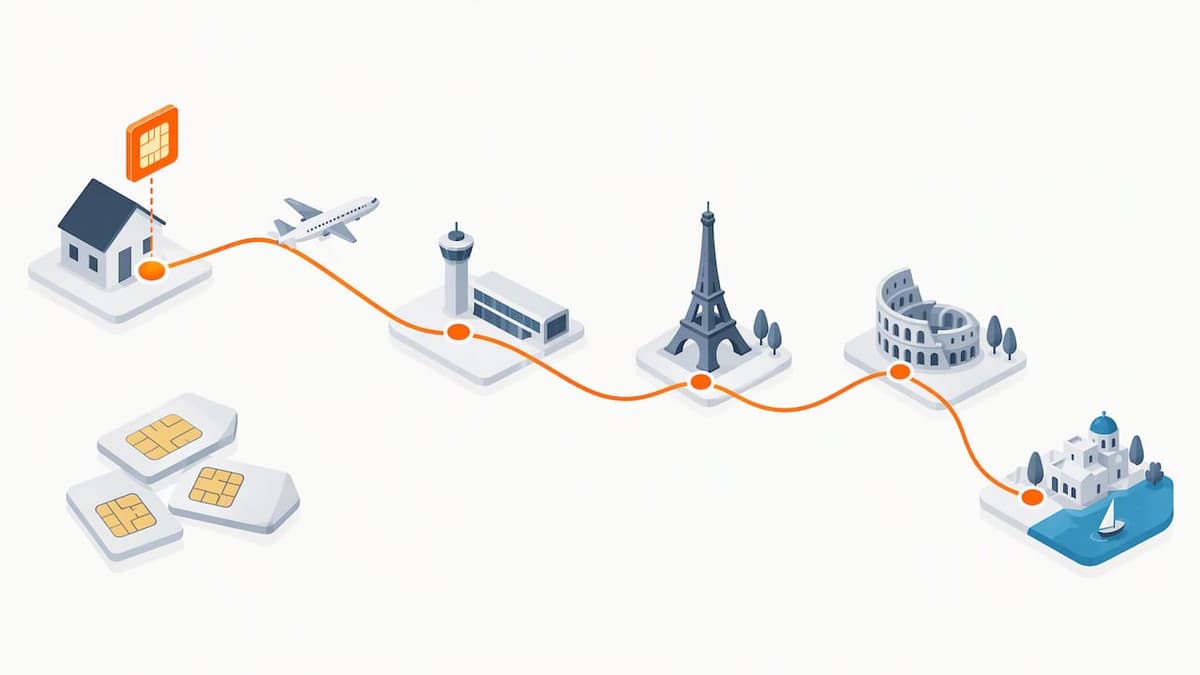
There’s also a privacy angle. Buying a physical SIM in some countries requires handing over passport details for registration, and reporting on SIM-related identity exposure shows this creates real risk when the vendor or kiosk is unfamiliar. Prearranging an eSIM through a known provider skips that touchpoint entirely.
Modern phones also support multiple eSIM profiles, so digital nomads and business travelers can carry a home profile, a work profile, and a destination profile side by side and switch between them in settings.
- Instant setup: activate before you leave or the moment you land.
- Fewer privacy touchpoints: no passport handed to a stranger at a kiosk.
- Multiple profiles: switch between home, work, and travel data without swapping hardware.
Limitations exist too. Not every phone or destination supports eSIM yet, and per-gigabyte pricing on a travel eSIM can run higher than a local plan built for residents.
Pro Tip: Install your travel eSIM profile a day or two before departure so any carrier prompts or glitches surface while you still have your home connection to fix them.
When a local physical SIM still beats an eSIM
A local SIM remains the better call in a few clear situations, mostly tied to how long you’re staying and what you need the number for.
- Long stays: If you’re in one country for a month or more with heavy daily data use, a local carrier’s resident pricing per gigabyte typically beats any travel eSIM plan.
- Local number requirements: Some banking apps, delivery services, or local registrations require a phone number from that country’s carrier, which only a local SIM provides.
- Buying safely: Stick to official carrier stores or authorized retailers rather than street vendors, and confirm the SIM is registered correctly in your name before you walk away.
- Weighing the tradeoffs: Expect to spend time on paperwork and, in countries requiring passport registration, accept some identity exposure as the cost of entry.
Device and compatibility checklist before you travel
Before deciding between an eSIM and a local SIM, confirm your phone can actually do what you’re planning. Unlocking status and eSIM support are two separate questions, and skipping either one can strand you without service.
- Confirm your phone is unlocked: the FCC’s international roaming guidance and Consumer Reports’ unlocking guide both note that carriers are generally required to unlock a paid-off phone on request, but you need to ask in advance.
- Check eSIM and dual-SIM support: Apple’s support documentation explains how iPhones handle dual SIM setups and let you choose which plan handles data versus calls, and Android flagships vary by model in the same way.
- Verify radio bands, not just unlock status: unlocking removes a software restriction, but it doesn’t guarantee your phone’s hardware supports the frequencies a foreign network uses.
- Test the switch ahead of time: installing your travel eSIM profile and toggling data to it before departure reveals any carrier prompts you’d rather not troubleshoot from an airport.
Avoiding roaming surprises and identity risks on the road
The most common trip-ruining mistake is leaving data roaming active on your home line while a travel eSIM sits unused in settings. Turn off roaming on the home SIM, set the travel eSIM as the active data line, and double check which line your phone defaults to for data in its network settings.
- Turn off data roaming on your home SIM before you land.
- Set the travel eSIM profile as your active data line in settings.
- Keep Wi-Fi calling enabled as a fallback when cellular data is spotty.
- If you must buy a local SIM in person, use an official store rather than an unfamiliar kiosk to limit how much personal data you hand over.
Identity exposure is a real concern when buying a physical SIM abroad, since some countries require passport details at the point of sale. A pre-purchased eSIM avoids that step entirely, which matters more as adoption grows: eSIM adoption continues to climb worldwide, and GSMA’s analysis frames travel eSIM as a clear disruptor to traditional roaming models, meaning more travelers each year are skipping the local-SIM counter altogether.
How we think about travel connectivity at Lumo
Our eSIM platform aims to address common traveler challenges, such as landing in a new country without data and managing multiple numbers or countries mid-trip without needing a store. Instant QR code activation allows setup before boarding, and coverage spans many countries to cover most itineraries.
- Multi-stop trips: switch between country profiles without buying new hardware at each border.
- Keeping your home line active: run a travel data plan alongside your existing number instead of replacing it.
- Landing and going: activate the moment you touch down, no store visit required.
Support runs 24/7, which matters when a compatibility question comes up outside your home time zone.
Which type of traveler should pick which option
Short-trip travelers and anyone hitting three or more countries in one journey should default to an eSIM. Long-stay residents and anyone needing a local number for banking or delivery apps should get a local SIM. Business travelers juggling a home number and travel data almost always want dual SIM. Whichever you pick, run the compatibility checklist first.
— Theo Wheeler
Get your travel eSIM activated in minutes
Picking a plan takes less effort than finding a SIM kiosk abroad. Choose your destination, complete checkout without creating an account, and scan the QR code that arrives by email. Most travelers are online within minutes of activating.
- Pick a destination plan that matches your trip length and data needs.
- Complete checkout, no registration or passport required.
- Scan the QR code and activate whenever you’re ready, before departure or on arrival.
If you’re heading to one region, our Europe eSIM Plans start from $1, and travelers covering multiple countries can check our Global eSIM Plans starting from $7. Local SIMs still make sense for long stays or when you need a resident phone number, so weigh your trip length before you decide. For a side-by-side look at the two options from our own research, see our comparison of eSIM and physical SIM options.
FAQ
Is it better to get an eSIM or local SIM?
For most trips under a few weeks, an eSIM is better because it activates instantly and avoids roaming fees without requiring a store visit. A local SIM wins for long stays or when you need a resident phone number, since local per-gigabyte pricing is often cheaper over time.
What is the downside of eSIM?
Not every phone or destination supports eSIM yet, so compatibility needs checking before you rely on one, as Apple’s dual-SIM guidance explains for iPhone models. Per-gigabyte pricing on a travel eSIM can also run higher than a resident local SIM plan for long stays.
Do I turn off the primary SIM when using eSIM?
You don’t have to turn it off entirely, but you should turn off data roaming on your home SIM and set the travel eSIM as your active data line. Your phone’s settings let you choose which line handles data and which handles calls or texts, as described in Apple’s support documentation.
Is it better to have an eSIM than a physical SIM?
For travel specifically, an eSIM is usually more convenient because setup takes minutes and doesn’t require handing over identification at a kiosk abroad, an exposure point reporting on SIM registration risks has flagged for travelers. A physical SIM still has its place for long-term residents who need a local number tied to local services.
Sources
- eSIM: the time is right to push adoption (GSMA Intelligence)
- How to unlock your phone from any major carrier
- International roaming | FCC
- Using Dual SIM with an eSIM - Apple Support
- SIM card identity theft abroad puts passport data at risk for North American travellers
Recommended
Related Topics
Stay Connected Anywhere
Prepaid eSIM data plans for 180+ countries and territories. No physical SIM required.