International Roaming Explained: Avoiding Costly Mistakes

Traveling from Paris to New York should mean adventures, not anxiety over mobile bills. For digital nomads and remote workers, reliable connectivity is more than a luxury—it is essential for work and staying in touch. Yet, international roaming often brings unexpected charges because operators pass on wholesale network access fees directly to users. This guide clarifies what international roaming really means and presents smarter ways to stay connected across borders without draining your wallet.
Table of Contents
- What International Roaming Actually Means
- Types of International Roaming Services
- How Roaming Charges and Access Work
- Why Roaming Costs So Much Abroad
- Alternatives: Esims and Local Data Plans
- Key Tips to Prevent Unexpected Charges
Key Takeaways
| Point | Details |
|---|---|
| Understanding International Roaming | International roaming keeps travelers connected by allowing devices to access local networks abroad, often resulting in high service fees. |
| Affordable Alternatives | Consider using local SIM cards, travel eSIMs, or portable WiFi hotspots for more cost-effective connectivity options while traveling. |
| Manage Roaming Charges | To minimize unexpected charges, disable data roaming, use Wi-Fi whenever possible, and understand your carrier’s specific roaming policies before traveling. |
| Emerging Technologies | eSIM technology offers flexible, instant network switching without the need for physical SIM cards, significantly improving international connectivity for travelers. |
What International Roaming Actually Means
International roaming is a telecommunications service that enables mobile users to stay connected while traveling outside their home network’s coverage area. When you cross geographical boundaries, mobile networks enable service continuity through complex technical agreements between different carriers.
At its core, international roaming allows your smartphone to connect to local cellular networks in foreign countries, essentially “borrowing” their infrastructure to maintain voice, text, and data connectivity. This process involves several critical technical steps:
- Authentication of your device with the foreign network
- Authorization to access network services
- Billing coordination between your home carrier and the visited network
- Seamless network switching without manual intervention
The international mobile roaming process relies on intricate agreements between mobile network operators worldwide. These partnerships ensure that travelers can make calls, send messages, and use mobile data as if they were in their home country, albeit often at significantly higher rates.
Why Roaming Matters for Travelers
Roaming isn’t just a technical convenience—it’s a lifeline for digital nomads, business travelers, and tourists who need consistent connectivity. Without roaming capabilities, your mobile device would become essentially useless the moment you cross a national border.
International roaming transforms your smartphone from a local tool into a global communication device.
Pro tip: Always check your carrier’s specific roaming rates and consider purchasing a local SIM or eSIM to minimize unexpected charges.
Types of International Roaming Services
International roaming services come in multiple configurations designed to meet diverse traveler needs. International mobile roaming agreements primarily cover three fundamental service types: voice, SMS, and data roaming, each with unique characteristics and pricing structures.
Voice Roaming Services
- Allows making and receiving calls while abroad
- Often charged per minute at premium international rates
- Rates vary significantly between carriers and destinations
SMS Roaming Services
- Enables sending text messages from foreign networks
- Typically charged per message sent or received
- Can be substantially more expensive than domestic texting rates
Data Roaming Services
- Provides mobile internet access outside home network
- Usually metered by megabyte or gigabyte of data consumed
- Most expensive and complex roaming service type
Beyond traditional cellular roaming, specialized services are emerging. For instance, specialized roaming networks like eduroam offer unique connectivity solutions for specific professional communities, demonstrating the evolving landscape of international communication technologies.
Roaming services transform mobile devices from local tools to global communication platforms.
Modern travelers now have multiple options beyond traditional carrier-based roaming, including:
Here’s a clear comparison of international roaming options for travelers:
| Solution Type | Setup Process | Cost Efficiency | Flexibility |
|---|---|---|---|
| Traditional Roaming | Automatic activation | Often expensive abroad | Tied to home carrier |
| Local SIM Card | Purchase and install | Usually best rates | Limited to one country |
| Travel eSIM | Digital download | Competitive pricing | Covers multiple nations |
| Portable WiFi Hotspot | External device needed | Variable rates | Shareable among devices |
- Local SIM cards
- Travel eSIM services
- Portable WiFi hotspots
- International data packages
Emerging Roaming Technologies
The telecommunications industry continues to innovate, with eSIM technology providing more flexible and cost-effective international connectivity options. These digital SIM solutions allow users to switch carriers instantly without physical SIM card swaps.

Pro tip: Always compare roaming service options and consider purchasing a local or travel-specific data plan before international trips to minimize unexpected expenses.
How Roaming Charges and Access Work
International roaming access involves a complex technical process where mobile devices connect to foreign networks through intricate agreements between telecommunications providers. When you travel abroad, your smartphone doesn’t simply switch networks—it undergoes a sophisticated authentication and authorization procedure.
Key Roaming Access Components
- Home network verification
- Visited network authentication
- Service parameter negotiation
- Billing coordination
- Connection establishment
The roaming process typically follows these technical steps:
- Device registers with visited network
- Home network validates user credentials
- Service parameters are established
- Temporary network access is granted
- Billing mechanisms are activated
Routing and Network Architecture
Roaming network architectures support two primary data routing modes that significantly impact user experience and costs:
-
Home-Routed Mode: All data traffic is redirected through the home network
- Slower connection speeds
- Higher potential latency
- More complex billing procedures
-
Local Breakout Mode: Traffic is routed directly through the visited network
- Faster connection speeds
- Lower latency
- More straightforward billing
Roaming charges are essentially wholesale access fees passed directly to consumers, making international connectivity potentially expensive.
Understanding these technical nuances helps travelers make more informed decisions about managing their mobile connectivity while traveling internationally.
Pro tip: Always check your carrier’s specific roaming configurations and consider alternative connectivity solutions to minimize unexpected network access charges.
Why Roaming Costs So Much Abroad
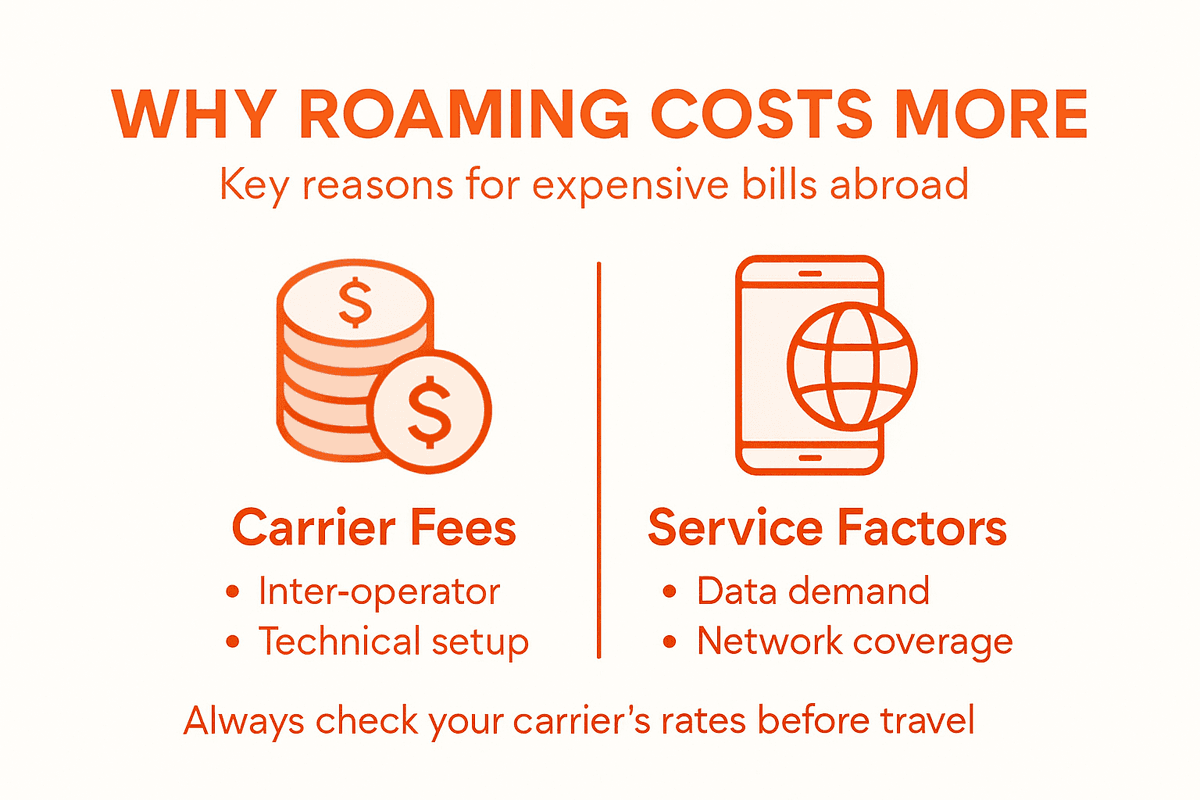
International roaming agreements create a complex web of pricing mechanisms that directly impact travelers’ connectivity expenses. These intricate partnerships between telecommunications providers result in surprisingly high costs for mobile users venturing beyond their home networks.
Cost Drivers for International Roaming
- Wholesale network access fees
- Complex international infrastructure
- Bilateral carrier agreements
- Administrative overhead
- Risk management expenses
The pricing structure for roaming services involves multiple layers of financial complexity. Telecommunications companies must manage significant operational challenges when enabling cross-border connectivity:
- Maintaining extensive global network partnerships
- Managing technical infrastructure across multiple countries
- Developing secure authentication systems
- Creating billing mechanisms for international transactions
- Absorbing potential financial risks
Breakdown of Roaming Expenses
International data roaming charges can be extraordinarily expensive due to several key factors:
- Per-Minute Call Rates: Significantly higher than domestic calling
- Text Message Fees: Charged individually at premium rates
- Data Consumption: Billed at extremely high per-megabyte prices
- Network Transition Costs: Technical expenses for handoff between carriers
Roaming charges represent a complex ecosystem of interconnected financial and technical negotiations between international telecommunications providers.
Telecommunications companies justify these high costs by pointing to the substantial investments required to create seamless global connectivity. The infrastructure needed to support instantaneous international network switching involves significant technological and administrative expenses.
Pro tip: Research and purchase local SIM cards or international data packages before traveling to dramatically reduce unexpected roaming expenses.
Alternatives: eSIMs and Local Data Plans
eSIM technology represents a revolutionary approach to international mobile connectivity, offering travelers unprecedented flexibility in managing their cellular services. Unlike traditional roaming methods, these digital solutions provide instant network switching without physical SIM card limitations.
Key Advantages of eSIM Technology
- No physical SIM card required
- Instant network profile downloads
- Multiple network profiles simultaneously
- Remote service provisioning
- Enhanced device compatibility
Types of International Connectivity Alternatives
-
Local SIM Cards
- Purchased at destination
- Typically most cost-effective
- Requires device unlocking
- Physical card swapping needed
-
Travel eSIM Plans
- Digital profiles downloadable instantly
- Multiple country coverage options
- No physical card management
- Often more flexible pricing
Digital cellular plans offer modern travelers unprecedented connectivity choices. These innovative solutions dramatically reduce the complexity and expense associated with traditional international roaming.
Digital connectivity solutions are transforming how travelers stay connected across global networks.
The emerging eSIM ecosystem provides multiple benefits for frequent international travelers:
- Instant network switching
- Competitive pricing models
- Enhanced privacy controls
- Simplified device management
- Global coverage without carrier restrictions
Emerging Connectivity Technologies
Innovative digital solutions continue to disrupt traditional telecommunications models, providing travelers with more control, transparency, and cost-effectiveness in managing their mobile connectivity.
Pro tip: Research and compare multiple eSIM providers before international travel to find the most cost-effective and comprehensive digital connectivity solution.
Key Tips to Prevent Unexpected Charges
Avoiding international roaming charges requires strategic planning and proactive device management before and during international travel. Understanding how to control your mobile device’s connectivity can save you hundreds of dollars in unexpected fees.
Critical Connectivity Management Strategies
- Turn off data roaming
- Use Wi-Fi whenever possible
- Disable background app refresh
- Control automatic updates
- Purchase local data plans
Device Settings to Control Data Usage
-
Disable Data Roaming
- Navigate to cellular settings
- Toggle off international data
- Prevent automatic network connections
-
Manage App Behaviors
- Disable background app refresh
- Turn off automatic app updates
- Control cellular data access for specific apps
Travel data management involves more than just switching settings. Travelers must be strategic about their connectivity approach to prevent bill shock.
Proactive mobile management is the key to preventing unexpected international roaming charges.
Additional Cost-Saving Techniques
To help prevent unexpected roaming charges, compare these device management strategies:
| Strategy | Effectiveness | Convenience | Additional Benefit |
|---|---|---|---|
| Disable Data Roaming | Highly effective | Simple to activate | Blocks unwanted connections |
| Use Wi-Fi Exclusively | Very effective | Needs Wi-Fi access | No mobile data fees |
| Purchase Local Data Plan | Effective in-country | Requires SIM/eSIM swap | Access to local rates |
| Manage App Permissions | Moderately effective | Requires manual setup | Optimizes battery usage |
- Use offline maps and resources
- Download content before traveling
- Consider portable Wi-Fi devices
- Research local SIM options
- Use messaging apps over cellular networks
Carrier Communication Strategies
Before international travel, contact your mobile carrier to understand specific roaming policies, potential travel packages, and cost-effective alternatives that match your destination and data needs.
Pro tip: Take screenshots of your device’s data settings before international travel and create a checklist to ensure you’ve minimized potential roaming expenses.
Take Control of Your International Connectivity Today
Understanding the costly pitfalls of international roaming makes it clear you need a smarter solution for global travel. The article highlights the frustration of unpredictable roaming charges and complex network restrictions that can turn seamless communication into an expensive challenge. If you want to avoid unexpected fees, complicated SIM swaps, and high data costs while staying connected in over 160 countries, a flexible alternative is within reach.
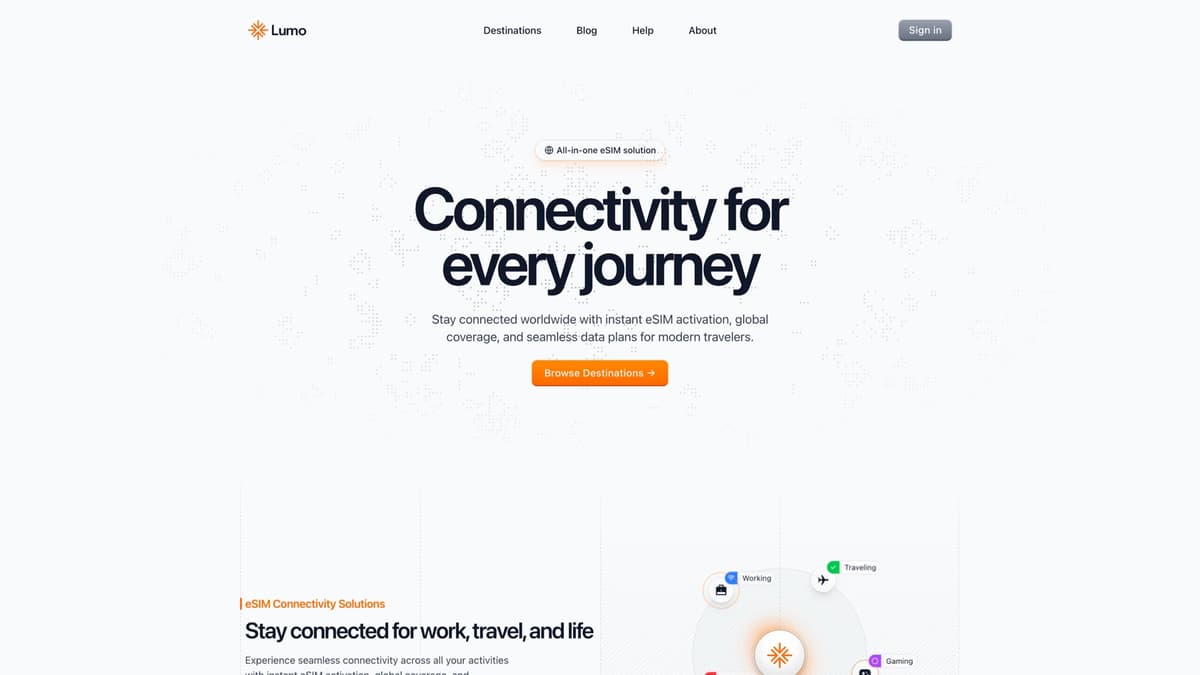
Discover how Lumo solves these problems with an all-in-one eSIM platform designed specifically for travelers, digital nomads, and international business users. Instantly activate high-speed 5G/4G data plans without physical SIM cards. Effortlessly switch between multiple networks on one device for affordable, reliable global coverage. Experience the freedom of managing several eSIM profiles across smartphones, tablets, and laptops to keep your data costs low and your connection seamless. Explore more and join thousands of smart travelers embracing the future of connectivity at Lumo. Start your journey toward stress-free and cost-effective roaming at https://lumo.to right now.
Frequently Asked Questions
What is international roaming?
International roaming is a telecommunications service that allows mobile users to access cellular networks outside of their home carrier’s coverage area, enabling them to maintain voice, text, and data connectivity abroad.
How can I avoid unexpected roaming charges while traveling?
To avoid unexpected roaming charges, turn off data roaming, use Wi-Fi whenever possible, disable background app refresh, and consider purchasing a local data plan or eSIM before traveling.
What types of services are included in international roaming?
International roaming primarily covers three services: voice roaming for calls, SMS roaming for texts, and data roaming for internet access. Each service has unique pricing and characteristics.
What are the advantages of using eSIM technology for international travel?
eSIM technology offers advantages such as instant network switching, no need for a physical SIM card, support for multiple network profiles, and often more flexible pricing options compared to traditional roaming methods.
Recommended
Related Topics
Stay Connected Anywhere
Prepaid eSIM data plans for 180+ countries and territories. No physical SIM required.