Why flexible data plans save travelers 40% in 2026

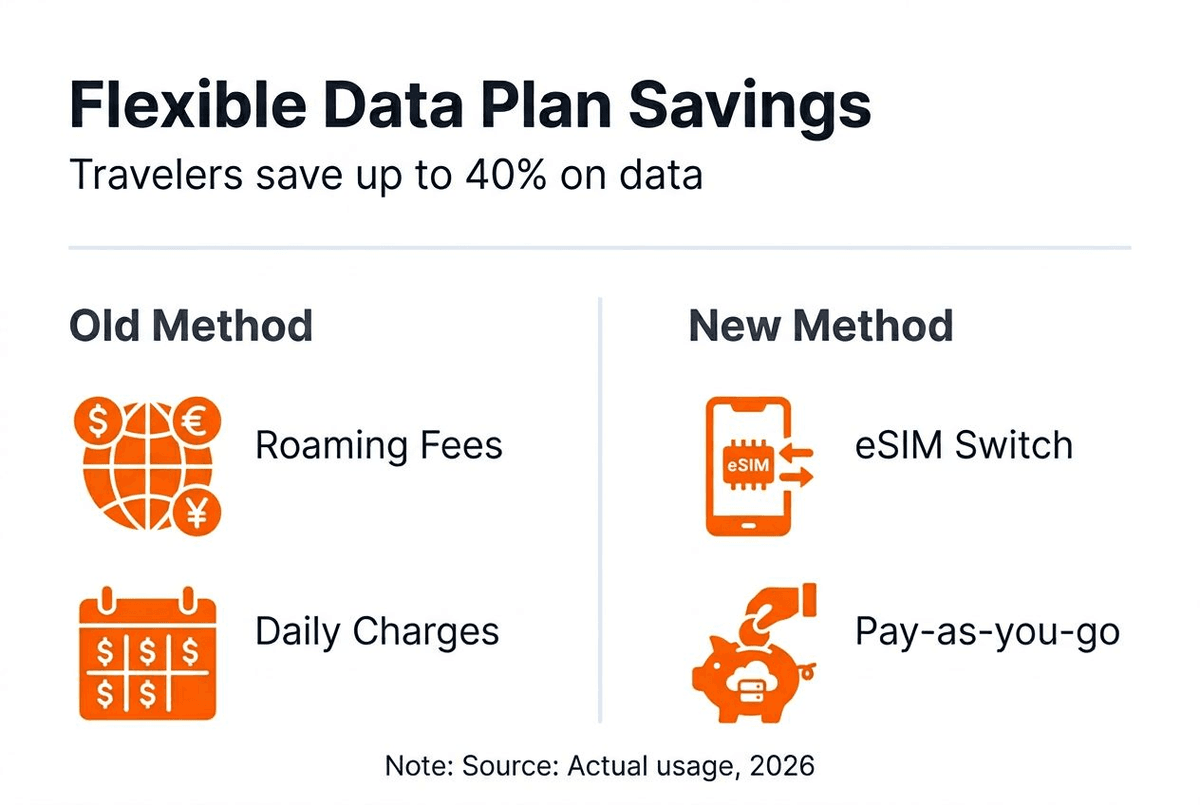
Frequent travelers now save up to 40% on international data by switching to flexible data plans powered by eSIM technology. These plans eliminate costly roaming fees while providing instant access to local networks across 160+ countries. Traditional physical SIM cards lock you into rigid contracts and expensive roaming charges, but flexible plans adapt to your journey. Whether you’re a digital nomad hopping between cities or a business traveler managing multiple destinations, these modern solutions transform how you stay connected globally.
Table of Contents
- Introduction To Flexible Data Plans
- How Flexible Data Plans Work To Eliminate Roaming Charges
- Cost Benefits Of Flexible Data Plans For Travelers
- Technical Advantages Of Flexible Data Plans With Esims
- Why Flexible Data Plans Suit Unpredictable Travel Patterns
- Common Misconceptions About Flexible Data Plans
- Activation And Ease Of Use For Flexible Data Plans
- Environmental And Practical Benefits Of Flexible Data Plans
- Explore Flexible Global Data Plans With Lumo Esim
- FAQ
Key takeaways
| Point | Details |
|---|---|
| Cost savings | Flexible data plans reduce roaming costs by approximately 40% compared to traditional carriers. |
| Global coverage | eSIM technology enables instant carrier switching across 160+ countries without physical cards. |
| Device flexibility | Support multiple devices including smartphones, tablets, and laptops with single profiles. |
| Quick activation | Activate service in under 60 seconds using QR codes without visiting stores. |
| Environmental impact | Reduce electronic waste by eliminating disposable physical SIM cards. |
Introduction to flexible data plans
Flexible data plans represent a modern approach to mobile connectivity, offering prepaid or postpaid options through eSIM technology without requiring physical cards. An eSIM (embedded SIM) is a digital chip built into your device that can store multiple carrier profiles simultaneously, letting you switch networks instantly based on location and pricing.
Traditional roaming creates serious challenges for travelers. Your home carrier charges premium rates when you connect to international networks, often $10 to $15 per day just for basic access. Physical SIM cards force you to choose between expensive roaming or the hassle of purchasing local cards in every country, dealing with registration requirements, and managing multiple small chips that easily get lost.
The growing demand for mobile connectivity among global travelers has accelerated the shift toward flexible solutions. Consider these limitations of conventional approaches:
- Locked contracts prevent switching to better rates mid-trip
- Physical SIM swaps waste time at airports and stores
- Unused prepaid data expires without refunds
- Roaming fees add unpredictable charges to monthly bills
- Multiple devices require separate SIM cards and plans
Flexible data plans solve these problems by combining digital convenience with economic efficiency. You maintain control over your connectivity budget while accessing local network speeds wherever your travels take you. This emerging solution addresses the specific needs of frequent travelers and digital nomads who require reliable, affordable global access.
How flexible data plans work to eliminate roaming charges
The technology behind flexible data plans centers on instant carrier switching through digital eSIM profiles. When you cross a border, your device can automatically or manually connect to a local network partner instead of roaming on your home carrier’s international agreements. This direct connection to local infrastructure eliminates the markup fees that make traditional roaming so expensive.
Your eSIM stores multiple carrier profiles simultaneously, letting you activate whichever network offers the best combination of coverage and cost in your current location. The process happens entirely through software, with no physical components to swap or lose.
Global coverage reaches over 160 countries through partnerships with regional carriers. Avoiding roaming fees with eSIM technology means you’re always connecting as a local user rather than an expensive visitor. The system works across these key mechanisms:
- Digital profile downloads activate new carriers in seconds
- Automatic network selection finds optimal local connections
- Pay-as-you-go pricing charges only for data consumed
- Dual-SIM functionality maintains your home number simultaneously
- Real-time carrier switching adapts to signal quality and pricing
Pro Tip: Download carrier profiles before departure while connected to WiFi to ensure immediate connectivity upon landing.
Physical SIM swapping created delays at every border crossing, forcing travelers to locate stores, navigate language barriers, and interrupt their journeys. Flexible plans eliminate these friction points entirely. You control which carrier to use based on transparent pricing and coverage maps rather than accepting whatever roaming agreement your home carrier negotiated.
The transformation of international travel through eSIM reflects how software-based solutions deliver superior user control and cost efficiency. Your device simply connects to local networks automatically, and you monitor usage through a single app interface regardless of which country you’re visiting.
Cost benefits of flexible data plans for travelers
The financial advantages of flexible data plans become clear when comparing actual costs across different connectivity methods. Digital nomads report up to 40% savings compared to traditional roaming fees, with the gap widening for frequent travelers who visit multiple countries monthly.
| Connection Method | Average Cost (1GB) | Typical Coverage | Flexibility |
|---|---|---|---|
| Traditional Roaming | $15 to $25 | Home carrier only | None |
| Physical Local SIM | $5 to $15 | Single country | Low |
| Flexible eSIM Plan | $3 to $8 | 160+ countries | High |
These savings compound dramatically for digital nomads and frequent business travelers. Someone using 10GB monthly across three countries would spend roughly $200 on roaming fees versus $120 with flexible data plans, saving $960 annually. The cost structure favors unpredictable usage patterns since you pay only for consumed data without minimum monthly commitments.
Flexible plans deliver these specific financial advantages for travelers:
- Pay-as-you-go models eliminate unused data waste
- No penalties for varying monthly consumption
- Instant switching to cheapest available carrier
- Transparent pricing without hidden roaming surcharges
- Bulk data packages offer volume discounts
Pro Tip: Monitor your data consumption weekly to identify usage patterns and optimize plan selection for maximum savings.
The economic impact extends beyond direct cost comparisons. Traditional roaming often includes daily access fees of $10 before any data usage, creating unexpected bill shock. Flexible plans charge only for actual consumption, making budgeting predictable and manageable. For travelers visiting expensive connectivity markets like Japan or Switzerland, the ability to select competitive local rates rather than premium roaming charges can cut costs by 60% or more.

Technical advantages of flexible data plans with eSIMs
Multi-profile support represents one of the most powerful technical capabilities of flexible eSIM plans. Your device can store 5 to 10 carrier profiles simultaneously, switching between them without deleting or reinstalling. This functionality proves essential when traveling through regions with varying network quality, letting you maintain backup options for uninterrupted connectivity.
Device compatibility spans the latest smartphones, tablets, and laptops equipped with eSIM chips. Apple iPhones from the XS series onward, Samsung Galaxy devices from the S20 forward, and Google Pixel phones from the 3 series all support the technology. Many iPad models and modern laptops now include eSIM capability for mobile connectivity beyond WiFi.
| Feature | Flexible eSIM Plans | Traditional Roaming |
|---|---|---|
| Activation Speed | Under 60 seconds | Automatic but expensive |
| Device Support | Multi-profile on single device | One SIM per device |
| Network Transitions | Instant digital switching | Manual SIM swaps required |
| Speed Options | 5G and 4G based on location | Limited by roaming agreements |
The technical benefits for travelers extend to network performance as well. Flexible plans provide access to 5G networks where available, delivering speeds up to 10 times faster than older roaming connections. This matters significantly for video calls, cloud file access, and real-time collaboration that define modern remote work.
Key technical advantages include:
- Simultaneous dual-SIM functionality maintains home and travel numbers
- Remote profile management updates plans without physical access
- Encrypted connections protect data across all carrier networks
- Automatic failover switches to backup profiles if primary fails
- Cloud synchronization keeps profiles accessible across devices
The advantages over traditional SIM cards become apparent in practical scenarios. A business traveler with a laptop, tablet, and smartphone can manage all three devices through coordinated eSIM profiles rather than purchasing separate data plans or portable hotspots. The unified management interface simplifies monitoring usage and costs across your entire device ecosystem.
Why flexible data plans suit unpredictable travel patterns
Travel rarely follows predictable patterns, and data consumption varies even more dramatically. Data usage fluctuates 30 to 50% monthly depending on destination, available WiFi, and work requirements. Flexible data plans accommodate this variability through pay-as-you-go structures that adapt to actual needs rather than forcing predetermined allocations.
Last-minute itinerary changes create connectivity chaos with traditional plans. A sudden flight reroute through a different country can trigger massive roaming charges or leave you without coverage entirely. Flexible plans let you download new carrier profiles mid-journey, activating service in unexpected locations within minutes. Extended stays become opportunities for cost optimization rather than penalty situations, as you can switch to better long-term rates for the specific country.
Consider these scenarios where flexibility delivers clear advantages:
- Spontaneous weekend trips require instant activation without advance planning
- Business emergencies demand immediate connectivity in new countries
- Seasonal travel creates months of high usage followed by minimal needs
- Multi-country tours benefit from optimized carriers in each location
- Remote work shifts between high-bandwidth video days and light email usage
The pay-as-you-go model eliminates the anxiety of choosing wrong plan sizes. Traditional contracts penalize you for underestimating with overage fees or punish overestimation through wasted prepaid data that expires. Flexible plans simply charge for consumption, letting you increase or decrease usage naturally based on current requirements.
Budget control improves dramatically when you can see real-time costs and adjust behavior accordingly. Apps show exactly how much data specific activities consume, helping you make informed decisions about when to use mobile connections versus waiting for WiFi. This transparency, combined with the ability to switch carriers if prices spike, gives travelers unprecedented control over connectivity spending.
The insurance considerations for digital nomads often overlook connectivity reliability as a risk factor. Flexible data plans function as connectivity insurance, ensuring you maintain access regardless of where your travels lead or how your plans change unexpectedly.
Common misconceptions about flexible data plans
Many travelers hesitate to adopt flexible data plans based on outdated assumptions or incomplete information. The most persistent myth suggests these plans cost more than traditional roaming or local SIMs. Reality proves the opposite, with digital nomads saving an average of 40% compared to conventional roaming fees. The confusion often stems from comparing premium unlimited roaming packages to basic flexible plans rather than equivalent usage levels.
Another misconception claims carrier switching requires technical expertise or complex procedures. Modern eSIM platforms make transitions completely automatic through simple app interfaces. You select a destination, choose a plan, and scan a QR code. The entire process takes less time than finding a physical SIM card store and completing purchase paperwork.
Reliability concerns surface frequently despite strong performance data. Users worry that digital-only solutions might fail when needed most, but network partnerships actually enhance reliability compared to single-carrier roaming. If one carrier experiences outages or poor coverage, you can instantly switch to an alternative without changing physical components.
Key myths to dismiss:
- Flexible plans work only in major cities (reality: coverage matches or exceeds roaming in 160+ countries)
- eSIM technology drains battery faster (reality: power consumption equals physical SIM cards)
- Switching carriers interrupts active connections (reality: transitions happen seamlessly between sessions)
- Data security suffers on multiple networks (reality: encryption standards apply uniformly)
- Setup requires unlocked devices (reality: most modern phones support eSIM regardless of carrier lock status)
Security fears often arise from misunderstanding how eSIM technology changes international travel connectivity. The embedded chip uses the same encryption and authentication protocols as physical SIM cards, with additional security from not having removable components that could be stolen or cloned. Your data travels through the same carrier infrastructure as traditional mobile connections.
These misconceptions persist partly because flexible data plans represent relatively new technology that challenges established mental models of mobile connectivity. Once travelers experience the actual simplicity and reliability firsthand, concerns typically vanish within the first trip.
Activation and ease of use for flexible data plans
The activation process for flexible data plans eliminates traditional friction points through streamlined digital procedures. Unlike physical SIM cards requiring store visits and identity verification, eSIM profiles install directly through QR codes or app downloads in under 60 seconds.
Follow these steps to activate your flexible data plan:
- Select your destination and data amount through the provider app or website
- Complete purchase using standard payment methods
- Receive a QR code via email or displayed in the app
- Open your device settings and select “Add Cellular Plan” or equivalent
- Scan the QR code using your camera
- Confirm installation and activate the new profile
- Select the new profile as your active data connection
Pro Tip: Screenshot or save QR codes to your photo library as backup in case you need to reinstall profiles without internet access.
The entire procedure happens without handling physical cards, visiting retail locations, or dealing with language barriers in foreign countries. Your connectivity begins the moment you activate the profile, often before your plane lands if you complete setup during the flight.
Time savings compound across multiple trips. Traditional SIM purchases consumed 30 to 60 minutes per country including transit to stores, waiting in lines, and completing transactions. Flexible plans recover dozens of hours annually for frequent travelers, eliminating one of the most frustrating aspects of international trips.
The advantages over traditional SIM cards extend to ongoing management as well. Topping up data requires only a few taps in your app rather than finding top-up locations or dealing with local payment systems. Plan changes, upgrades, and carrier switches all happen through the same simple interface.
Stress reduction matters as much as time savings. Arriving in a new country with immediate connectivity eliminates the anxiety of finding transportation, contacting accommodations, or accessing maps without mobile data. You step off the plane already connected and ready to navigate your destination.
Environmental and practical benefits of flexible data plans
The environmental impact of disposable SIM cards rarely enters travelers’ decision-making, yet the waste adds up significantly. Flexible data plans reduce e-waste by eliminating the need for multiple physical cards, with estimates suggesting 80% less plastic and electronic waste per user annually.
Traditional SIM cards contain plastics, metals, and electronic components that create disposal challenges. Global travelers might accumulate dozens of cards over years, each representing resources extracted, manufactured, and ultimately discarded. The shift to digital eSIM profiles eliminates this entire waste stream while delivering superior functionality.
Practical benefits extend beyond environmental considerations:
- No lost SIM cards means no emergency replacement hassles
- Simplified device management through unified digital profiles
- Easier travel preparation without researching SIM vendors
- Reduced luggage clutter from SIM card adapters and storage
- No risk of damaging device SIM trays through repeated swapping
The sustainability aspect aligns with broader conscious travel practices. Many digital nomads and frequent travelers actively seek ways to minimize their environmental footprint while maintaining necessary connectivity. Flexible data plans let you reduce waste without sacrificing performance or convenience.
Device longevity improves when you eliminate mechanical wear on SIM trays and slots. Every physical card insertion and removal creates potential for damage to delicate connectors. eSIM-only devices can be manufactured without removable trays entirely, improving water resistance and structural integrity.
The telecom industry generates substantial waste through billions of physical SIM cards distributed annually. Individual choices to adopt flexible digital plans contribute to industry-wide shifts toward more sustainable infrastructure. As adoption increases, manufacturers reduce production of disposable cards and associated packaging materials.
Explore flexible global data plans with Lumo eSIM
Now that you understand how flexible data plans transform global connectivity, it’s time to experience the benefits firsthand. Lumo delivers instant activation, coverage across 160+ countries, and complete freedom from roaming fees through intuitive eSIM solutions designed specifically for modern travelers.
Our platform simplifies the entire process from selection through activation. Choose your destination, pick a data amount that matches your needs, and activate service in under 60 seconds using a simple QR code. Whether you’re a digital nomad managing multiple countries monthly or a business traveler seeking reliable connectivity, Lumo’s flexible plans adapt to your journey.
Thousands of travelers trust Lumo for seamless global access without the complexity of traditional SIM cards or the expense of roaming charges. Visit Lumo eSIM today to explore plans tailored to your specific travel patterns and discover how easy international connectivity can be.
FAQ
What devices support flexible data plans with eSIM?
Most smartphones released after 2018 include eSIM capability, including iPhone XS and newer, Samsung Galaxy S20 and later, and Google Pixel 3 onward. Many tablets and modern laptops also support the technology. Check your device specifications under cellular settings to confirm eSIM compatibility before purchasing a plan.
Can I use flexible data plans for short trips?
Absolutely, flexible data plans excel for short trips through pay-as-you-go structures with no minimum commitments. Activate service only when needed, use exactly the data required, and avoid wasting money on unused allocations. This makes them ideal for weekend getaways or spontaneous travel.
How do flexible plans compare to buying local SIM cards?
Flexible plans eliminate the hassle of finding stores, handling foreign transactions, and swapping physical cards in every country. While local SIMs might offer marginally lower rates in single destinations, flexible plans provide superior convenience and competitive pricing across multiple countries. The time saved and unified management often justify any small cost difference.
Are flexible data plans secure and reliable?
Flexible data plans use the same encryption and authentication standards as traditional SIM cards, ensuring data security across all carrier networks. The majority of users report stable, reliable connectivity comparable to or better than roaming since you connect directly to local infrastructure. Multiple carrier options actually enhance reliability by providing instant backup if one network experiences issues.
Recommended
- Why flexible data plans matter for travelers in 2026 | Lumo eSIM Store
- International Data Plan Checklist 2026: Save 40% on Travel | Lumo eSIM Store
- Affordable Travel Data Plans: Smart Global Connectivity | Lumo eSIM Store
- Defining Unlimited Data Plans for Global Travelers | Lumo eSIM Store
- Mobile Internet Benefits in 2025
Related Topics
Stay Connected Anywhere
Prepaid eSIM data plans for 180+ countries and territories. No physical SIM required.