6 Essential eSIM Security Tips for Global Travelers

Traveling with an eSIM opens up a world of convenience, but keeping your digital identity secure on the road is tougher than it seems. One wrong move with your provider, device security, or software updates can leave your data vulnerable to attacks, theft, or unauthorized access—often when you need connectivity most. Protecting your eSIM is about more than just choosing new technology, it’s about making smart, informed decisions every step of the way.
This list breaks down the exact steps you need for safer eSIM use while abroad. From picking a trusted provider to managing your device’s settings and updates, every action on this list is backed by proven methods that matter for real travelers. Get ready to learn practical strategies that put you back in control—and help you travel with confidence no matter where you land.
Table of Contents
- Choose Trusted eSIM Providers Only
- Set Strong Device Passwords and Biometrics
- Keep Software Updates Enabled
- Avoid Public Wi-Fi for Activation
- Monitor eSIM Profiles Regularly
- Utilize Secure Backups for eSIM Data
Quick Summary
| Takeaway | Explanation |
|---|---|
| 1. Choose Trusted eSIM Providers | Select reputable providers with strong encryption and support to protect against hacking and unauthorized access while traveling. |
| 2. Set Strong Device Passwords and Biometrics | Use complex passwords and enable biometric security to safeguard your device and eSIM from unauthorized access. |
| 3. Keep Software Updates Enabled | Regularly update your software to patch security vulnerabilities and protect against malware that can compromise your eSIM data. |
| 4. Activate eSIM Over Private Connections Only | Avoid using public Wi-Fi for eSIM activation to prevent interception of sensitive activation data by attackers. |
| 5. Monitor eSIM Profiles Regularly | Check your eSIM settings frequently for unauthorized usage or changes to catch potential security breaches early. |
1. Choose Trusted eSIM Providers Only
Your choice of eSIM provider directly impacts your security while traveling. A reputable provider acts as your first line of defense against unauthorized access, hacking, and data theft across multiple countries.
Why provider reputation matters comes down to one critical fact: eSIMs are built into your device hardware, making them much harder to physically steal or tamper with than traditional SIM cards. However, this hardware security means nothing if your provider doesn’t implement strong encryption and authentication protocols.
What separates trustworthy providers from risky ones:
- Strong encryption standards that protect your profile data
- Secure remote provisioning technology for safe installation
- Transparent security policies clearly documented on their website
- Verified customer reviews across independent platforms
- 24/7 customer support for security concerns
- Regular security audits and compliance certifications
Untrusted providers cut corners on security to maximize profits. They skip encryption updates, use weak authentication methods, and provide minimal support when problems arise. This leaves you vulnerable to SIM swapping attacks where hackers gain control of your phone number and accounts.
Choosing a trusted and reputable provider that applies strong encryption, authentication, and security protocols helps prevent unauthorized access, hacking, or SIM swapping attacks.
When evaluating providers, check their track record thoroughly. Look for companies that publish security documentation, respond quickly to vulnerabilities, and maintain active security certifications. Before committing to any provider, verify that your specific devices support their eSIM service through proper eSIM compatibility resources.
Read customer reviews on multiple platforms. Focus on feedback about security experiences, not just speed or price. Check how long the company has operated and whether they’ve had any publicized security breaches. Companies like Lumo demonstrate transparency through extensive documentation and responsive support teams.
Trust isn’t earned instantly. Reputable providers invest heavily in security infrastructure because they understand the stakes for travelers managing sensitive data across international networks. Your selection now determines your protection level across dozens of countries.
Pro tip: Before activating an eSIM from any provider, verify they offer explicit security guarantees in writing, including encryption standards and breach notification timelines, so you have documented accountability if issues arise.
2. Set Strong Device Passwords and Biometrics
Your eSIM lives inside your device, which means the gate guarding your eSIM is only as strong as your device’s lock. A weak password or no biometric security leaves your eSIM vulnerable even if the provider uses military-grade encryption.
Device-level security acts as your first physical barrier against unauthorized access. When someone steals your phone or gains remote access through a compromised password, they can manipulate your eSIM profile, intercept messages, and drain your data plan. Strong authentication prevents this scenario entirely.
Biometric authentication offers superior protection compared to passwords alone. Your fingerprint or facial recognition data is unique to you and far harder to guess or steal than a numeric PIN or predictable password pattern.
Why both matter:
- Passwords protect against casual access and remote attacks
- Biometrics prevent unauthorized use if your device is physically stolen
- Combined, they create redundant security layers
- Most modern devices support both simultaneously
- Biometric unlock speeds up access while maintaining security
When setting your password, avoid common patterns like birthdays, sequential numbers, or dictionary words. Create a password with at least 12 characters mixing uppercase letters, lowercase letters, numbers, and special characters. Device protection complements eSIM security by preventing misuse if the device is lost or stolen, so take this seriously.
Enable biometric features on your device immediately. Most smartphones offer fingerprint sensors or facial recognition that unlock in seconds while maintaining security. Set your device to lock automatically after five minutes of inactivity.
Device-level security remains crucial. Using strong passwords or biometric authentication restricts unauthorized physical or remote access to your eSIM and personal data.
Consider enabling additional security features like two-factor authentication for your email account. Since your eSIM connects to messaging services, email recovery codes, and cloud storage, protecting email access is equally important. Your recovery options for locked accounts often depend on regaining email access first.
Test your authentication system before traveling. Ensure your fingerprint sensor works reliably, your face recognition responds quickly, and your password is something you can type accurately under stress. Practice unlocking your device after several hours to confirm everything works smoothly.
Pro tip: Create a unique, randomly generated 16-character password for your device and store it separately in a password manager, never writing it down on paper or sharing it verbally with anyone.
3. Keep Software Updates Enabled
Software updates feel like interruptions when you’re traveling, but they’re actually your device’s immune system fighting off attacks. Delaying or ignoring updates leaves your eSIM exposed to vulnerabilities that hackers actively exploit.
Every software update patches security holes discovered since the previous release. Hackers know exactly which devices run outdated software and target those vulnerabilities systematically. Your device becomes an easier target the longer you delay patching.
Security patches fix real threats:
- Operating system vulnerabilities that allow unauthorized device access
- Malware injection points that compromise stored data
- Remote code execution exploits that give hackers control
- Communication protocol weaknesses affecting messaging and data
- Authentication bypasses that circumvent your passwords
Think of your operating system as a building. Updates reinforce the walls and lock the doors. Without them, intruders find open windows and broken locks. Updates improve operating system defenses and fix known vulnerabilities, minimizing risks such as malware injection or remote hacking attempts that could compromise your eSIM profiles.
Enable automatic updates on your device before traveling. Go into Settings, find the System Update or Software Update section, and toggle on automatic downloads and installation. Set it to update during low-usage hours like 2 AM or 3 AM so updates don’t interrupt your work.
When traveling across time zones, your device’s automatic update schedule might conflict with your sleep. Override this by manually checking for updates weekly. Spend five minutes installing pending updates rather than hours recovering from a security breach.
Keep your software current. This minimizes risks such as malware injection, remote hacking attempts, or other exploits that could compromise your eSIM profiles or related data.
Your apps also need updates. Enable automatic app updates in your device’s app store settings. Apps communicate with your eSIM and handle sensitive data, so outdated apps create unnecessary vulnerabilities.
Before major updates, backup your eSIM profile information and important data. Most modern devices handle this automatically, but having redundancy protects you if something goes wrong. Check your cloud backup settings and confirm they’re active.
Pro tip: Schedule a monthly “security Sunday” where you check for all pending updates, including the operating system, apps, and any firmware for connected devices like smartwatches that might share connectivity with your phone.
4. Avoid Public Wi-Fi for Activation
Activating your eSIM requires sending sensitive profile data to your device. Public Wi-Fi networks at airports, hotels, and coffee shops expose this activation process to interception and man-in-the-middle attacks where hackers capture your information mid-transmission.
Public Wi-Fi presents a critical vulnerability window during eSIM setup. Attackers can impersonate the network, intercept your activation request, or inject malicious code during the process. Your eSIM profile data contains authentication credentials that unlock access to cellular networks worldwide.
Why activation over public Wi-Fi is risky:
- Unencrypted networks allow anyone to capture data packets
- Fake Wi-Fi hotspots mimic legitimate networks perfectly
- Activation requests contain unique profile identifiers and credentials
- Intercepted data could allow attackers to clone your eSIM
- Compromised activation leads to account takeover
Use your personal mobile hotspot from your existing phone instead. Enable hotspot mode, connect your target device, and activate your eSIM through this private, encrypted connection. This takes two extra minutes and eliminates the entire risk category.
If your existing phone lacks hotspot capability, wait until you reach a secure location. Your hotel room Wi-Fi with a strong password, your home network, or a VPN-protected connection all work safely. Delaying activation by a few hours beats compromising your security.
Activate over private connections only. Public Wi-Fi networks expose your eSIM profile data to interception during the vulnerable activation window.
Virtual Private Networks (VPNs) add encryption on top of public Wi-Fi, but they introduce additional trust requirements. You must trust the VPN provider with your activation data. Personal hotspots eliminate this middleman entirely.
After activation completes, you can freely use public Wi-Fi for general browsing because your eSIM profile is already installed and protected by your device’s encryption. The activation window is the vulnerable period. Once installed, your eSIM operates through normal cellular encryption channels.
When traveling internationally, understanding proper eSIM setup procedures ensures you activate securely from day one. Plan your activation to occur before you need connectivity, giving yourself options for safe network selection.
Pro tip: Activate your eSIM at your departure location using your home Wi-Fi or personal hotspot before traveling, so you never face pressure to activate over an insecure public network while stressed at an airport.
5. Monitor eSIM Profiles Regularly
Regularly checking your eSIM profiles is like scanning your bank account for unauthorized charges. Unexpected profile changes, unfamiliar data usage spikes, or disabled profiles signal potential security breaches that need immediate attention.
Your eSIM profile contains your mobile identity across networks worldwide. If someone gains unauthorized access, they can modify settings, redirect messages, or create clone profiles that intercept your communications. Regular monitoring catches these changes before they cause damage.
Checking your profiles takes just minutes but prevents hours of recovery work. Most devices display eSIM settings in the cellular or mobile network section of Settings. Look for any profiles you don’t recognize or settings you didn’t configure.
What to monitor monthly:
- Data usage patterns compared to your typical consumption
- Profile names and activation status for all eSIM entries
- Connected carrier information matching your chosen plan
- Any disabled profiles you previously enabled
- Unusual network switching or automatic provider changes
Unexpected data consumption often indicates unauthorized access or cloned profiles using your credentials. Someone might be using your eSIM identity to make calls or send messages through secondary devices. If your 10GB monthly plan shows 7GB consumed in two days, investigate immediately.
Stay vigilant with profile oversight. Regular monitoring catches unauthorized access, suspicious data usage, and profile modifications before escalating into major security incidents.
When traveling across multiple countries, data usage tracking becomes even more critical. Each country charges different rates, so sudden spikes become obvious quickly. You know approximately how much data you use daily, so deviations stand out instantly.
If you discover unfamiliar profiles or suspicious activity, contact your eSIM provider immediately. Documentation of how to manage multiple eSIM profiles helps you understand your legitimate profiles versus potential intrusions. Request a security audit of your account and consider requesting new profile credentials.
Set a calendar reminder for the first of each month to review your eSIM settings. This routine takes five minutes but ensures you catch problems within days rather than weeks. Digital nomads especially benefit from this habit since they depend entirely on eSIM connectivity.
Keep written records of your profile information, activation dates, and data limits. Compare each month’s review against your records to spot changes immediately. This documentation proves invaluable if you need to dispute unauthorized usage with your provider.
Pro tip: Enable billing alerts in your provider’s app so you receive notifications when data usage reaches 50% and 90% of your plan, giving you early warning of any unusual consumption patterns.
6. Utilize Secure Backups for eSIM Data
Backups are your safety net when devices fail, get stolen, or corrupted. Without secure backups of your eSIM data, losing your phone means losing access to connectivity across your entire trip with no quick recovery option.
Your eSIM profile contains irreplaceable activation information tied to your specific device. If something goes wrong, a secure backup lets you restore your profile quickly instead of purchasing new data plans or contacting support from an airport.
Why backups matter for travelers:
- Device theft or loss requires rapid connectivity restoration
- Hardware failure can corrupt eSIM data mid-travel
- Accidental profile deletion happens more often than expected
- Backup restoration takes minutes versus hours on support calls
- Multiple backups protect against single point of failure
Most modern devices offer cloud backup services like iCloud or Google Drive. Enable automatic backup and verify it includes your eSIM profile settings. Check your backup settings in the cloud section of your device’s Settings app and ensure backup is turned on.
Don’t rely on cloud backup alone. Create a secondary backup by documenting your eSIM activation details, QR codes, and profile information in an encrypted file stored separately. Use password-protected note apps or encrypted cloud storage like Proton Drive rather than plain text files.
Maintain redundant backups. Multiple secure copies of your eSIM data ensure rapid recovery if your primary device becomes unavailable during travel.
Document your provider’s support contact information and account credentials in your backup. When you’re in crisis mode at an airport with a broken phone, having this information immediately accessible saves hours of searching.
When traveling with multiple devices, backup each device independently. Your smartphone backup differs from your tablet or laptop eSIM settings. Each device maintaining its own backup prevents losing connectivity across your entire digital ecosystem.
Test your backup restoration process before traveling. Restore from backup on a secondary device or simulate the process to confirm everything works. Discovering backup problems after device failure creates unnecessary stress during travel.
Comprehensive travel data management includes proper backup strategies as a foundational step. Review your backup procedures alongside other security practices to create comprehensive protection.
Update your backups monthly or after any profile changes. Adding new eSIM plans, switching devices, or modifying settings creates new backup-worthy information. Regular updates ensure your latest configuration is always protected.
Pro tip: Store a secondary backup of your eSIM credentials in a password-protected email draft that you can access from any device, providing emergency access to your profile information even if your primary backup fails.
Below is a comprehensive table summarizing the key security measures for eSIM usage as discussed in the article.
| Strategy | Description | Key Benefits |
|---|---|---|
| Trusted eSIM Providers | Use reputable providers with strong encryption, transparent policies, and responsive support. | High security against unauthorized access and SIM swapping. |
| Device Passwords and Biometrics | Enable both strong passwords and biometric locks to protect device access. | Prevents unauthorized manipulation of eSIM profiles. |
| Software Updates | Maintain up-to-date device and app software for security patches. | Reduces vulnerabilities and protects from malware or unauthorized access. |
| Safe Activation Environment | Avoid public Wi-Fi during eSIM activations; use secured connections. | Prevents interception risks during initial activation processes. |
| eSIM Profile Monitoring | Regularly review eSIM settings and data usage for anomalies. | Early detection and response to unauthorized activities. |
| Secure Data Backups | Backup eSIM profiles and related data for easy recovery in case of device loss. | Ensures continuity of connectivity and fast recovery of settings. |
Secure Your Global eSIM Experience with Lumo
Traveling with eSIM technology means facing challenges like ensuring provider trustworthiness, activating securely, and protecting your device from unauthorized access. This article highlights vital steps such as choosing a trusted provider, avoiding public Wi-Fi during activation, and monitoring your profiles regularly. These security practices are essential for every global traveler seeking seamless and safe connectivity.
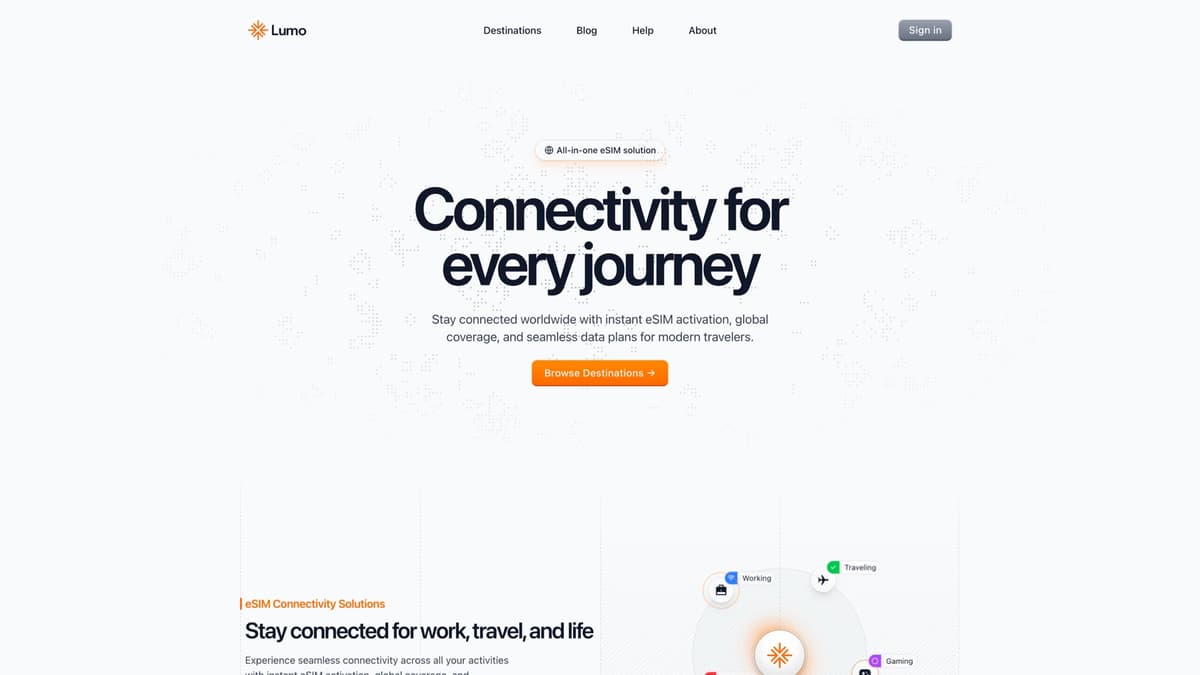
Stay ahead of cyber threats and data risks by partnering with Lumo, a digital platform designed specifically for modern travelers who demand instant activation, trusted security protocols, and flexible data plans across over 160 countries. With features like rapid QR code activation and reliable 24/7 customer support, Lumo makes it effortless to maintain your privacy and control while traveling internationally. Start securing your connectivity today and enjoy peace of mind wherever you go by exploring the complete eSIM solution. Learn more about optimizing device security with tips from How to Set Up eSIM for Travel and keep your connectivity safe with advice on eSIM Compatibility and Global Connectivity. Take action now to simplify your travels with confidence at Lumo.
Frequently Asked Questions
How can I choose a trusted eSIM provider?
To choose a trusted eSIM provider, look for strong encryption standards, secure provisioning technology, and verified customer reviews. Research their security policies and ensure they offer 24/7 customer support for any concerns.
What should I do to secure my device before using eSIM?
To secure your device, set a strong password and enable biometric authentication, such as fingerprint or facial recognition. Create a unique, randomly generated 16-character password and store it securely in a password manager.
Why are software updates important for eSIM security?
Software updates are crucial for eSIM security as they patch vulnerabilities that hackers exploit. Enable automatic updates and check for updates at least once a week to keep your device secure from potential threats.
How can I activate my eSIM safely?
Activate your eSIM only over private, secure connections, such as your personal mobile hotspot or a secure home Wi-Fi network. Avoid using public Wi-Fi for activation, as it may expose your activation data to interception.
What should I monitor in my eSIM profiles?
Regularly monitor your eSIM profiles for unfamiliar changes, unexpected data usage spikes, and the status of all enabled profiles. Set a calendar reminder to review your profiles monthly, catching potential security issues early.
How can I back up my eSIM data securely?
To back up your eSIM data securely, enable automatic cloud backups and create a separate encrypted backup of your activation details. Document this information and verify it every month to ensure you can quickly restore connectivity if your device is lost or damaged.
Recommended
Related Topics
Stay Connected Anywhere
Prepaid eSIM data plans for 180+ countries and territories. No physical SIM required.