Dual SIM Functionality Explained: Benefits and How It Works

TL;DR:
- Dual SIM technology enables smartphones to operate two connections simultaneously, managing separate phone numbers and data plans. Most devices use DSDS, which allows standby for both SIMs but active calls on only one, while DSDA supports concurrent active use but consumes more power. eSIMs offer rapid carrier switching without physical cards, making them ideal for international travel and flexible secondary lines.
Dual SIM functionality is defined as the ability of a single smartphone to operate two SIM connections simultaneously, letting you manage two phone numbers, two carriers, and two data plans on one device. Apple confirms that iPhone 13 and later support either a physical SIM plus an eSIM, or two eSIMs, covering the full range of modern dual SIM configurations. Android manufacturers like Samsung, Google, and OnePlus have offered dual SIM hardware for years across both budget and flagship tiers. The result is a phone that replaces two devices, separates your work and personal lines, and cuts roaming costs when you travel.
What is dual SIM functionality and how does it work technically?
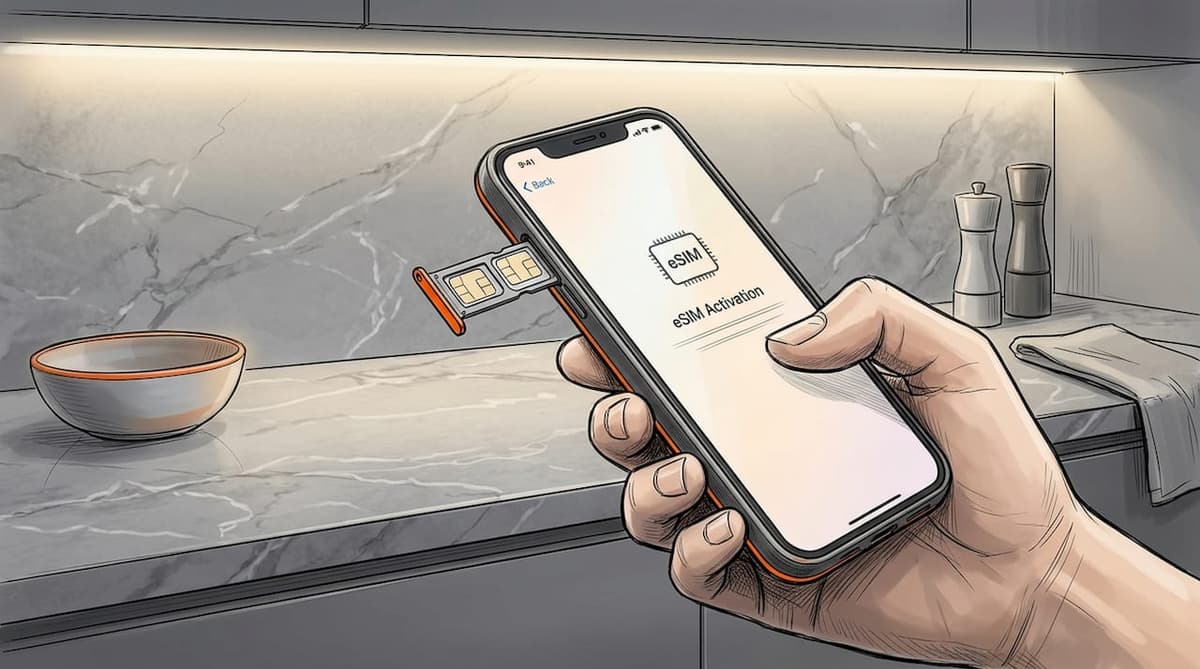
Dual SIM technology comes in three physical configurations: two physical nano-SIM slots, one physical SIM slot plus an eSIM, or two eSIM profiles with no physical card at all. Each setup achieves the same goal. You register two numbers with two carriers, and the phone manages both.
The critical technical distinction is between Dual SIM Dual Standby (DSDS) and Dual SIM Dual Active (DSDA). DSDS uses a single transceiver that switches rapidly between both SIMs so both numbers stay on standby, but only one SIM is active during a call. DSDA uses two separate transceivers, meaning you can receive a call on SIM 1 while actively using data on SIM 2 at the same time. Most consumer phones ship with DSDS because it is simpler and more power-efficient.
Cellular data adds another layer of nuance. iPhones use one cellular data network at a time, even when both SIMs are active for calls and texts. You designate a primary data SIM in settings, and the phone can switch automatically if needed. This matters when you are comparing phones: a DSDS device handles calls and texts on both lines but routes all data through one network at a time.
Pro Tip: Before buying any dual SIM phone, search the exact model name plus “cellular data switching” to confirm whether it supports automatic data switching or only manual selection. This single spec determines how useful the phone is during travel.
What are the real benefits of dual SIM for personal, business, and travel use?
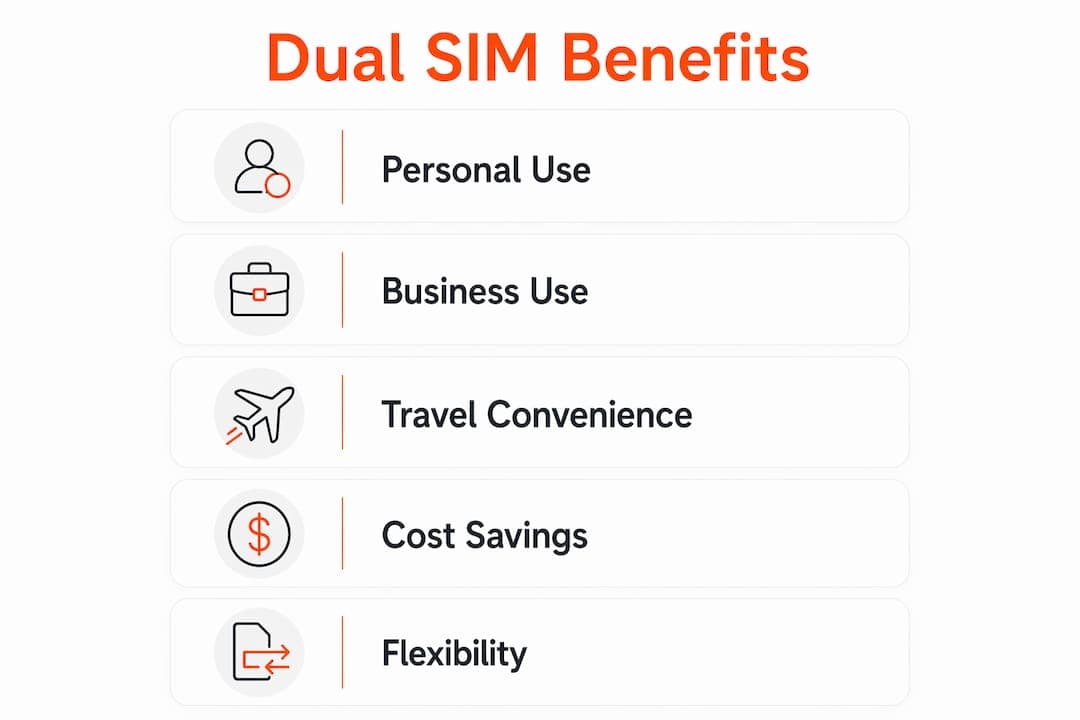
The practical advantages of dual SIM go well beyond the novelty of two numbers. Here are the four scenarios where it delivers the most measurable value:
- Work and personal separation. Dual SIM phones eliminate the need to carry two devices by keeping professional and personal lines on one handset. You can silence the work SIM after hours without turning off your personal number.
- Cost control across carriers. You can put your voice plan on one carrier and a cheaper data-only plan on another. If one carrier has better coverage in your area, you route calls through it while keeping the other for data.
- International travel savings. Apple recommends dual SIM for travel by keeping your home number active on one SIM while adding a local plan on the second. Your contacts can still reach your regular number, and you pay local rates for data instead of roaming fees.
- Managing multiple WhatsApp or messaging accounts. Apps like WhatsApp for business tie to a phone number, so a dual SIM phone lets you run separate accounts for work and personal use without logging in and out.
Pro Tip: When traveling internationally, activate your local eSIM plan before landing. Most eSIM carriers allow you to download a profile in under a minute, so you have data the moment you step off the plane.
The advantages of global eSIM plans are especially pronounced for frequent travelers, who can add a new local plan in minutes rather than hunting for a SIM card vendor at the airport.
Physical SIM vs. eSIM: which is better for dual SIM setups?
eSIM technology stores your carrier identity as a software profile directly on the device chip. There is no physical card to insert, lose, or damage. eSIM carrier profiles download in under a minute, making it far faster to switch carriers than ejecting a SIM tray and swapping cards. This speed advantage is what makes eSIM the preferred second line for travelers.
The table below shows the practical differences between physical SIM and eSIM in a dual SIM setup:
| Feature | Physical SIM | eSIM |
|---|---|---|
| Carrier switching speed | Requires physical swap | Download new profile in minutes |
| Risk of loss or damage | Card can be lost or damaged | No physical card, stored on chip |
| Number of profiles | One per slot | Multiple profiles stored, one active |
| Device compatibility | Universal | Requires eSIM-capable hardware |
| Travel convenience | Must source local SIM card | Activate remotely before travel |
For a deeper look at how these two technologies compare in real-world use, the eSIM vs physical SIM breakdown from Lumo covers compatibility and switching in detail. The short answer: if your phone supports eSIM, use it as your flexible second line and keep the physical SIM for your primary carrier.
Limitations and compatibility issues to know before you buy
Dual SIM functionality is not without trade-offs. Understanding these before purchase saves real frustration.
- One data network at a time. On most DSDS phones, both SIMs handle calls and texts, but only one SIM carries data at any moment. You choose the primary data SIM in settings.
- Battery drain on DSDA devices. DSDA phones run two transceivers simultaneously, which increases power consumption noticeably compared to single SIM or DSDS setups. Expect shorter battery life if you need both SIMs fully active.
- RF interference and hardware complexity. DSDA requires advanced RF shielding to prevent the two active radio paths from interfering with each other, which is why DSDA phones cost more and are less common.
- Carrier and regional lock restrictions. Some carriers sell phones locked to their network, which blocks the second SIM slot entirely. Always confirm the phone is unlocked before purchasing for dual SIM use.
- Disabling a SIM without removing it. You can toggle any SIM off in settings to save battery, stop roaming charges, or reduce distractions. This is more practical than physically removing the card.
Check the dual SIM management guide from Lumo for a practical walkthrough of configuring both lines for maximum coverage and minimum cost.
Key takeaways
Dual SIM functionality gives you two active phone numbers on one device, with the technical mode (DSDS vs. DSDA) and SIM type (physical vs. eSIM) determining how much flexibility you actually get.
| Point | Details |
|---|---|
| DSDS vs. DSDA | Most phones use DSDS, where only one SIM is active during calls; DSDA allows concurrent use but drains battery faster. |
| eSIM advantage | eSIM profiles download in under a minute, making them the best choice for a flexible travel or secondary line. |
| Data limitation | Even on dual SIM phones, only one cellular data network is active at a time. Check this spec before buying. |
| Key use cases | Work and personal separation, international travel savings, and carrier cost optimization are the top three benefits. |
| Disable without removing | You can turn off one SIM in settings to save battery or stop roaming without physically removing the card. |
Why I think most people underestimate dual SIM
Most people shopping for a new phone treat dual SIM as a checkbox feature rather than a genuine productivity tool. That is a mistake I have seen repeatedly. The real value is not just having two numbers. It is the control it gives you over when and how you are reachable.
For business users, the ability to go completely dark on a work number at 6 PM without affecting your personal line changes how you relate to work. For travelers, the combination of a home eSIM and a local data eSIM means you never pay a roaming surcharge again, and you never miss a call from home. The people who get the most from dual SIM are those who treat the two SIMs as two distinct tools with distinct jobs, not just two numbers on one phone.
My one consistent warning: do not buy a DSDA phone just because it sounds more capable. Unless you genuinely need to make a call on one line while streaming data on the other simultaneously, DSDS handles 95% of real-world use cases with better battery life and lower cost. Match the hardware to your actual behavior, not the spec sheet.
— Bogdan
Take your dual SIM setup global with Lumo
Lumo’s instant global eSIM plans are built for exactly the kind of flexibility dual SIM users need. Whether you are adding a local data line while keeping your home number active, or managing separate work and travel profiles across 160+ countries, Lumo activates via QR code in minutes with no physical SIM required. Plans cover 5G and 4G networks with 24/7 support, so you are never left without connectivity in an unfamiliar city. If you are ready to get the most out of your dual SIM phone, explore Lumo’s global eSIM plans and activate your second line before your next trip.
FAQ
What is dual SIM functionality on a smartphone?
Dual SIM functionality is the ability to operate two SIM connections on one device, supporting two phone numbers, two carriers, and two data plans simultaneously. Modern implementations include physical SIM plus eSIM combinations or two eSIM profiles.
What is the difference between DSDS and DSDA?
DSDS (Dual SIM Dual Standby) keeps both SIMs on standby but only one is active during a call, while DSDA (Dual SIM Dual Active) uses two transceivers to allow concurrent calls and data on both SIMs. DSDA consumes significantly more battery and costs more.
Can both SIMs use data at the same time?
No. On most dual SIM phones, including iPhones, only one cellular data network is active at a time. You designate a primary data SIM, and the phone may switch automatically depending on the model.
Is eSIM better than a physical SIM for dual SIM use?
eSIM is faster and more flexible for dual SIM setups because carrier profiles download in under a minute and no physical card swap is needed. It is the preferred option for travelers who need to add a local plan quickly.
Can I turn off one SIM without removing it?
Yes. Most dual SIM phones let you disable either SIM through the settings menu, which stops it from registering on the network without requiring you to physically remove the card.
Recommended
Related Topics
Stay Connected Anywhere
Prepaid eSIM data plans for 180+ countries and territories. No physical SIM required.