Why Choose Digital SIMs for Travel and Remote Work
TL;DR:
- Digital SIMs, or eSIMs, offer quick activation, enhanced security, and significant cost savings, transforming global connectivity for travelers. They eliminate physical cards, support multiple profiles, and enable remote management, making international travel more seamless and eco-friendly. However, device compatibility and regional coverage limitations require careful planning before switching from traditional SIM cards.
Physical SIM cards have done the job for decades, but they come with a growing list of frustrations: roaming bills that shock you, frantic store searches at foreign airports, and tiny plastic cards that get lost in jacket pockets. More travelers and remote workers are asking why choose digital SIMs, and the answer has become harder to ignore. eSIM shipments reached 503 million units in 2024, a 35% year-on-year increase that signals a genuine shift in how people connect on the move. This article breaks down exactly what you gain, what you should watch out for, and how to get started.
Table of Contents
- Key takeaways
- What digital SIMs actually are
- The real benefits of choosing digital SIMs
- Limitations you need to know before switching
- Digital SIMs vs traditional SIMs for travelers
- How to use digital SIMs without the headaches
- My take on digital SIMs after years of travel
- Ready to connect instantly with Lumo?
- FAQ
Key takeaways
| Point | Details |
|---|---|
| Instant setup, no store needed | Most eSIM profiles activate in under a minute by scanning a QR code or using an app. |
| Real cost savings on data | Travel eSIMs are often cheaper than roaming plans, though local physical SIMs can beat them for long stays. |
| Stronger security built in | eSIMs are tied to device hardware, making SIM-swap fraud significantly harder to pull off. |
| Dual-SIM is the smart default | Keep your home number on a physical SIM for calls and SMS while using eSIM data abroad. |
| Not every device qualifies | Budget phones and older models frequently lack eSIM support, so check compatibility before you commit. |
What digital SIMs actually are
A digital SIM, or eSIM, is a programmable chip soldered directly into your device. You cannot remove it, lose it in the airport security tray, or accidentally run it through the washing machine. Instead of physically swapping cards, you download a carrier profile remotely.
The activation process is straightforward. You scan a QR code or open a carrier app, and a new profile activates in under a minute on most modern phones. No shipping. No waiting for a card to arrive. No hunting for a paperclip to open the SIM tray.
Here is what makes digital SIMs functionally different from physical ones:
- Multiple profiles stored at once. Your device can hold several carrier profiles and you switch between them in Settings, not by fumbling with a card.
- Remote management. You can purchase, activate, and cancel plans from anywhere with an internet connection.
- Dual-SIM capability. Most modern eSIM-compatible phones let you run a physical SIM and an eSIM simultaneously, two active numbers on one device.
- No physical wear. SIM trays can corrode, bend, or break. Embedded chips do not have that problem.
Pro Tip: Before buying an eSIM plan, confirm your phone supports eSIM by checking Settings > General > About (iPhone) or Settings > Network > SIM management (Android). Not all newer phones include it, especially budget models sold in certain regions.
The real benefits of choosing digital SIMs
The advantages of using digital SIMs go well beyond skipping the airport SIM kiosk. They reshape how you manage connectivity across countries and work arrangements.
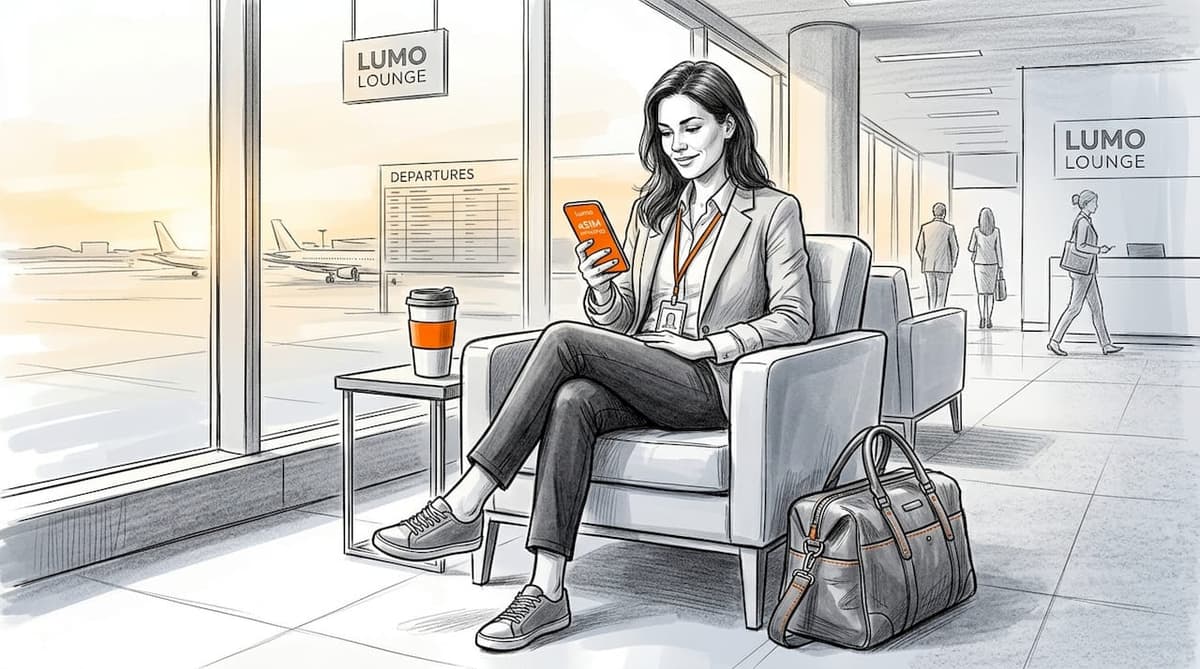
Instant access without the logistics. When you land in a new country at midnight, finding a local carrier store is not realistic. With an eSIM, you buy a plan on the plane (if you have Wi-Fi), scan the QR code when you land, and you have data before your bags arrive on the carousel. This alone is worth the switch for frequent travelers.
Lower costs for international data. Travel eSIMs typically cost $16 to $20 for 5GB, which undercuts many carrier roaming packages significantly. You can compare that directly against what your home carrier charges for international roaming and the difference is often startling. For a deeper breakdown, the eSIM vs roaming comparison at Lumo lays out where the real savings appear.
Security that physical SIMs cannot match. An eSIM is tied to your device’s IMEI, meaning it cannot be physically stolen and cloned the way a traditional SIM card can. If you lose your phone, you can remotely disable the eSIM profile without waiting for a carrier store to open. Security experts consistently flag this as one of the strongest advantages of eSIM over physical cards.
A genuine sustainability benefit. Eliminating physical SIM cards removes plastic, metal contacts, paper packaging, and shipping emissions from the equation entirely. If you travel frequently and swap SIMs regularly, that adds up across a year.
- You land in a new country and activate your plan in under a minute.
- Your home number stays active on your physical SIM for calls and texts.
- You pay local data rates instead of your carrier’s roaming markup.
- If your device is lost, you lock the eSIM remotely before any unauthorized use occurs.
- At the end of the trip, you delete the profile with no plastic waste left behind.
“The dual-SIM flexibility of eSIM is the real shift for work-life balance: keeping your personal or business number reachable while running cost-effective local data in the background.”
Pro Tip: If you travel across multiple countries on one trip, look for regional eSIM plans that cover several countries under one data allowance. These are often more economical than buying separate local plans at each destination.
Limitations you need to know before switching
Understanding the advantages of global eSIMs is only useful if you also know where the technology falls short. Here are the honest limitations:
- Device compatibility gaps. Budget smartphones, many regional Android models, and older flagship phones do not support eSIM. Check before you buy a plan you cannot use.
- Travel eSIMs are usually data only. Voice calls and SMS typically stay on your physical SIM or primary line. If you need a local number abroad for calls, a physical SIM may still be necessary.
- Long stays can favor local physical SIMs. Local SIMs in Southeast Asia can run as low as $4 to $10 per month, which no travel eSIM will beat for a multi-month stay.
- Profile transfers between devices are complicated. Moving eSIM profiles from one phone to another depends entirely on carrier policy and platform support. It is not as simple as pulling out a card and inserting it in a new phone.
- Regional carrier coverage varies. eSIM support is strong in North America, Europe, and parts of Asia, but patchy in rural or developing regions where local carriers have not adopted the technology.
| Feature | Digital SIM (eSIM) | Physical SIM |
|---|---|---|
| Activation speed | Under 1 minute | Hours to days (shipping or store visit) |
| Device compatibility | Modern flagships mostly | Universal |
| Security | Hardware-bound, remote lock | Can be stolen, cloned |
| Environmental impact | No plastic or packaging | Plastic, metal, packaging |
| Long-stay cost | Higher in some markets | Often lower locally |
Pro Tip: Always disable data roaming on your physical SIM after activating a travel eSIM. Leaving data roaming on your primary SIM while abroad will generate unexpected roaming charges even when you are actively using eSIM data.
Digital SIMs vs traditional SIMs for travelers
The digital sims vs traditional sims debate comes down to your travel style. Here is a clear-eyed look at where each option wins.
Physical SIMs work on virtually all devices, require no app or QR code, and transfer between phones by hand in seconds. For someone visiting one country for several months or using a phone that does not support eSIM, they remain the practical choice. The 7 key eSIM advantages for travelers at Lumo covers the tradeoffs in practical terms worth reviewing.
Digital SIMs win on speed, flexibility, and security. If you visit multiple countries in a month, manage a remote work schedule across time zones, or simply want to stop paying roaming rates, the advantages of eSIM are concrete. You get instant setup, no physical card management, and the ability to hold multiple profiles ready without carrying a wallet of SIM cards.
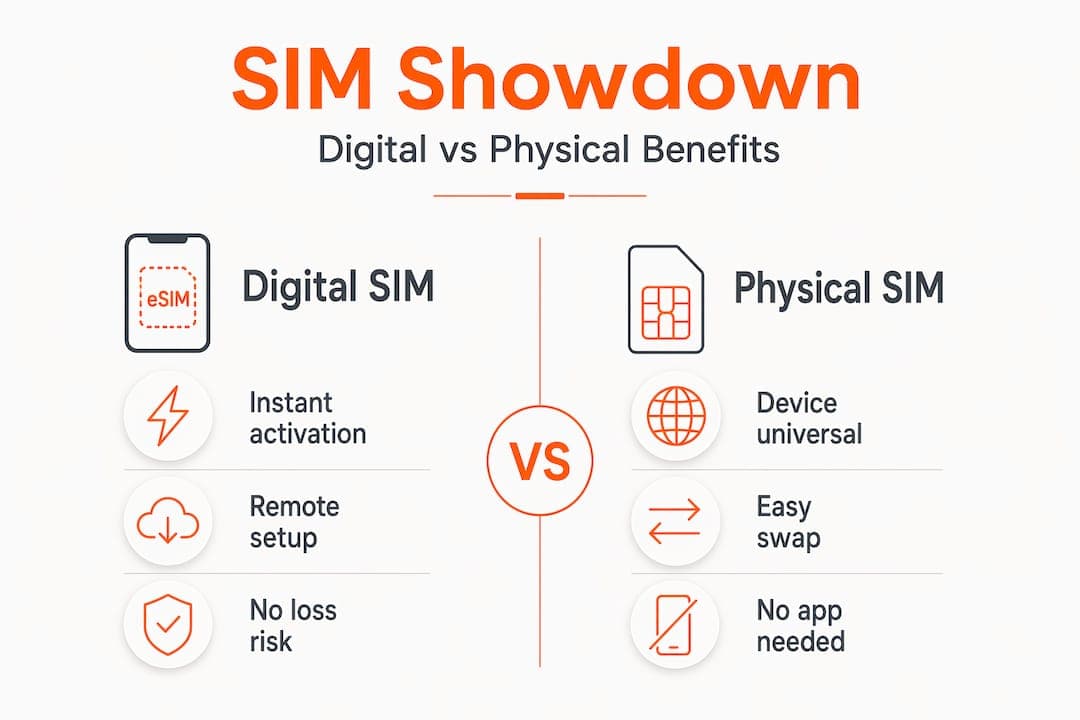
For most frequent travelers today, the realistic answer is both. Run your home number on a physical SIM for calls and SMS, use a travel eSIM for data, and manage both profiles from your settings without switching hardware.
How to use digital SIMs without the headaches
Getting started is simpler than most people expect. Here is a clear process:
- Confirm device compatibility. Check your phone’s settings or manufacturer page to verify eSIM support before purchasing any plan.
- Choose the right plan type. For a single country, a local eSIM plan is usually the best value. For multi-country trips, choose a regional plan. For ongoing remote work across regions, a global plan with a data allowance that rolls over is worth the investment.
- Activate via QR code or app. Scan the QR code from your plan provider or follow the in-app steps. Most activations complete in under a minute. The instant activation process is well-documented if you want a walkthrough.
- Label your profiles clearly. In your phone’s SIM settings, rename each eSIM profile by country or purpose so you are not guessing which one to toggle on.
- Turn off data roaming on your physical SIM. This is the step most people skip. Do it immediately after eSIM activation.
- Keep your physical SIM active. Use it for calls and SMS. Use your eSIM exclusively for data. This dual-SIM setup keeps you reachable on your regular number while keeping data costs low.
Pro Tip: If your eSIM does not connect right after activation, restart your phone. Carrier network registration occasionally requires a full reboot to complete, especially when switching between profiles in a new country.
My take on digital SIMs after years of travel
I switched from physical SIMs to a dual-SIM eSIM setup about three years ago, and the single biggest change was not the cost savings. It was the mental load I dropped at every border crossing. I used to budget 45 minutes at every new airport to find a carrier kiosk, explain my data needs in a language I barely spoke, and wait while someone fiddled with activation. Now I do it on the plane.
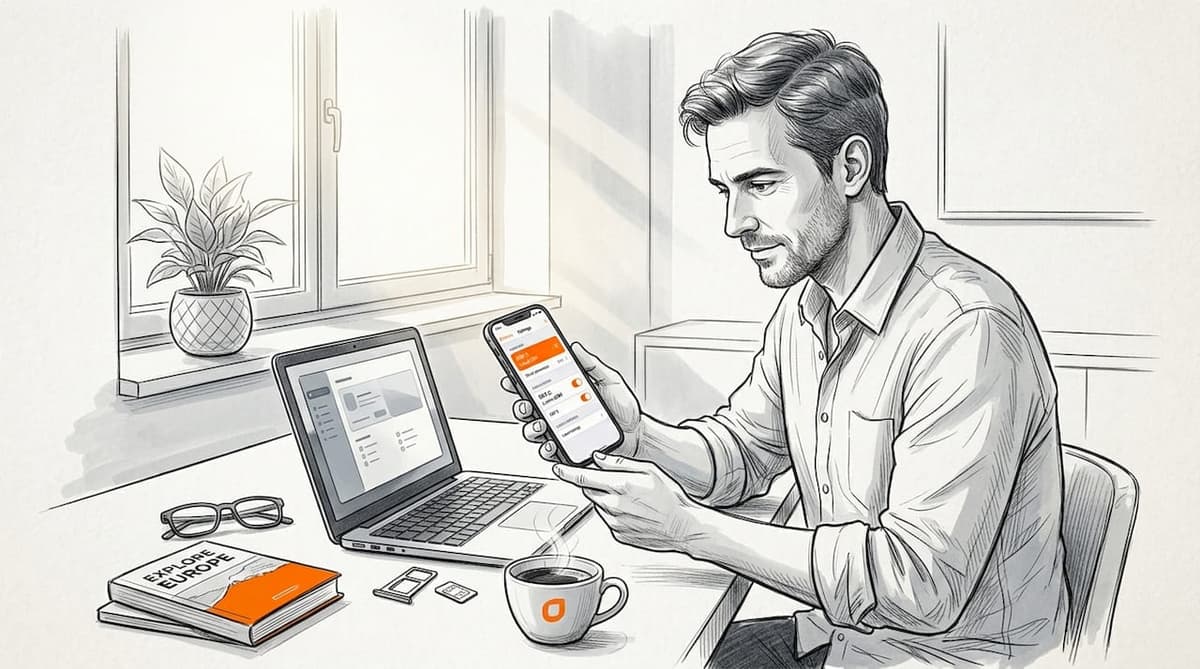
The device compatibility issue is real, though. I had a frustrating week in 2023 when a backup phone I brought did not support eSIM and I had to track down a physical SIM anyway. The lesson was clear: always verify compatibility well before departure, not at the departure gate.
What I have noticed is that the carrier ecosystem is catching up fast. Coverage gaps that were significant two years ago have narrowed considerably. I expect that within two to three years, the “not supported in this region” problem will affect a much smaller percentage of travelers. For now, maintaining a physical SIM as a backup is genuinely useful, not just theoretical caution.
My honest advice: try a digital SIM on your next trip, even a short one. The experience of not scrambling for connectivity when you land will do more to convince you than any article could.
— Bogdan
Ready to connect instantly with Lumo?
If you have been weighing whether to make the switch, Lumo makes the decision easier. Lumo offers instant global data plans across more than 160 countries, with activation done entirely through a QR code or the Lumo app in under a minute.
Plans are flexible and priced to undercut traditional roaming, with 5G and 4G coverage on major networks. Whether you are managing client calls from a Lisbon café or working through a two-week multi-country trip, Lumo handles connectivity so you are not thinking about it. You keep your existing number active for calls and SMS while Lumo powers your data. No contracts, no SIM cards, no roaming surprises. Just coverage, ready when you land.
FAQ
What makes digital SIMs better than physical SIMs for travel?
Digital SIMs activate in under a minute, require no physical card, and let you switch between carrier plans without visiting a store, making them far more convenient for multi-country travel.
Are eSIMs cheaper than roaming plans?
Travel eSIMs typically cost $16 to $20 for 5GB, which is cheaper than most carrier international roaming packages, though local physical SIMs can be more economical for long-term stays in certain markets.
Can I use an eSIM and keep my regular phone number?
Yes. Most modern smartphones support dual-SIM, meaning you run your physical SIM for calls and SMS alongside an eSIM for data, keeping your home number fully active abroad.
Is an eSIM safer than a physical SIM card?
An eSIM is tied to your device hardware and cannot be physically removed or cloned. It also supports remote disablement, which gives it a clear security edge over traditional SIM cards in cases of theft or loss.
What should I do after activating a travel eSIM?
Immediately disable data roaming on your physical SIM. Leaving it active while abroad will cause your home carrier to charge roaming fees even when your eSIM is handling the data connection.
Recommended
Related Topics
Stay Connected Anywhere
Prepaid eSIM data plans for 180+ countries and territories. No physical SIM required.