The ultimate international travel tech checklist for 2026
TL;DR:
- Powering devices efficiently requires a universal travel adapter, GaN chargers, and a power bank under 100Wh.
- eSIMs are the preferred, cost-effective choice for international connectivity, with hybrid setups recommended.
- Managing data with offline downloads, VPNs, and understanding activity data needs prevents overages and improves security.
Packing smart for international travel in 2026 is nothing like it was five years ago. You’re managing eSIMs, GaN chargers, VPNs, and airline battery rules before you even think about what clothes to bring. One wrong call on a power adapter or a roaming plan can cost you hours of productivity and hundreds of dollars in unexpected fees. This checklist cuts through the noise and gives you exactly what you need to stay powered, connected, and in control from the moment you land, whether you’re hopping between European capitals or working remotely from Southeast Asia.
Table of Contents
- Essential device power and charging solutions
- Connectivity abroad: eSIMs, physical SIMs, and avoiding roaming fees
- Data management: How much do you really need and how to stay secure
- Critical edge cases: Device compatibility, SIM limitations, and uncommon scenarios
- Why a well-planned travel tech kit saves more than just money
- Start your next trip with seamless connectivity
- Frequently asked questions
Key Takeaways
| Point | Details |
|---|---|
| Universal charging is essential | A quality adapter and GaN charger keep all devices powered safely in any country. |
| eSIM saves money | Switching to an eSIM cuts roaming costs by up to 80 percent and adds flexibility. |
| Smart data use matters | Daily data usage averages about 1GB, so manage activity and use WiFi securely. |
| Edge cases require planning | Carrier locks and rural coverage can disrupt even the best plans—check ahead for compatibility. |
Essential device power and charging solutions
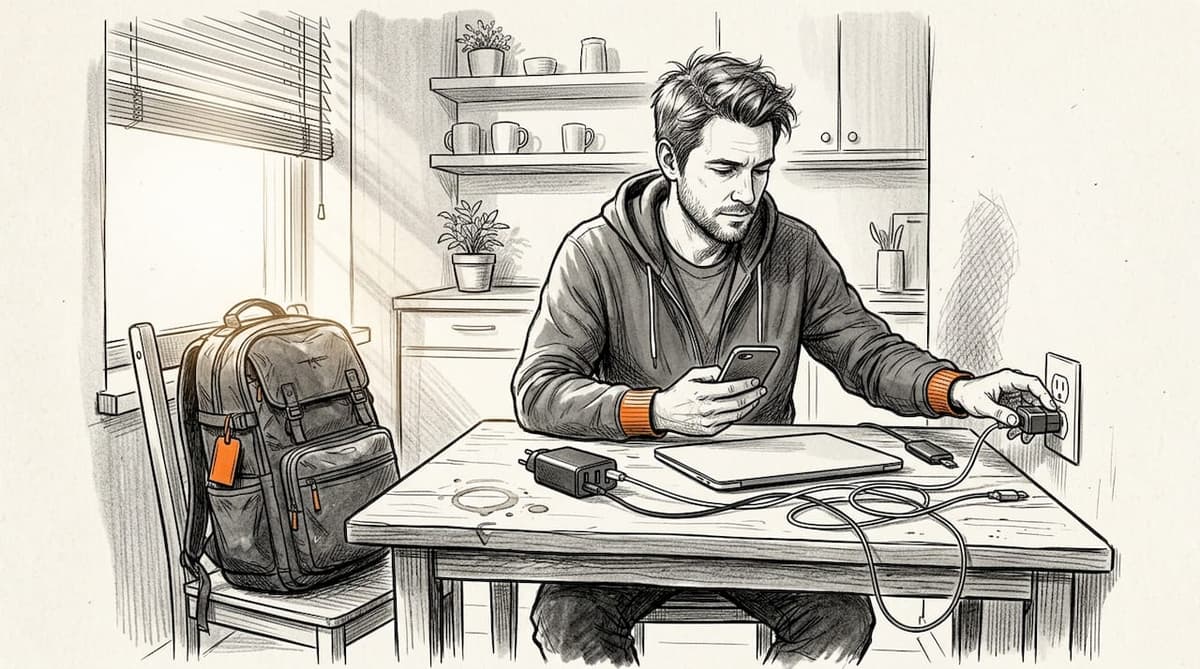
Power is the foundation of any tech travel setup. Without it, nothing else matters. The good news is that modern gear has made this much simpler, but only if you pick the right pieces.
The single most important item is a quality universal travel adapter. Universal adapters with USB-C PD support like the Epicka handle nearly every outlet type worldwide and deliver 100W+ charging speeds. Most modern laptops, phones, and tablets are built for 100 to 240 volts, meaning you won’t need a bulky voltage converter for standard tech devices. If you’re unsure about voltage compatibility advice for specific gear, always check the label on the device’s power brick before you travel.
GaN (gallium nitride) chargers are a genuine game changer. They’re roughly half the size of traditional chargers but push serious wattage across multiple ports at once. A single 65W or 100W GaN charger can handle your laptop, phone, and tablet simultaneously, which means one plug, one adapter, and a much lighter bag.
For power banks, airlines enforce a 100Wh maximum for lithium batteries in carry-on luggage. A 20,000mAh bank typically falls just under this limit and gives you roughly four full phone charges. Never pack power banks in checked luggage.
Must-have power accessories:
- Universal adapter with USB-C PD (at least 65W output)
- GaN multi-port charger (65W to 100W)
- 20,000mAh power bank (under 100Wh)
- USB-C to USB-C cable (1m and 2m lengths)
- Magnetic charging cable organizer
Pro Tip: One GaN charger that covers your laptop, phone, and tablet eliminates the need for three separate bricks. You save space, reduce adapter count, and keep your bag under weight limits. Check our eSIM travel tips for more ways to streamline your entire travel kit.
Connectivity abroad: eSIMs, physical SIMs, and avoiding roaming fees
Now that power is solved, staying connected is your next priority. The SIM decision you make before departure directly affects your budget and your sanity.

eSIMs have become the default choice for frequent international travelers, and for good reason. eSIM convenience comes from the ability to activate a local data plan digitally, without touching a physical card. No hunting for a SIM shop at the airport, no tiny ejector pins, no risk of losing your home SIM in a foreign country.
The cost difference is significant. eSIM data plans run $5 to $30 per week, compared to $10 to $100 or more for standard roaming. That’s a potential saving of over 80% on your data costs. For context, a Nomad 10GB plan covering 180 days costs around $30 total.
| Option | Typical cost | Convenience | Best for |
|---|---|---|---|
| eSIM data plan | $5 to $30/week | Very high | Most travelers |
| Local physical SIM | $10 to $25/trip | Medium | Rural areas, locked phones |
| Carrier roaming | $10 to $100+/week | High | Short trips only |
Physical SIMs still have a place. If your phone is carrier-locked, you may not be able to activate an eSIM at all. Rural destinations with limited network infrastructure sometimes favor local physical SIMs for better coverage. Some countries also have registration requirements that make physical SIMs more practical.
The smartest hybrid setup: keep your home number active on your primary SIM for calls and texts, and run a local eSIM for all data. This gives you the best of both worlds without paying roaming rates. Learn more about setting up eSIM activation before you fly, and explore the full eSIM advantages for travelers if you’re still on the fence.
Pro Tip: Activate your eSIM after landing, not before. Most plans start counting days from activation, so waiting until you arrive maximizes every day of your data window. For a full breakdown of how to cut carrier fees, the avoiding roaming fees guide covers every scenario.
Data management: How much do you really need and how to stay secure
Once you’re connected, managing data wisely makes all the difference between a smooth trip and an unexpected overage bill.
Most travelers dramatically overestimate how much data they need, or they buy unlimited plans that throttle speeds after a soft cap. Budget roughly 1GB per day for standard use: maps, messaging, light browsing, and occasional video calls. Heavy streaming or video uploads push that to 3GB or more per day.
| Activity | Data per hour |
|---|---|
| Google Maps navigation | ~50MB |
| WhatsApp calls | ~15MB |
| Instagram browsing | ~100MB |
| Netflix (standard) | ~1GB |
| Video conferencing | ~500MB |
“Unlimited” plans often include a fair usage policy (FUP) that throttles speeds to 2G after you hit a threshold, sometimes as low as 5GB. Read the fine print before buying.
Steps to manage data and stay secure:
- Download offline maps via Google Maps or Maps.me before departure.
- Save boarding passes, hotel confirmations, and translation apps offline.
- Enable low data mode on iOS or Android to limit background usage.
- Use a reputable VPN on all public WiFi networks, especially in hotels and airports.
- Turn off auto-updates and cloud backups while on mobile data.
Public WiFi is convenient but risky. A VPN encrypts your traffic and protects login credentials from interception on shared networks. It also helps bypass regional content restrictions in certain countries. For deeper guidance on staying safe while connected, check out eSIM security tips and the full eSIM and data safety breakdown.
Pro Tip: Download your translation app’s language packs offline. Real-time translation eats data fast, and you’ll almost always need it in a moment when WiFi isn’t available.
Critical edge cases: Device compatibility, SIM limitations, and uncommon scenarios
Even the best checklist needs upgrades for those rare, tricky situations that only reveal themselves once you’re already abroad.
Carrier-locked phones are one of the most common surprises. If your device is locked to a specific carrier, eSIM activation from a third-party provider may be blocked entirely. Carrier-locked devices can disable eSIM support for foreign plans, and rural destinations often perform better with a local physical SIM anyway. Check your lock status before you leave home, not at the airport.
Some countries require SIM card registration with a passport. Others restrict certain eSIM providers for geopolitical reasons. Always research your destination’s specific telecom regulations at least a week before departure.
Here’s a rapid troubleshooting checklist for edge cases:
- Confirm your phone is unlocked via your carrier’s website or settings menu.
- Verify eSIM compatibility on your specific device model (not just the brand).
- Research your destination’s eSIM provider coverage and any registration laws.
- Pack a backup physical SIM from a global carrier as a failsafe.
- Know your carrier’s international roaming rate as a last resort option.
Voltage issues are rare for modern tech, but high-wattage appliances like hair dryers or curling irons can fry on foreign current without a proper converter. Your phone charger is fine. Your 1800-watt hair dryer is not. The edge cases for SIMs and power guide covers the full range of compatibility scenarios worth reviewing.
For a step-by-step walkthrough of activating your eSIM in any country, the eSIM activation guide is the fastest way to get up and running without guesswork.
Why a well-planned travel tech kit saves more than just money
Here’s what most tech travel guides won’t tell you: the real cost of bad gear isn’t the roaming bill. It’s the two hours you spend in an airport trying to find a working outlet, or the client call you miss because your eSIM didn’t activate properly, or the afternoon you lose hunting for a SIM card shop in a city where you don’t speak the language.
We’ve seen travelers spend $200 on a last-minute local SIM at an airport kiosk because they didn’t set up an eSIM before departure. That’s not a connectivity problem. That’s a preparation problem. The gear itself is rarely expensive. What costs you is not thinking about it until you’re already in the situation.
The travelers who move most smoothly through international trips are the ones who treat their tech kit with the same seriousness as their passport. One hour of prep at home eliminates ten hours of friction abroad. The global eSIM plan advantages go well beyond cost savings. They give you the confidence to be spontaneous, to take the detour, to stay an extra day, because you know your connection will follow you.
Start your next trip with seamless connectivity
You’ve got the checklist. Now it’s time to put it into action before your next departure date sneaks up on you.
Lumo eSIM gives you instant access to flexible data plans across more than 160 countries, activated in minutes via QR code with no physical SIM required. Whether you need a regional plan for a two-week trip or a global plan for months of remote work, Lumo has a data option that fits. Check out the instant eSIM activation guide to see exactly how fast setup can be. Stop paying roaming fees and start traveling with the kind of connectivity that actually keeps up with you.
Frequently asked questions
What tech adapter do I really need for international travel in 2026?
A universal adapter with USB-C PD works in virtually every country and supports fast charging for most modern devices. You only need a voltage converter if you’re bringing high-wattage appliances like hair dryers or straighteners.
Are eSIMs or physical SIM cards better for global travelers?
eSIMs are generally superior for convenience, security, and cost savings, but physical SIMs remain the better choice in rural areas or on carrier-locked devices. The ideal setup uses both.
How much mobile data do I need per day while traveling?
Plan on roughly 1GB per day for standard use including maps, messaging, and light browsing. Add more if you’re streaming video or running frequent video calls.
Can I use my high-powered hair dryer or straightener abroad?
Most modern tech devices handle 100 to 240V without a converter, but high-powered appliances like hair dryers often require a separate voltage converter to avoid damage.
What is the major risk if I choose the wrong SIM or eSIM plan?
A poor choice can result in carrier-locked eSIM failures, unexpected roaming charges, or complete loss of connectivity in regions with limited eSIM provider coverage.
Recommended
- International travel tech tips for seamless connectivity | Lumo eSIM Store
- 6 main types of travel connectivity for seamless trips | Lumo eSIM Store
- Business travel tech essentials for global connectivity | Lumo eSIM Store
- International Data Plan Checklist 2026: Save 40% on Travel | Lumo eSIM Store
- Cost to Build a Travel Booking Like App in 2025 | Projekto
Related Topics
Stay Connected Anywhere
Prepaid eSIM data plans for 180+ countries and territories. No physical SIM required.