Smart mobile connectivity solutions for travelers: 35% savings

TL;DR:
- Modern eSIMs offer extensive global coverage and significant savings over traditional roaming.
- Portable hotspots and multi-carrier SIMs provide flexible connections for multiple devices and remote areas.
- Travelers should assess coverage, device compatibility, and trip duration to choose the best connectivity solution.
Crossing multiple borders and juggling work calls while watching your data bill climb is one of the most frustrating realities of life as a frequent traveler or remote worker. The good news: modern mobile connectivity has evolved far beyond expensive carrier roaming. eSIMs can cover 150 to 200 countries, saving travelers roughly 35% compared to traditional roaming charges. This guide breaks down the most practical, affordable options available right now so you can make a confident, informed choice before your next departure.
Table of Contents
- Criteria for choosing mobile connectivity solutions
- Popular eSIM solutions: Airalo, Saily, Holafly, and Nomad
- Portable hotspots and multi-carrier SIMs: Devices for flexible connectivity
- Head-to-head: eSIMs vs portable hotspots vs physical SIMs
- What seasoned travelers and remote workers really choose
- Get seamless, affordable global data with Lumo eSIM
- Frequently asked questions
Key Takeaways
| Point | Details |
|---|---|
| eSIMs offer global coverage | Install digital plans easily for 150+ countries and avoid physical SIM swaps. |
| Portable hotspots support groups | Connect multiple devices with dedicated hardware and fallback across carriers. |
| Pricing beats roaming | eSIMs and regional SIMs save 35% or more compared to daily roaming fees. |
| Device compatibility matters | Check if your device supports eSIM; hotspots are best for older devices and families. |
Criteria for choosing mobile connectivity solutions
Before comparing specific providers, you need a clear checklist. Not every solution fits every traveler, and picking the wrong one can cost you time, money, and signal at the worst possible moment.
Here are the core factors to evaluate:
- Coverage: Does the plan cover all the countries on your itinerary, including rural areas?
- Pricing model: Pay-as-you-go works well for short trips; bundled regional plans suit longer stays. Average eSIM pricing runs $5.50/GB versus $8.57/GB for traditional roaming, a clear 35% savings.
- Device compatibility: Not all laptops, older smartphones, or tablets support eSIM. Physical SIMs and portable hotspots fill that gap.
- Data speed and limits: 5G or 4G LTE matters for video calls. Know whether a plan throttles after a certain usage threshold.
- Activation process: Some plans activate via a QR code in under two minutes. Others require arriving at a local shop. Pre-departure activation is almost always faster.
- Reliability in remote areas: Urban connectivity is rarely a problem. If you travel to rural Southeast Asia or Eastern Europe, antenna quality and carrier partnerships become critical.
Understanding eSIM benefits for travelers goes beyond convenience. It means you can switch local carriers without touching a SIM tray, which is a genuine game-changer when you cross three borders in a week. For anyone serious about budget management, learning the basics of avoiding roaming fees is an essential first step before you even book your flight.
Pro Tip: Always check whether your phone supports dual SIM or eSIM plus physical SIM simultaneously. This lets you keep a home number active while running a local eSIM for data.
Popular eSIM solutions: Airalo, Saily, Holafly, and Nomad
Once you know what you need, these four providers consistently top the rankings for international use. Each has a different strength.

Leading eSIM providers include Airalo covering 200+ countries, Saily covering 150+ countries, Holafly with unlimited data plans, and Nomad known for reliable speeds across Europe and Asia.
Here is a quick breakdown:
- Airalo: Largest global coverage, marketplace model with regional and country-specific plans. Best for travelers hitting multiple continents.
- Saily: Strong data value, straightforward pricing, and a clean app experience. Solid pick for budget-focused nomads.
- Holafly: Unlimited data plans with no data cap anxiety. Ideal when you cannot predict your daily usage.
- Nomad: Consistent 4G/5G speeds in Europe and Asia. Popular with remote workers doing regular video calls.
| Provider | Coverage | Pricing model | Best for |
|---|---|---|---|
| Airalo | 200+ countries | $4.50 to $7/GB | Multi-region trips |
| Saily | 150+ countries | ~$5/GB | Budget travelers |
| Holafly | 160+ countries | Flat unlimited fee | Heavy data users |
| Nomad | 100+ countries | Per GB/bundle | Europe and Asia focus |
For a broader view of how these options stack up, a global eSIM comparison can help you match each provider to your actual travel style. If you want to dig into plan specifics, this eSIM solutions comparison covers detailed performance notes from real users.
Pro Tip: For frequent border crossers, regional plans (like a Europe-wide bundle) often cost 30 to 40% less than buying separate country plans for each destination.
For those curious about the nomad community’s actual preferences, best eSIM for nomads digs into real-world data usage patterns and cost breakdowns.
Portable hotspots and multi-carrier SIMs: Devices for flexible connectivity
Not every device supports eSIM. Cameras, older laptops, gaming devices, and some business tablets still rely on WiFi or physical connections. That is exactly where portable hotspots and multi-carrier physical SIMs earn their place.
Portable hotspots connect 5 to 10+ devices simultaneously using vSIM or multi-carrier technology across 140+ countries, while physical multi-carrier SIMs offer fallback access across 600+ carriers worldwide.
Key benefits of each:
- Portable hotspots: Perfect for traveling families, small teams, or digital nomads carrying multiple devices. One data plan powers everything. Devices like Skyroam or GlocalMe are popular options.
- Multi-carrier physical SIMs: Automatically switch to the strongest available signal, making them reliable in rural or remote regions where a single carrier might have weak coverage.
- Upfront investment: Hotspot devices typically cost $80 to $200, then pay-as-you-go or monthly data. Factor in total trip length before deciding.
- Battery dependency: A hotspot device needs charging. If you are hiking or off-grid, this is a real limitation.
| Solution | Devices supported | Coverage | Upfront cost |
|---|---|---|---|
| Portable hotspot | 5 to 10+ | 140+ countries | $80 to $200 |
| Multi-carrier SIM | 1 per SIM | 150+ countries | $10 to $30 |
| eSIM | 1 per profile | 160+ countries | $0 hardware |
Comparing eSIM vs physical SIM options helps you weigh flexibility against cost. For those building a reliable travel setup, guidance on how to choose a reliable SIM walks through the practical decision process step by step. A thorough eSIM vs hotspot breakdown is also worth reviewing if you regularly travel in groups.
Pro Tip: Rent a hotspot device at the airport only as a last resort. Monthly rental fees can exceed the cost of purchasing your own device within just two trips.
Head-to-head: eSIMs vs portable hotspots vs physical SIMs
Here is the direct comparison to help you make a final call based on your specific travel pattern.
| Feature | eSIM | Portable hotspot | Physical SIM |
|---|---|---|---|
| Activation | Instant QR code | Device setup needed | Manual swap |
| Hardware required | No | Yes | Yes |
| Devices supported | 1 per profile | 5 to 10+ | 1 |
| Cost per GB | $3 to $7 | $5 to $12 | $2 to $15 |
| Coverage | 160+ countries | 140+ countries | Varies widely |
| Rural reliability | Moderate | High | High |
For situational guidance:
- Solo traveler on a short trip: eSIM wins on price, convenience, and zero hardware hassle.
- Family or team of 4+: Portable hotspot makes more financial sense with shared data.
- Long-term stay in one country: Local physical SIM delivers the best value and speed.
- Remote worker in rural areas: Multi-carrier SIM or hotspot for signal reliability.
“eSIMs are best for solo or short trips due to lower cost and no hardware needed. Hotspots suit families and remote workers managing multiple devices. Local SIMs remain the top choice for extended single-country stays.”
Reviewing the best travel eSIMs for global trips is a practical next step once you have settled on your connectivity approach.
What seasoned travelers and remote workers really choose
Here is the honest truth: most experienced travelers do not pick one solution and stick with it forever. They adapt. For frequent border crossings, eSIMs are the default because speed and convenience outweigh everything. But the reality of “unlimited” plans is more complicated than the marketing suggests.
Digital nomads prioritize Saily and Airalo for per-GB efficiency, while Holafly unlimited plans suit those with data anxiety. Testing speeds with Speedtest.net on arrival is smart practice since partner networks vary significantly by country.
The biggest mistake we see? Buying an unlimited plan assuming you will get full speed all day. Most throttle after 1 to 3GB of daily use. For video-heavy remote workers, regional bundles with higher speed thresholds are worth the slight premium. Also, always activate your plan before boarding. Trying to set up a new eSIM at 30,000 feet with no signal is a frustrating lesson you only need once. Reviewing digital nomad eSIM plans that match high-usage patterns can save you a lot of headaches down the road.
Get seamless, affordable global data with Lumo eSIM
If you want a single platform that simplifies the entire decision, Lumo is built exactly for travelers like you.
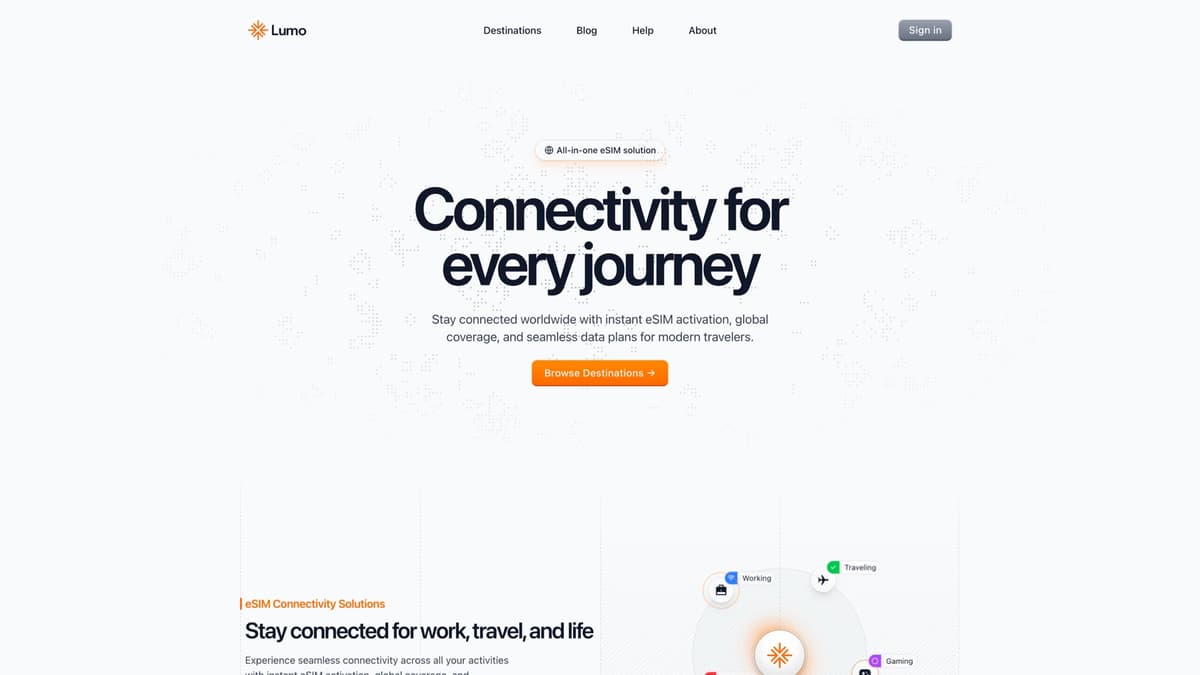
Lumo eSIM covers 160+ countries with instant QR code activation, flexible pay-as-you-go and bundled plans, and 24/7 support when you need it most. Whether you are hopping between continents or settling into a new city for a month, you can compare global eSIMs and find your best fit without guesswork. For a full overview of what is available in 2026, explore the best eSIM solutions and see how Lumo stacks up against the competition.
Frequently asked questions
Which eSIM providers are best for frequent international travel?
Airalo and Saily are top picks for affordable, broad coverage across 150 to 200+ countries, while Holafly is the go-to choice for travelers who need unlimited data without worrying about overages.
Are portable hotspots a better solution than eSIMs?
Portable hotspots are the stronger option when you need to connect 5 to 10+ devices simultaneously or when your devices lack eSIM support, but they require an upfront hardware investment and a separate data plan.
How can I avoid roaming charges while traveling internationally?
Switching to an eSIM or multi-carrier SIM before you travel is the most effective strategy, since average eSIM rates at $5.50/GB are significantly lower than the typical roaming rate of $8.57/GB.
Do unlimited eSIM plans really offer unlimited data?
Most unlimited eSIM plans include fair-use throttling after 1 to 3GB per day, meaning your speed drops noticeably after that threshold even though the data itself remains technically available.
Recommended
- Secure Mobile Data While Traveling: Cut Costs by 80% | Lumo eSIM Store
- Affordable Travel Data Plans: Smart Global Connectivity | Lumo eSIM Store
- The ultimate international travel tech checklist for 2026 | Lumo eSIM Store
- Types of global connectivity: smart travel options 2026 | Lumo eSIM Store
- Corporate Travel Explained: Smarter Management and Safer Rides
- Travel money saving tips: Cut costs on your next trip
Related Topics
Stay Connected Anywhere
Prepaid eSIM data plans for 180+ countries and territories. No physical SIM required.