Local carrier switching explained: travel smarter, save more

TL;DR:
- Switching to a local carrier abroad can cut data costs by over 80%.
- Unlocking your phone and disabling roaming are essential steps for local SIM use.
- Using eSIMs simplifies activation and offers flexible, multi-country travel plans.
Most travelers quietly overpay for data every single trip. They land, keep their home plan active, and watch roaming charges stack up, not realizing that switching to a local carrier could cut their bill by 80% or more. Local carrier switching is the practice of connecting to a network provider in the country you’re visiting, and it’s far simpler than most people think. This guide breaks down what it means, how it works, what you need, and the mistakes that will cost you, so you can stay connected without the sticker shock.
Table of Contents
- What is local carrier switching?
- How does local carrier switching work?
- What do you need for local carrier switching?
- Common mistakes and how to avoid them
- Our perspective: What most guides miss about local carrier switching
- Stay connected abroad with Lumo eSIM
- Frequently asked questions
Key Takeaways
| Point | Details |
|---|---|
| Local carrier switching defined | Switching to a local data provider lets you access better rates and stronger connectivity when traveling. |
| Requirements checklist | You need an unlocked, compatible device and may need an ID to activate service in some countries. |
| eSIM advantages | eSIM enables digital switching for flexibility and instant activation, ideal for frequent travelers. |
| Avoiding common mistakes | Always check device compatibility, disable home roaming, and know local SIM laws before traveling. |
What is local carrier switching?
At its core, switching carriers abroad means changing to a service provider in the country you’re visiting to save on roaming and access local rates. Instead of paying your home carrier’s international surcharges, you use a local network that treats you like any other customer on that grid.
This matters in several real-world scenarios:
- Long-term stays: Spending two weeks or more in one country? A local plan almost always beats a roaming add-on.
- Frequent movement: Jumping between countries every few days? Multi-country eSIM plans let you switch without buying a new SIM at every airport.
- Remote work: Working from a café in Lisbon or a co-working space in Bangkok means you need reliable, fast data, not just enough to check email.
- Budget travel: Every dollar saved on data is a dollar spent on experiences.
The quick benefits are real: lower per-GB rates, stronger local network coverage, and the ability to call local numbers without international fees.
“Switching carriers locally means changing to a service provider in the country you’re visiting to save on roaming and access local rates.”
One thing worth knowing upfront: registration or ID may be required in some countries for SIM activation. This is standard practice across much of Europe, Southeast Asia, and South America, so keep your passport handy.
How does local carrier switching work?
Having defined the concept, here’s a look at how you actually make the switch in real-world situations.
The process follows a clear sequence:
- Confirm your phone is unlocked. A locked phone only works with your home carrier’s SIM. Contact your carrier before departure to unlock it.
- Choose a local carrier or travel eSIM plan. Research coverage maps and pricing for your destination.
- Activate your SIM or eSIM. Physical SIMs require a tray swap; eSIMs activate digitally via a QR code.
- Register if required. Some countries need passport details at activation.
- Disable roaming on your home SIM. This step is critical, and we’ll come back to it.
eSIM-compatible devices can switch carriers digitally, while physical SIMs require tray access, which is an issue for some US iPhones that have removed the physical SIM tray entirely.
| Feature | eSIM | Physical SIM |
|---|---|---|
| Activation method | QR code or app | In-store or kiosk |
| Tray swap needed | No | Yes |
| Multiple profiles | Yes | No |
| Works on US iPhones (newer) | Yes | Limited |
| Speed of setup | Minutes | 15 to 60 minutes |
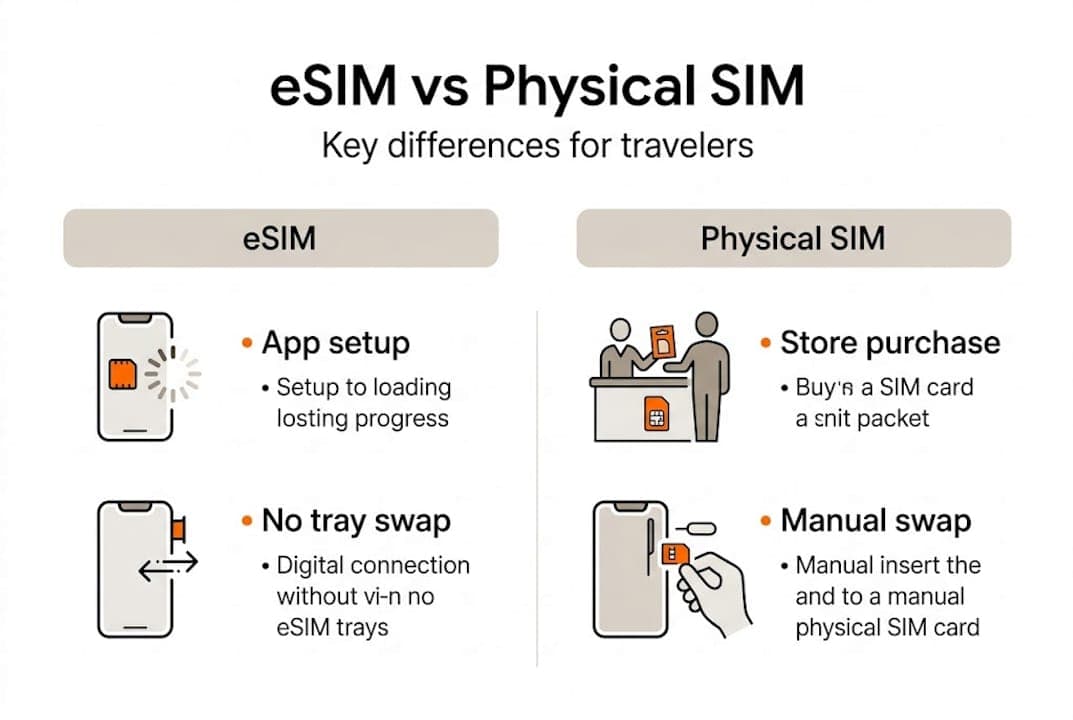
For a deeper look at the trade-offs, the eSIM vs physical SIM comparison covers every angle. If you’re new to the format, a step-by-step guide to activate an eSIM walks you through the full process.
Pro Tip: The moment you insert or activate a local SIM, go into your phone settings and manually disable data roaming on your home SIM. Even with a local SIM active, some phones will auto-connect to your home carrier in areas with weak local signal, triggering roaming fees without warning.
What do you need for local carrier switching?
A clear understanding of the technical process leads us to what you need to prepare to switch smoothly.
Here’s a practical checklist before your next trip:
- Unlocked phone: Phone must be unlocked and, for eSIMs, compatible. Check Settings > General > About on iPhone or contact your carrier.
- Physical SIM slot or eSIM support: Verify which your device supports. Newer flagship phones support both.
- Government-issued ID: Passport is standard for SIM registration in most countries.
- Local carrier research: Know which networks have the best coverage at your destination before you land.
- Backup plan: Always have a secondary connectivity option, whether that’s a US Mobile prepaid SIM or a Wi-Fi calling setup.
Country-specific rules add another layer. In Germany and Italy, for example, ID verification is legally required to activate any SIM card. In some parts of Southeast Asia, tourist SIMs are sold at airports but still require passport scanning.
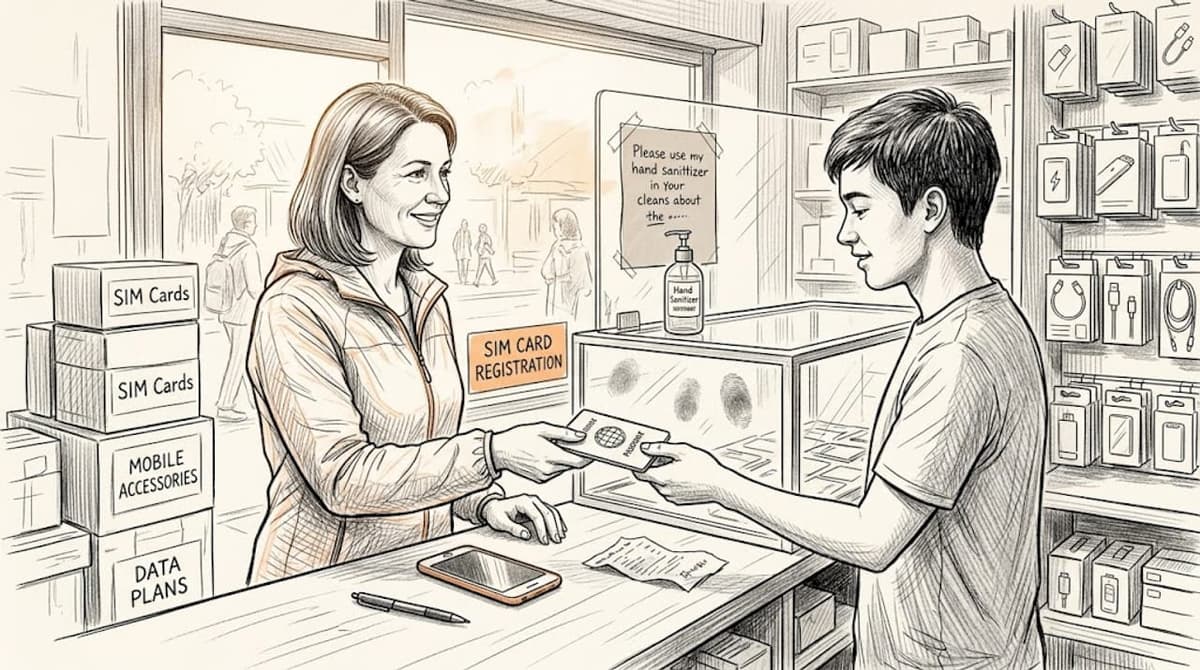
eSIM wins here for flexibility. You can purchase and install a plan before you board, avoiding airport kiosk lines entirely. For guidance on choosing a travel SIM that fits your trip, check the breakdown by trip length and destination type. If you want to avoid roaming fees entirely, planning your SIM strategy before departure is the single most effective move.
Pro Tip: Before you leave home, go to Settings and check whether your phone shows “SIM locked” or lists eSIM as an available option. This five-second check can save hours of frustration at a foreign airport.
Common mistakes and how to avoid them
Getting prepared helps, but even savvy travelers make mistakes. Let’s cover the main ones and how to sidestep them.
| Mistake | Impact | Fix |
|---|---|---|
| Using a locked phone | Can’t use local SIM at all | Unlock before departure |
| Forgetting to disable roaming | Surprise charges on home bill | Turn off data roaming manually |
| Skipping ID registration | SIM won’t activate | Carry passport at all times |
| Assuming app-based switching works abroad | No local coverage | Use a true local or travel eSIM |
| Buying SIM at the airport without research | Overpriced, poor coverage | Research plans in advance |
Auto-switching can be avoided by disabling data roaming on your home SIM. Manual network selection is an option but can disrupt fallback connectivity if the local signal drops.
One misconception worth clearing up: US MVNO switching is only useful domestically. Real carrier switching abroad means using a true local provider, not toggling between T-Mobile and Verizon via an app.
Prevention strategies that actually work:
- Test your local SIM or eSIM the day you arrive, not when you urgently need navigation.
- Save offline maps before switching SIMs in case activation takes longer than expected.
- Screenshot your carrier’s APN settings before departure as a troubleshooting reference.
- Use cheaper, reliable data abroad by choosing plans with known local network partnerships.
Our perspective: What most guides miss about local carrier switching
Most articles stop at “unlock your phone and buy a local SIM.” That’s the easy part. What years of travel have shown us is that the real challenge isn’t technical, it’s behavioral. Travelers who struggle with connectivity abroad almost always skipped the planning phase, not the activation step.
The eSIM benefits are well documented, but the deeper advantage is redundancy. Carrying both an active eSIM and a physical SIM slot gives you a fallback that no single-SIM setup can match. Connectivity isn’t just about speed; it’s about never being stranded. The travelers who stay connected seamlessly are the ones who treat their SIM strategy the same way they treat their travel insurance: sorted before they need it.
Stay connected abroad with Lumo eSIM
If you want to simplify switching and avoid travel hassles altogether, here’s a solution designed for global explorers.
Lumo makes local carrier switching seamless. With instant QR code activation, Lumo eSIM plans cover over 160 countries, so you’re never hunting for a SIM kiosk after a long flight. Plans are flexible, affordable, and built around how real travelers move. Whether you need data for a weekend in Tokyo or a month across Southeast Asia, you can check global destination coverage and activate before you even pack your bag. No locked phones, no roaming surprises, no wasted time.
Frequently asked questions
Do I need an unlocked phone for local carrier switching?
Yes, your phone must be unlocked to use a local SIM or eSIM abroad. A locked device will only connect to your home carrier’s network, making local switching impossible.
What documents are needed to register a local SIM card?
Most countries require a passport or official ID to activate a local SIM card. Registration or ID requirements vary by country, so always travel with your passport accessible.
Can US carriers switch networks internationally via app?
No, US MVNO switching only works between domestic carriers. Connecting to a local network abroad requires a separate local SIM or travel eSIM.
How can I avoid roaming charges when traveling?
Disable data roaming on your home SIM immediately upon arrival, then activate a local carrier or eSIM. Reviewing country-specific switching rules before your trip prevents most surprise charges.
Recommended
- Why switch carriers abroad for cheaper, reliable data | Lumo eSIM Store
- Cost Savings With eSIM: Why Travelers Benefit | Lumo eSIM Store
- How to switch mobile carriers abroad in 2026 seamlessly | Lumo eSIM Store
- eSIM Benefits for Travelers: Seamless Global Connectivity | Lumo eSIM Store
- Corporate Travel Explained: Smarter Management and Safer Rides
Related Topics
Stay Connected Anywhere
Prepaid eSIM data plans for 180+ countries and territories. No physical SIM required.