What is roaming avoidance: save on mobile data in 2026

Imagine landing in Paris for a week-long work trip, checking your phone casually throughout the day, and returning home to a $1,200 phone bill. This nightmare scenario happens more often than you think because most travelers don’t understand data roaming or how to avoid its crushing costs. Roaming charges occur when your phone connects to foreign networks, and carriers pass along hefty fees that can reach $2.05 per megabyte. This guide explains what roaming avoidance means, why it matters for your budget, and how modern solutions like travel eSIMs let you stay connected internationally without the financial shock.
Table of Contents
- What Is Data Roaming And Why Is Avoidance Important?
- How Roaming Avoidance Works: Strategies And Technology
- Comparing Travel ESIMs With Standard Roaming Plans
- Practical Tips To Avoid Roaming Charges While Traveling In 2026
- Explore Lumo’s ESIM Global Data Plans For Seamless Travel
- Frequently Asked Questions
Key takeaways
| Point | Details |
|---|---|
| Roaming charges cost travelers thousands annually | International data roaming can charge up to $2.05 per MB, turning simple tasks into expensive mistakes. |
| Roaming avoidance uses alternative connectivity methods | Strategies include travel eSIMs, local SIMs, and smart settings to bypass expensive carrier roaming fees. |
| Travel eSIMs provide instant, affordable global data | Modern eSIM technology activates instantly without physical cards and offers better rates than traditional roaming. |
| Proper planning protects your budget and connectivity | Understanding your options before departure ensures reliable service without surprise charges. |
| Remote workers need consistent international solutions | Frequent travelers benefit most from roaming avoidance strategies that work across multiple countries. |
What is data roaming and why is avoidance important?
Data roaming means using your mobile data outside your home network’s coverage area, typically while traveling abroad. When you leave your carrier’s service zone, your phone automatically searches for available networks in your destination country. Your home carrier partners with these foreign networks to keep you connected, but this convenience comes at a steep price.
Think about common travel scenarios. You’re on vacation in Tokyo checking restaurant reviews, or you’re a remote worker in Barcelona joining video calls from a café. Every time your phone uses data in these situations, you’re potentially triggering roaming charges. Your carrier pays the foreign network for access, then passes those costs to you with significant markups.
Why are roaming charges so expensive? Carriers negotiate agreements with international partners, and these wholesale rates get multiplied before reaching your bill. The lack of competition in roaming markets means providers can charge premium rates. Some U.S. carriers bill up to $2.05 per megabyte for international data. To put that in perspective, streaming just one hour of standard definition video could cost over $400 in roaming fees.
The financial impact extends beyond individual trips. Business travelers crossing borders regularly face unpredictable monthly bills. Families vacationing abroad often return to shocking charges because kids streamed videos or apps updated automatically. These costs add up quickly and create budget anxiety that shouldn’t exist in 2026.
Roaming avoidance becomes crucial for anyone traveling internationally more than once or twice per year. Frequent flyers, digital nomads, and remote workers need reliable connectivity without the financial uncertainty. Understanding international roaming explained mistakes avoid helps you take control of your mobile costs.
Key problems caused by unplanned roaming include:
- Unexpectedly high bills that strain travel budgets
- Lack of cost transparency until charges appear
- Potentially slower speeds despite premium pricing
- Service interruptions when carriers impose usage caps
- Stress and distraction from worrying about connectivity costs
The good news? You don’t have to accept these inflated charges. Modern technology and smart planning make roaming avoidance straightforward and effective.
How roaming avoidance works: strategies and technology
Roaming avoidance means deliberately choosing alternative connectivity methods that bypass your home carrier’s expensive international roaming fees. Instead of paying premium rates to use foreign networks through your regular plan, you access local data directly at much lower costs. This shift requires understanding your options and implementing them before you travel.
Several proven strategies help you avoid roaming charges entirely. Purchasing local SIM cards at your destination provides native network access at local rates. Using public Wi-Fi for basic tasks reduces cellular data needs, though this approach has security limitations. The most effective modern solution involves travel eSIMs that offer instant activation and better local rates without physical card swaps.
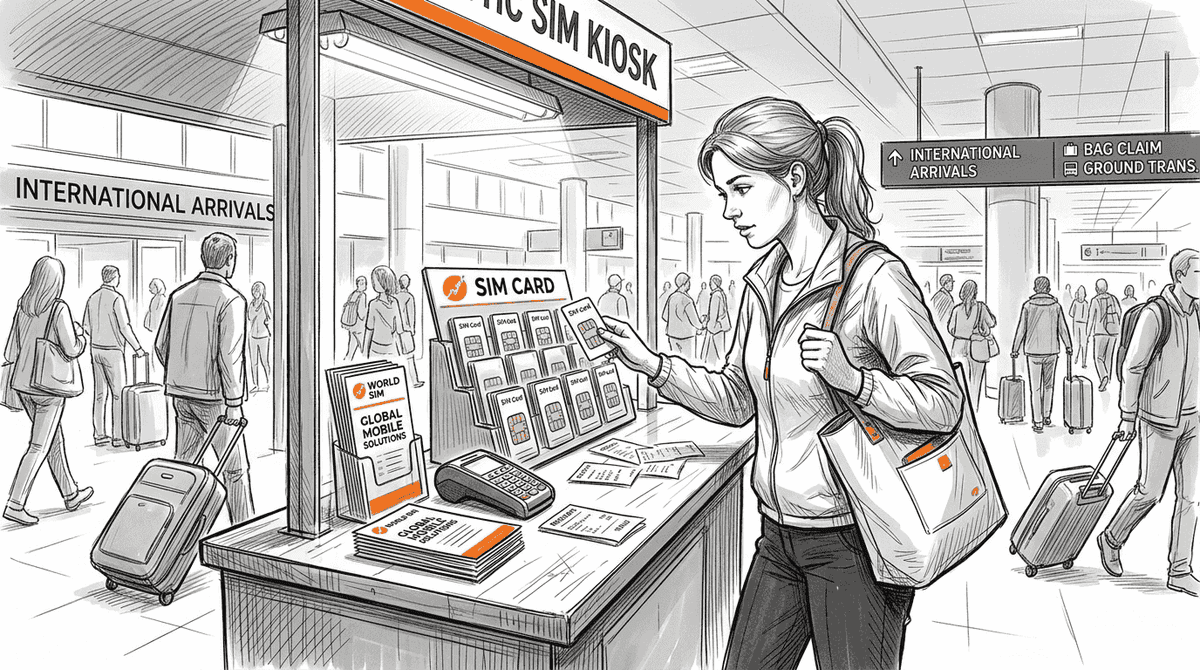
Travel eSIM technology represents a breakthrough for international connectivity. These digital SIM profiles download directly to compatible devices, activating within minutes through simple QR codes. You maintain your primary number while adding affordable data plans for specific countries or regions. No airport kiosk visits, no tiny SIM card juggling, no service gaps.
The advantages of eSIMs extend beyond convenience. Traditional roaming routes your data through complex carrier agreements with multiple intermediaries. Travel eSIMs connect you directly to local networks, often providing faster speeds and more reliable service. You pay transparent upfront costs instead of per-megabyte charges that accumulate invisibly.
Pro Tip: Research coverage maps and rate comparisons at least one week before departure to identify the best eSIM provider for your specific destinations and usage patterns.
Implementing roaming avoidance successfully requires following these steps:
- Check your device compatibility with eSIM technology at least two weeks before travel
- Research travel eSIM providers offering coverage in your destination countries
- Compare data allowances, validity periods, and total costs across multiple providers
- Purchase and download your eSIM profile 24-48 hours before departure
- Activate the eSIM after landing and confirm connectivity before leaving the airport
- Disable your home carrier’s data roaming in device settings to prevent accidental charges
- Monitor your eSIM data usage through the provider’s app throughout your trip
Beyond eSIMs, smart device settings amplify your roaming avoidance efforts. Enable airplane mode when you don’t need connectivity, then turn on Wi-Fi separately for internet access. Set data usage alerts to warn you before approaching plan limits. Download maps, translation tools, and entertainment content while on Wi-Fi before heading out. These habits work alongside avoiding roaming fees with eSIM technology.
Many travelers overlook simple app settings that trigger background data usage. Disable automatic app updates, cloud photo backups, and email sync while traveling. These features consume significant data without you realizing it. Taking ten minutes to adjust these settings before your trip prevents hundreds in potential charges.
The 7-step avoid roaming charges checklist global travelers provides additional detailed guidance for implementing these strategies effectively across different travel scenarios.
Comparing travel eSIMs with standard roaming plans
Understanding the practical differences between traditional carrier roaming and modern travel eSIM solutions helps you make informed connectivity decisions. The gap between these options has widened dramatically as eSIM technology matured and more providers entered the market.
| Feature | Traditional Roaming | Travel eSIM |
|---|---|---|
| Cost per GB | $80-$200+ depending on carrier | $3-$15 for most destinations |
| Activation time | Automatic but expensive | 2-5 minutes via QR code |
| Speed and latency | Variable, often throttled | 42-88 Mbps with under 35ms latency |
| Coverage flexibility | Limited to carrier partnerships | Choose from multiple local networks |
| Billing transparency | Charges appear later on bill | Prepaid with known costs |
| Call quality setup | Standard carrier routing | Under 2 seconds connection time |
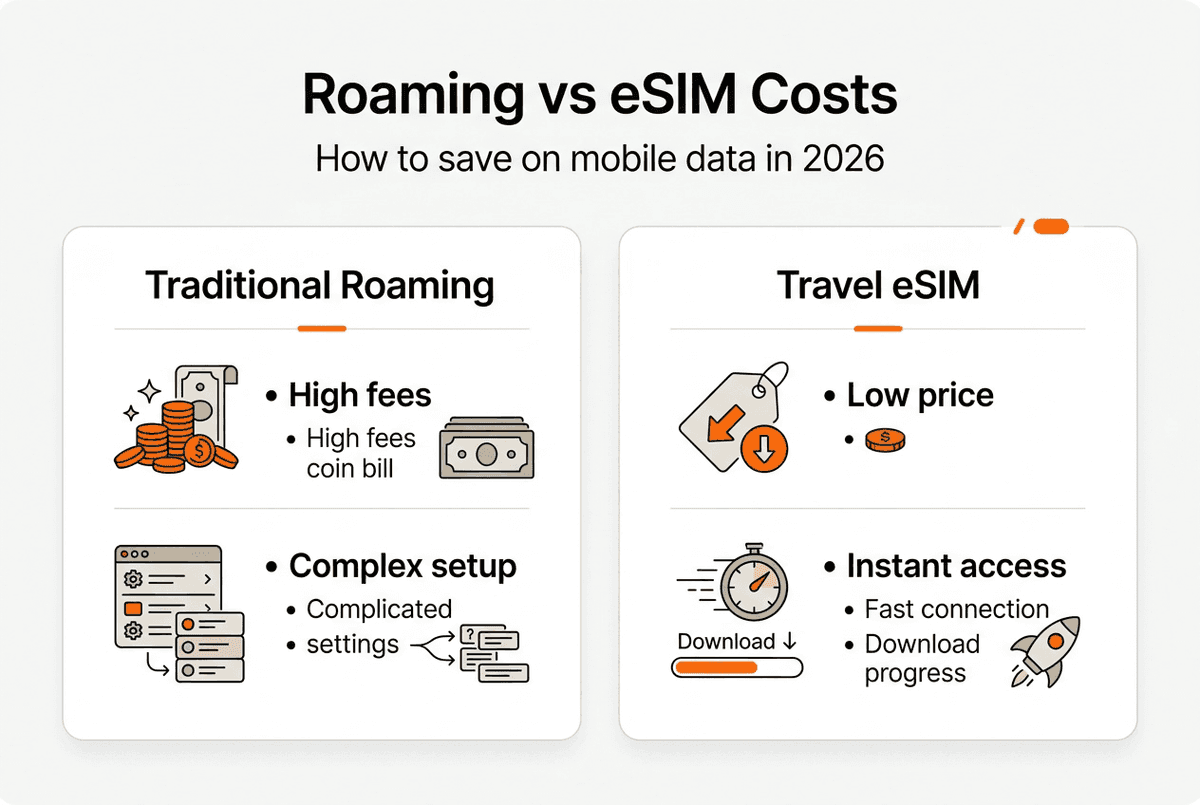
The cost difference alone makes travel eSIMs compelling. A week-long trip using 5GB of data might cost $150-$300 through traditional roaming. The same usage with a quality eSIM typically runs $8-$20. For frequent travelers, these savings compound into thousands of dollars annually.
Speed and reliability deserve special attention because not all eSIM providers deliver equal performance. True reliability in multi-country eSIM plans emerges only when the provider owns the IMSI pool, manages HSS/HLR integrations directly, and avoids third-party wholesale aggregators. This technical infrastructure determines whether your eSIM delivers consistent service or frustrating dropouts.
IMSI pools and HSS/HLR systems sound technical, but they directly impact your experience. Providers controlling their own infrastructure maintain better network relationships and faster authentication. Third-party aggregators introduce additional routing hops that slow connections and create potential failure points. When researching eSIM options, ask whether the provider manages their own technical stack.
Recent testing data shows quality eSIM providers consistently deliver 42-88 Mbps download speeds across major international destinations. Latency stays under 35 milliseconds, making video calls and real-time applications work smoothly. Call setup times complete in under two seconds, matching or exceeding traditional carrier performance. These metrics matter for remote workers who need reliable connectivity for professional tasks.
Pro Tip: Prioritize eSIM providers with direct carrier relationships and owned infrastructure rather than resellers offering suspiciously cheap rates that often come with poor reliability.
Traditional roaming offers one advantage: zero setup effort. Your phone simply works when you land, though at premium cost. For occasional travelers taking short trips, this convenience might justify the expense. However, anyone traveling internationally more than twice yearly benefits significantly from understanding roaming fees vs eSIM tradeoffs.
The flexibility of eSIM technology extends beyond single trips. You can maintain multiple eSIM profiles for different regions, switching between them as you travel. This capability particularly benefits digital nomads and remote workers who move between countries regularly. Traditional roaming offers no equivalent flexibility without changing physical SIM cards.
Practical tips to avoid roaming charges while traveling in 2026
Knowing roaming avoidance strategies means nothing without implementing them correctly. These actionable steps ensure you stay connected affordably on your next international trip.
Start by disabling automatic data roaming in your device settings before leaving home. Both iOS and Android devices have clear toggles preventing your phone from connecting to foreign networks accidentally. This single step eliminates the risk of background data usage triggering charges while you sleep or forget to monitor your connection.
Use airplane mode strategically throughout your travels. Enable it during flights obviously, but also when you’re in situations where you don’t need connectivity. Turn Wi-Fi back on separately to access internet without cellular data. This combination gives you control over exactly when and how your device connects.
Download essential content before departure to reduce data needs abroad. Offline maps for your destination cities, translation app language packs, entertainment for downtime, and any work files you might need. Spending 30 minutes on Wi-Fi at home saves significant data usage and potential costs later.
Purchase your travel eSIM at least 24 hours before departure. This timing lets you troubleshoot any activation issues while still at home with reliable internet. Most providers send QR codes via email instantly, but allowing buffer time prevents last-minute stress. Test the eSIM profile installation process before leaving to confirm everything works.
Monitor your data usage daily through your eSIM provider’s app or your device’s built-in tracking. Set alerts at 50%, 75%, and 90% of your data allowance. This awareness prevents running out of data unexpectedly or paying overage charges. Most quality eSIM apps show real-time usage breakdowns by application.
Consider these preparation steps:
- Verify your device supports eSIM technology by checking manufacturer specifications
- Contact your home carrier to confirm your account allows eSIM additions without conflicts
- Research eSIM providers with strong reviews for your specific destination countries
- Compare plan options based on your expected data usage and trip length
- Purchase and install the eSIM profile while connected to home Wi-Fi
- Test the eSIM activation and confirm it appears in your device’s cellular settings
- Save provider customer support contact information for troubleshooting abroad
The cost savings potential justifies this planning effort. Data roaming charges can be very expensive, with some U.S. carriers charging up to $2.05 per MB internationally. A single HD video stream could cost hundreds of dollars. Investing an hour in proper preparation saves that money and eliminates connectivity anxiety.
Avoid relying solely on public Wi-Fi as your roaming avoidance strategy. Coffee shop and hotel networks work for basic browsing but pose security risks for sensitive activities. Banking, work email, and confidential communications need encrypted cellular connections. Public networks also suffer from unreliable speeds and frequent disconnections.
Additional practical measures include:
- Disable automatic app updates and only update manually on Wi-Fi
- Turn off cloud photo and video backup until you return home
- Use data-saving modes in streaming apps if you must use them
- Avoid video calls unless absolutely necessary or on Wi-Fi
- Check which apps consume the most data and restrict background usage
For comprehensive guidance, review how to avoid roaming fees abroad and the detailed avoid roaming charges guide 2026 for destination-specific tips.
Remember that roaming avoidance requires minimal effort compared to the financial protection it provides. Spending 30-60 minutes preparing before each international trip saves hundreds or thousands in potential charges. These habits become automatic after your first successful implementation.
Explore Lumo’s eSIM global data plans for seamless travel
Now that you understand roaming avoidance strategies and their benefits, finding the right eSIM provider makes all the difference. Lumo offers instant global data plans designed specifically for travelers who refuse to pay inflated roaming charges.
With coverage across over 160 countries, Lumo eliminates the hassle of researching local options for each destination. Activation happens in minutes through simple QR codes, and you get access to high-speed 5G/4G networks without physical SIM cards. The platform supports multiple eSIM profiles across your devices, whether you’re traveling with a smartphone, tablet, or laptop.
Lumo’s transparent pricing and flexible plans let you choose exactly the data amount and validity period matching your trip. No hidden fees, no surprise charges, just straightforward connectivity that works when you need it. The 24/7 customer support ensures help is available regardless of your time zone. Visit Lumo eSIM global data plans to explore options for your next international adventure.
Frequently asked questions
What does roaming avoidance mean in mobile data context?
Roaming avoidance refers to deliberately using alternative connectivity methods instead of your home carrier’s international roaming service. This includes strategies like travel eSIMs, local SIM cards, or Wi-Fi to prevent expensive per-megabyte charges when traveling abroad.
How much can roaming charges cost when traveling abroad?
Roaming charges vary by carrier but can reach $2.05 per megabyte with some U.S. providers. Streaming one hour of video could cost over $400, and a typical week-long trip using 5GB of data might generate $150-$300 in roaming fees. These costs make roaming avoidance essential for budget-conscious travelers.
Are travel eSIMs reliable for avoiding roaming fees internationally?
Quality travel eSIMs from providers managing their own infrastructure deliver reliable service with speeds of 42-88 Mbps and latency under 35ms. Choose providers owning their IMSI pools and HSS/HLR systems rather than resellers for consistent connectivity across multiple countries.
What steps can I take to avoid roaming charges on short trips?
Disable data roaming in device settings before departure, purchase a travel eSIM for your destination, download offline maps and content on Wi-Fi, and use airplane mode with Wi-Fi when you don’t need cellular data. These steps take 30 minutes of preparation but save hundreds in potential charges.
Is public Wi-Fi a good alternative to avoid roaming charges?
Public Wi-Fi works for basic browsing but shouldn’t be your only roaming avoidance strategy. These networks pose security risks for sensitive activities like banking and often provide unreliable speeds. Combine limited Wi-Fi use with a travel eSIM for secure, consistent connectivity.
Can I use multiple eSIM profiles for different countries?
Yes, modern devices support multiple eSIM profiles that you can switch between as you travel. This flexibility particularly benefits frequent international travelers and digital nomads who move between regions regularly without needing physical SIM card changes.
Recommended
- What is data roaming in 2026: avoid $6,000 bills abroad | Lumo eSIM Store
- Avoid roaming charges guide: save on mobile data in 2026 | Lumo eSIM Store
- Mobile Data Roaming: Costs, Risks, and Smarter Choices | Lumo eSIM Store
- 7-Step Avoid Roaming Charges Checklist for Global Travelers | Lumo eSIM Store
- Best Wireless Hotspots for RV: Comparison
Related Topics
Stay Connected Anywhere
Prepaid eSIM data plans for 180+ countries and territories. No physical SIM required.