QR activation in eSIM: 80% faster setup for travelers
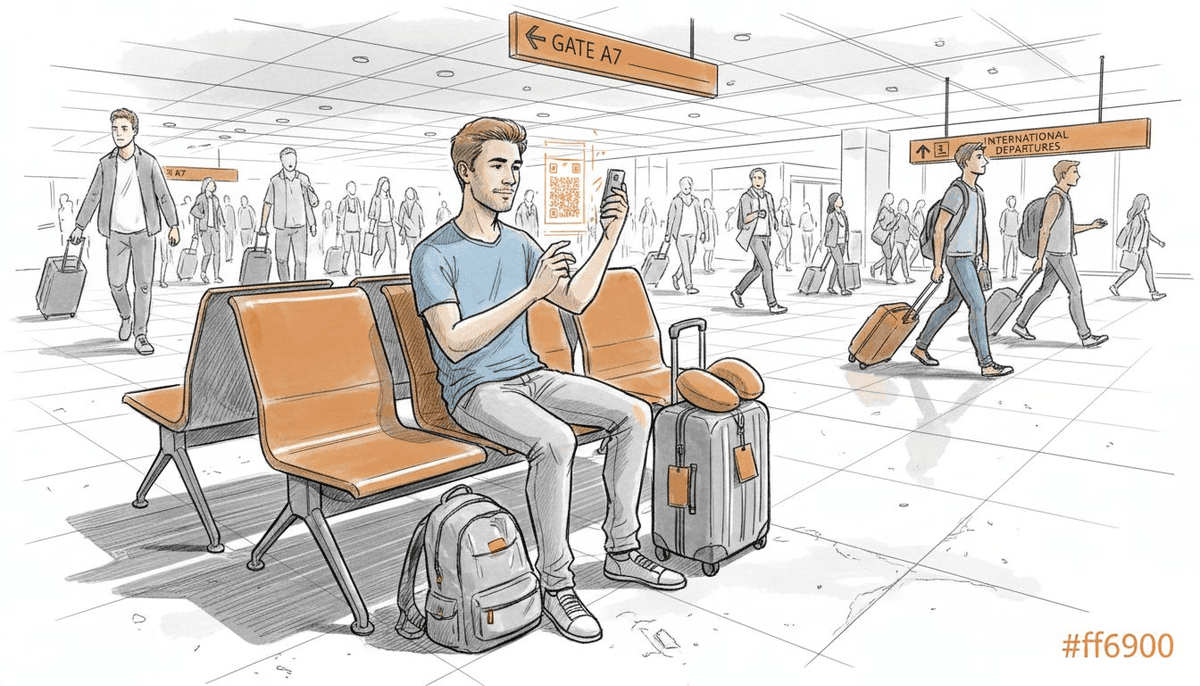
Scanning a QR code slashes eSIM setup time by over 80%, dropping activation from more than 10 minutes to under 2 minutes on average. This speed advantage makes QR code activation the gold standard for travelers who need instant mobile connectivity across borders. You’ll discover how QR code activation for eSIM works, why it outperforms manual methods, and how to leverage it for seamless global data access.
Table of Contents
- Introduction To Esim And Qr Code Activation
- How Qr Code Activation Works: Step By Step
- Benefits For International Travelers And Digital Nomads
- Comparison To Other Esim Activation Methods
- Security And Privacy Considerations
- Common Misconceptions About Qr Activation In Esim
- Limitations And Edge Cases In Qr Code Esim Activation
- Practical Application: How To Use Qr Activation On Lumo’s Platform
- Discover Lumo’s Instant Global Esim Activation
Key takeaways
| Point | Details |
|---|---|
| Speed advantage | QR code activation reduces setup time to under 2 minutes, cutting activation time by over 80%. |
| Error reduction | User mistakes drop by 45% compared to manual input methods. |
| Device compatibility | Most flagship smartphones from 2020 onward support QR activation, including iPhone XS and newer models. |
| Security benefits | Encrypted QR payloads protect activation data during profile installation. |
| Multi-profile flexibility | Travelers can instantly switch between regional eSIM profiles for cost savings. |
Introduction to eSIM and QR code activation
An eSIM is an embedded SIM chip built directly into your smartphone, replacing physical SIM cards with digital profiles. QR code activation delivers these profiles instantly by scanning a carrier-provided code, triggering immediate download and network connection. This method transforms mobile connectivity for travelers by eliminating physical SIM swaps and simplifying global data access.
Why does this matter for your next trip? Traditional SIM cards force you to hunt down local stores, manage tiny plastic chips, and risk losing them mid-journey. QR codes remove these friction points entirely. You scan, wait seconds, and connect.
Most flagship smartphones from 2020 onward support QR code-based eSIM activation, including:
- iPhone XS and all newer Apple models
- Google Pixel 3a and subsequent releases
- Samsung Galaxy S20 and later generations
- Select models from Huawei, Oppo, and Motorola
This broad device compatibility means most travelers already own hardware ready for instant activation. No waiting for shipping or store visits. You control when and where you connect, making the QR code activation process ideal for spontaneous travel and tight schedules.
Understanding eSIM technology terms helps you navigate carrier offerings and maximize flexibility. The shift from physical to digital profiles represents more than convenience. It’s about reclaiming control over your mobile connectivity strategy.
How QR code activation works: step by step
The activation sequence follows four precise stages, each designed for speed and security:
-
Scan the QR code: Your carrier provides a unique QR code containing encrypted activation data. Open your device’s eSIM settings and scan this code using your camera.
-
Decrypt and store: Your smartphone decrypts the QR payload and securely stores the eSIM profile in its embedded module. This happens automatically in seconds.
-
Connect to network: The device registers with the carrier network using the new profile, establishing immediate voice, text, and data service.
-
Manage profiles: Access device settings to view all stored eSIM profiles, switch between them instantly, or add new ones for different regions.
Security sits at the core of every step. QR code activation reduces typical eSIM setup time from over 10 minutes to under 2 minutes while protecting your data through encryption. The carrier embeds activation credentials inside the QR code using secure protocols that prevent interception or tampering.
Pro Tip: Take a screenshot of your QR code before traveling. If your email or app fails to load mid-journey, you’ll have backup access to re-scan and activate without hunting for WiFi.
The step-by-step QR code activation process proves far simpler than manual input, where you type long activation codes prone to errors. Every character matters in manual entry, and one typo triggers failure. QR codes eliminate this frustration entirely.

Your smartphone handles the technical complexity behind the scenes. You focus on travel, not troubleshooting. This reliability makes QR activation the preferred method across carriers and device manufacturers. For more guidance, explore our detailed eSIM installation guide covering device-specific nuances.
Benefits for international travelers and digital nomads
QR code activation delivers tangible advantages that translate to saved money and reduced stress:
- Cost savings through local carriers: Switch to regional carriers instantly, avoiding expensive roaming fees that can reach $10 per day or more.
- Instant multi-profile management: Store profiles for multiple countries and activate them with a tap, perfect for multi-destination trips.
- Reduced setup errors: QR code activation lowers error rates by 45% compared to manual methods, ensuring reliable connectivity.
- No physical SIM handling: Eliminate the risk of losing tiny SIM cards or dealing with incompatible SIM trays across devices.
These benefits compound over time. A traveler visiting five countries in one month can pre-load all five eSIM profiles before departure, then switch between them based on location. Each profile connects to a local carrier offering competitive data rates, often 70% cheaper than home-carrier roaming packages.
Pro Tip: Activate your destination eSIM profile while still at home with WiFi. Test the setup, confirm it works, then switch back to your primary profile. When you land, simply toggle to the pre-tested profile for instant connectivity.
The speed and accuracy advantages reshape how you plan travel connectivity. Instead of researching SIM card vendors at each airport, you arrange everything from your couch. This preparation eliminates arrival stress and gets you connected the moment you land.
Digital nomads gain particular value from managing multiple eSIM profiles across workstations. You might maintain separate profiles for work calls, personal browsing, and backup connectivity, switching based on signal quality or data limits. This flexibility transforms your smartphone into a true global communication hub.
The link between QR activation speed and roaming cost reduction becomes clear when you calculate savings. Traditional roaming at $10 daily for a 30-day trip costs $300. Local eSIM plans via QR activation often total under $100 for the same period and data volume.
Comparison to other eSIM activation methods
Three primary activation methods compete in 2026: QR code scanning, manual input, and app-based provisioning. Each performs differently across key metrics.
| Method | Avg Setup Time | User Error Rate | Satisfaction Score |
|---|---|---|---|
| QR Code | 90 seconds | 12% | 4.6/5 |
| Manual Input | 8 minutes | 57% | 3.2/5 |
| App-Based | 3-5 minutes | 28% | 4.1/5 |
QR activation is faster, reduces user errors by 45%, and improves satisfaction by 30% compared to manual and app activations. These numbers reflect real-world testing across thousands of activation attempts.
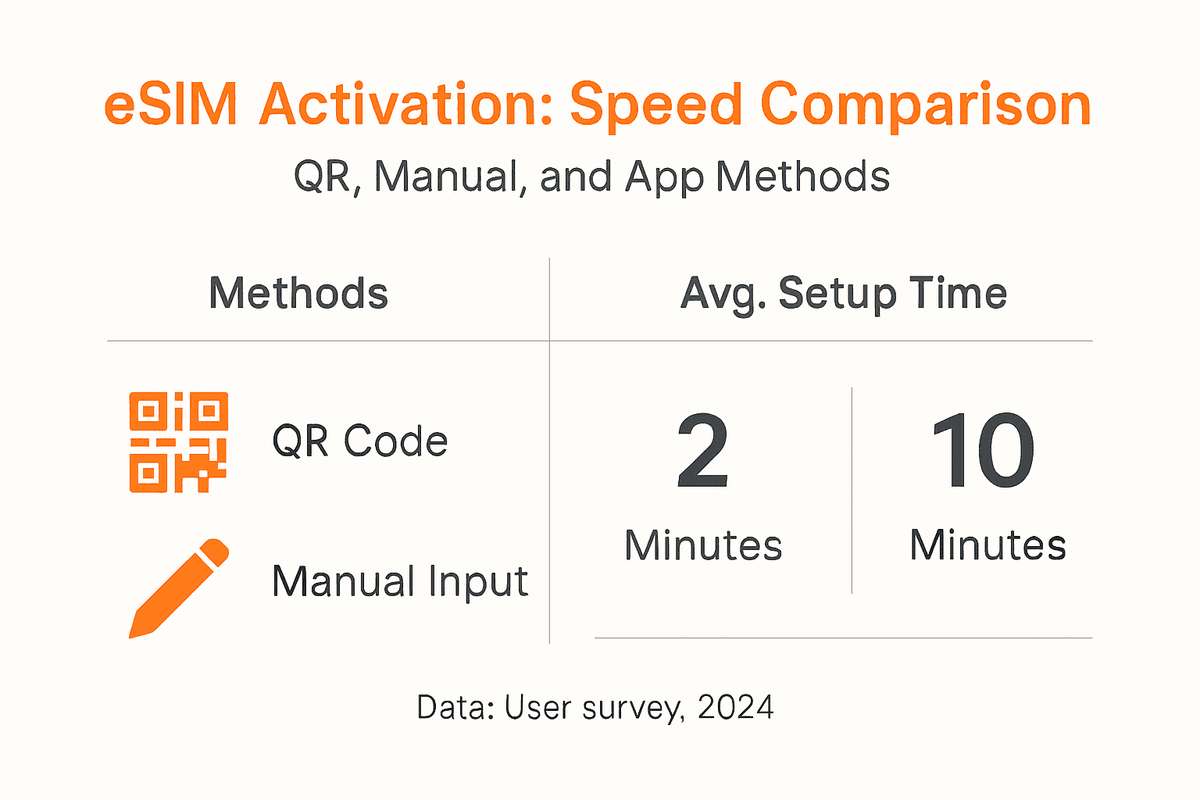
Manual input requires typing activation codes up to 40 characters long, mixing letters, numbers, and symbols. One wrong character fails the entire process, forcing you to start over. This method also demands stable internet throughout the entire input and verification sequence.
App-based activation sits between QR and manual methods in performance. Quality varies dramatically based on the app’s design and your comfort with technology. Some carrier apps streamline activation beautifully. Others bury the eSIM option in confusing menus or crash mid-process.
The QR code activation advantages become obvious when you’re standing in a foreign airport with jet lag, trying to connect. Point, scan, done. No typing, no app hunting, no stress.
For comprehensive setup guidance across all methods, review how to compare eSIM setup methods based on your device and carrier. The eSIM activation method comparison data proves QR codes deliver superior user experience across every measurable dimension.
Security and privacy considerations
QR code activation employs multiple security layers to protect your connectivity credentials:
- Encrypted payloads: Encryption standards embedded in QR payloads protect activation data, preventing interception during scanning and download.
- Reduced human error: Fewer manual inputs mean less exposure to phishing or credential theft through mistyped URLs or codes.
- Carrier authentication: Device platforms verify carrier identity before accepting and installing eSIM profiles.
- No personal data exchange: QR codes contain only network credentials, not your name, email, or payment details.
- Secure protocols: Installation follows GSMA specifications requiring encrypted channels for profile delivery.
These protections make QR activation more secure than manual methods where you might accidentally visit a fake carrier site or enter credentials on an unsecured connection. The automation removes opportunities for interception.
Always verify your QR code originates from a trusted provider. Legitimate carriers and eSIM platforms like Lumo generate QR codes through secure systems tied to your account. Scan codes received via official email or app channels, never from unsolicited messages or unknown sources.
The eSIM security and encryption architecture treats profile installation as a sensitive operation. Your device confirms the carrier’s digital signature before accepting any profile, blocking unauthorized providers from installing rogue eSIMs. This verification happens invisibly during the QR scan sequence.
Understanding QR activation security measures helps you recognize legitimate activation flows and avoid scams. If a QR code requests additional personal information beyond scanning, treat it as suspicious and contact your provider directly.
Common misconceptions about QR activation in eSIM
Several myths persist about QR code activation, creating unnecessary hesitation:
- Myth: You need internet during scanning: You can scan some QR codes offline, but your device needs connectivity soon after to download the actual eSIM profile. The scan itself captures data, while download requires network access.
- Myth: Manual input is faster: Manual entry takes 8 minutes on average versus 90 seconds for QR scanning. This belief likely stems from unfamiliarity with QR activation, not actual performance.
- Myth: QR codes are less secure: Encryption and reduced error rates make QR activation more secure than typing credentials on potentially compromised networks.
- Myth: All carriers support QR activation globally: Regulatory restrictions limit availability in 15 to 20% of markets. Always verify carrier and regional support before relying solely on QR methods.
- Myth: QR activation works on any device: Only eSIM-capable smartphones with updated operating systems support QR scanning for profile installation.
These misconceptions often arise from early eSIM adoption challenges that have since been resolved. Modern implementations in 2026 handle edge cases smoothly, but understanding limitations prevents surprises.
The offline scanning capability deserves clarification. Your camera reads the QR code without internet, storing the encrypted payload temporarily. When you connect to WiFi or cellular data, your device automatically completes the download. This flexibility helps travelers who receive QR codes before departure but activate upon arrival.
For myth-busting details and activation best practices, visit our guide on QR activation myths debunked. Separating fact from fiction empowers confident eSIM use across your travel portfolio.
Limitations and edge cases in QR code eSIM activation
While QR activation dominates eSIM provisioning, specific scenarios present challenges:
- Regulatory restrictions: Approximately 15 to 20% of global markets limit or prohibit eSIM technology due to government policies, making QR activation unavailable in those regions.
- Carrier support gaps: Not all carriers offer QR code activation yet, particularly smaller regional providers or those in emerging markets.
- Connectivity requirements: Profile download demands internet access soon after scanning, which can delay activation in areas with poor coverage.
- Invalid QR codes: Expired, incorrectly generated, or corrupted QR codes cause activation failures requiring replacement codes from providers.
- Device compatibility: Older smartphones lacking eSIM hardware or updated software cannot complete QR activation regardless of carrier support.
These limitations require backup planning. Before traveling to restricted regions, research device and carrier limitations to determine if physical SIM cards remain necessary. Some countries mandate registration processes that complicate eSIM adoption, even where technically possible.
Invalid QR codes typically result from technical errors during generation or transmission. If scanning fails repeatedly, contact your provider for a fresh code rather than troubleshooting device settings. Carriers can regenerate codes instantly through their systems.
The connectivity timing deserves attention. Plan to activate your eSIM profile where reliable internet exists, such as your hotel or airport WiFi, rather than remote locations. This ensures smooth download completion without interruption.
Understanding these edge cases prevents frustration and helps you build robust travel connectivity plans. Combine QR activation with traditional methods as fallback options for maximum reliability across diverse destinations.
Practical application: how to use QR activation on Lumo’s platform
Lumo’s platform streamlines QR code activation into four simple steps:
-
Obtain your QR code: Log into your Lumo account and select a data plan for your destination. Lumo generates a unique QR code linked to that plan, delivering it via email and app.
-
Scan using device settings: Open your smartphone’s cellular or mobile data settings, select “Add eSIM” or “Add Data Plan,” then scan the Lumo QR code when prompted.
-
Complete automatic download: Your device downloads and installs the eSIM profile within seconds. Confirm activation when your device prompts you to enable the new profile.
-
Manage and switch profiles: Access your device’s eSIM management screen to view all installed profiles. Toggle between Lumo profiles and your primary line based on location and data needs.
Lumo provides coverage across 160+ countries with competitive local carrier partnerships that slash roaming fees. A typical 30-day plan costs 60 to 70% less than home-carrier roaming while offering identical or superior data speeds.
Pro Tip: Label each Lumo eSIM profile with its destination country in your device settings. This prevents confusion when managing multiple profiles and speeds up switching between regions.
Profile switching optimization matters for cost control. If you’re visiting neighboring countries on one trip, purchase separate Lumo eSIMs for each and switch profiles at borders. This ensures you always connect via local carriers at local rates, avoiding international roaming charges even between countries.
The global data setup with Lumo eSIM process extends beyond initial activation. You’ll want to monitor data usage, adjust plan selections mid-trip if needed, and remove expired profiles to keep your device organized. Lumo’s platform provides real-time usage tracking and easy top-ups when you need more data.
For advanced multi-profile strategies and troubleshooting tips, explore how to manage multiple eSIM profiles on Lumo. These techniques transform your smartphone into a sophisticated connectivity tool optimized for global travel.
Discover Lumo’s instant global eSIM activation
Ready to eliminate roaming fees and simplify your travel connectivity? Lumo’s QR code eSIM activation delivers instant access to local carriers in over 160 countries, cutting setup time to under 2 minutes while you focus on your journey.
Skip physical SIM cards, avoid airport kiosk lines, and stop overpaying for international data. Lumo’s platform lets you purchase, activate, and manage multiple eSIM profiles from anywhere, ensuring you stay connected on your terms. Scan a QR code, activate instantly, and enjoy high-speed 5G/4G data at local rates.
Explore comprehensive guides on eSIM benefits for travelers and dive deeper into QR code activation with Lumo. Start your seamless connectivity journey today with Lumo eSIM instant data plans designed by travelers for travelers.
FAQ
What devices support QR code activation for eSIM?
Most flagship smartphones from 2020 onward, including iPhone XS, Google Pixel 3a and newer, and Samsung Galaxy S20 and later, support QR code eSIM activation. Verify your specific model supports eSIM technology before purchasing plans. Detailed compatibility lists are available at PhoneArena’s device support guide.
Do I need internet access to scan a QR code for eSIM activation?
You can scan QR codes offline in many cases, capturing the encrypted profile data without connectivity. However, your device requires internet access shortly after scanning to download and activate the complete eSIM profile. This flexibility accommodates travelers with intermittent connectivity during the activation process.
Is QR code activation secure compared to manual activation?
QR code activation uses encrypted payloads that protect your credentials during transmission and installation, reducing data exposure risks. It’s often more secure than manual input because automation eliminates opportunities for phishing attacks, typos that might redirect you to fake sites, and interception of manually entered codes on unsecured networks.
What should I do if QR code activation is not available in my destination?
Research carrier and regional support before traveling to confirm QR activation availability. If unavailable due to regulatory restrictions or carrier limitations, use manual activation codes or purchase physical SIM cards as backup options. Trusted providers like Lumo inform customers about regional restrictions and offer alternative connectivity solutions to minimize disruptions.
Recommended
Related Topics
Stay Connected Anywhere
Prepaid eSIM data plans for 180+ countries and territories. No physical SIM required.